
Reflections
-
It is weird to read my correspondences from the late August/early September
period, being the time of transition between my old function in life to my
new ...
14 years ago
Quadrophenia (UK, 1979)
Directed by Franc Roddam
Starring Phil Daniels, Mark Wingett, Lesley Ash, Sting
As the 1970s wore on The Who increasingly turned their attention from music to filmmaking. Following Ken Russell's Oscar-nominated adaptation of Tommy, the band gained a stake in Shepperton Studios. Here they filmed the final scene of The Kids Are Alright, in what turned out to be Keith Moon's last live performance. After production wrapped on The Kids Are Alright, the group pressed on with adapting their other rock opera, Quadrophenia. In bringing Quadrophenia to the big screen, the band and first-time director Franc Roddam took a completely different approach than they had for Tommy. Ken Russell had a deep-seated interest in opera and classical music: he treated the material as an opera which just happened to have been written by a rock band. The finished product was a divisive mixed bag: amidst some striking imagery and memorable characterisation, there was a lot of bad singing, over-indulgence and naff pomposity.
 Quadrophenia is more like a coming-of-age film which documents the rise and fall of the original mods. Its storyline interweaves elements of the rock opera out of album order, and its soundtrack balances The Who with other mod favourites like The Kinks, The Ronettes and The Crystals. The film is around 40 minutes longer than the album even with several songs cut out, taking its time to set up the mods' aims, culture and modus operandi.
 To understand the reasons for this approach, we have to consider the changing circumstances of the band. When Tommy was made, The Who were at the height of their power as a live group; they had both the money and the fame to be a little over-exuberant. Four years later, punk had moved in and swallowed up the younger generation, leaving The Who in a no-man's-land between circus-act obsolescence and risky reinvention. After the death of Keith Moon, the band lost some of its live firepower, so that even if they had wanted to recapture the old ground, they could no longer drown out their rivals.
 Much of Quadrophenia is about The Who trying to justify their continued existence by examining the foundations of the culture which launched them. Just as The Who were (retrospectively) described as the original punk rock band, so there is an attempt to portray the mods as the direct predecessors of the punks. There is some similarity in their characterisation, as gangs of young people with a unique dress sense, who eschew all authority and are generally unpleasant to anyone outside their inner circle. Roddam even screen-tested Sex Pistols frontman Johnny Rotten for the lead role, but he was dropped because no-one would insure him.
Despite this earnest desire to justify themselves, the approach of The Who's surviving members is decidedly hands-off. Unlike Tommy, the band do not appear in person, either as themselves or in character (for instance, Keith Moon playing Uncle Ernie with a worrying amount of relish). We are therefore spared the prospect of Pete Townshend et al playing themselves aged 21, in the manner of Mariah Carey's excremental Glitter. There are only two occasions in which we see the band: once on a poster of Pete Townshend next to Jimmy's bed, the other in an early TV performance from Ready, Steady, Go!. This strange sense of modesty is further reflected in the soundtrack, which was overseen by bassist John Entwistle. In Quadrophenia the songs are mixed right down to serve as background, rather than being the driving force for the action. When 'My Generation' gets played at the house party, you quickly get the mods shouting over it until Roger Daltrey's delivery becomes totally lost. The film is emphasising the effect which this music had rather than the band that created it; we have to focus on Jimmy as a character rather than as a vessel for different aspects of the group.
 Although this approach may disgruntle purists, the music in Quadrophenia is still of a high quality. Of the seventeen album tracks, ten survive in either their original form or with very slight alterations - for instance, the new bass part and more definitive ending of 'The Real Me', which plays out over the opening credits. The three original compositions which Townshend penned are also up to snuff: they may be more deliberately incidental, but they still feel like Who songs, and the oft-maligned Kenney Jones manages to at least partially replicate Keith Moon's drumming style.
 Quadrophenia is a character study of a confused young man, who attaches himself to the mods as a means of identity, but starts to go to pieces when they desert him. Early on in the film he meets his childhood friend Kevin (a young Ray Winstone), who has just returned from a spell in the army. Jimmy has a warm bond with Kevin, but whenever his friends turn up he changes his tune and runs with the pack - right down to him fleeing the scene when Kevin is beaten up for being a rocker.
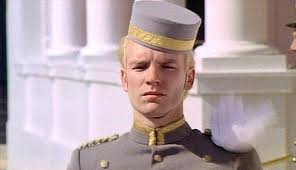
 The central idea of Quadrophenia is that of youth-led revolution. The mods were the first genuinely post-war teenagers; having no real attachment to the world or values of their parents, they saw no reason to accept the old way of life. The scenes of the Brighton riots are edgy and visceral, showing the gang mentality of both mods and rockers, and the cluelessness of the police who simply don't know how to respond t to a generation that doesn't care. When the magistrate orders him to pay a fine, the Ace Face (played unconvincingly by Sting) responds by getting out his chequebook, causing the whole court to erupt with laughter.
 But rather than simply glorify the mods, Quadrophenia highlights the dangers of identifying with such a culture too closely. Just as The Who only became truly successful after the mods died away, so Jimmy only gets to see 'the real me' when the scales have fallen from his eyes. Having been thrown out of home, jilted by Lesley Ash and his prized scooter wrecked by a lorry, he decides to return to Brighton. After a drug-fuelled train journey ("out of my brain on the 5:15"), he finds the mods gone and the Ace Face working as a bell boy at the hotel they smashed up. Alienated and depressed, Jimmy throws Ace's scooter off Beachy Head. The scooter, like the mods, is smashed beyond repair, while the fate of Jimmy remains unknown.
 There are a number of flaws with Quadrophenia. Despite the impressive choreography during the riots, Franc Roddam's direction is not great - the choice of camera angles is rather jobbing and the sequence on the cliffs could have used a couple of big edits. The first hour feels padded out, taking too long to get to Brighton and dragging narratively: there are only so many parties, bars and cafes we need to visit to understand how mod culture works. One scene in particular, of Jimmy and his friends raiding a pharmacy, wanders rather too close to Animal House in its jokes about pills and condoms.
 Like so many cult films, Quadrophenia is rough around the edges and approaches its subject matter in a manner which is not entirely successful. But as an examination of mod culture it manages to be comprehensive and genuine without totally falling in love with its subject, and it manages to do justice to the album, albeit in a roundabout way. Though Russell is by far the better director, this work had dated much better than Tommy, and it remains a highly influential work of 1970s cinema.
Rating: 4/5
Verdict: A rough-and-ready cult classic
Amazing Journey: The Story of The Who (UK, 2007)
Directed by Murray Lerner & Paul Crowder
Starring Roger Daltrey, Pete Townshend, John Entwistle, Keith Moon
Like any kind of biographical project, rock documentaries have the potential to be nothing more than exercises in ego inflation. When The Who's first film, The Kids Are Alright was released, Roger Daltrey sold it on the basis that it made the band look like "complete idiots", commenting that The Song Remains The Same was made "for the sole purpose of making Robert Plant's dick look big."
Amazing Journey is a natural companion to The Kids Are Alright, covering much of the same ground in a more detailed and serene manner, as well as providing some much-needed coverage of the band's activity after the death of Keith Moon. It is the weaker and less engaging of the two films, but newcomers to the band will find much that is engrossing or entertaining, while existing fans can revel in all the new footage on offer. When making a documentary about a famous band, it would be very easy to just regurgitate all the most famous anecdotes, intercut with their greatest hits. And considering all the things Keith Moon did in his life, you could have filled up the two hours with an exhaustive list of every last prank. But Amazing Journey rarely falls into this trap, and when it does approach stories of cars being driven into swimming pools or drum kits being blown up, it makes some effort to clarify the facts rather than just revelling in the myth.
 The film is very well-researched, drawing on a variety of sources to tell the story of The Who. Alongside a series of interviews with surviving members Roger Daltrey and Pete Townshend, there is footage of the band's TV appearances, live performances at Charlton and Kilburn (which featured in The Kids Are Alright), and various clips from their promotional videos and forays into filmmaking. In certain sections animation is employed - for instance, the cover art of A Quick One is animated while Townshend's mini-opera is discussed.
 The most interesting section of the film, for both fans and newcomers, is the opening section up until the arrival of Keith Moon in early-1964. This section explores the genesis of The Who's unique sound, describing the musical landscape of 1950s Britain and the young musicians' relationship with London skiffle and American blues. It may be a cliché to describe life in 1950s Britain as being in black-and-white, and to set the scene by showing footage of bombed buildings. But through this section you come to understand the band's initial fire and fury, and how much of their music was a reaction against 1950s culture, both musically and socially.
 One of the coups of the film is the 8 minutes of footage of the band, then called The High Numbers, performing at the Railway Hotel in London in 1964. This footage is interesting both for its rarity and for capturing the band on the brink of finding their own sound and thereafter success. Daltrey is still singing blues covers in a style somewhere between Lonnie Donnegan and John Lee Hooker, but all the other ingredients are beginning to come through: Moon's exuberant drumming, Townshend's jagged power chords and John Entwistle's complex, jazzy bass lines.
 Amazing Journey is far from a po-faced affair, with plenty of laugh-out-loud moments to keep us entertained. It's hard not to chuckle when John Entwistle likens their label-mate Jimmy Hendrix, or Pete Townshend impersonates the Beach Boys with equal amounts of playfulness and vitriol. And then there is the montage of Moon's various incarnations, ranging from a pirate to an SS officer and a Dickensian money-keeper.
There is also a lot of self-deprecation on the part of Townshend and Daltrey. While the former occasionally covers himself in glory, describing himself as "on the edge of things" and calling Quadrophenia "magnificent" (which it is), Daltrey is much more understated and welcoming. His posture throughout interviews is downbeat, frequently holding his hands near his face and at points being close to tears. He's not asking for sympathy, but nor is he reigning himself in to play to his stereotype of being the band's hard man. This sense of self-deprecation helps to partially mitigate one of the problems of Amazing Journey, namely the chumminess of its outside contributors. The film features contributions from The Edge, Noel Gallagher, Eddie Vedder and Sting, all of whom makes no bones about their adulation of the band and its influence on their own music. Some of them have direct connections with the band - Sting played the Ace Face in Quadrophenia and Gallagher performed with them in 2000. But for all The Edge's knowledge of 1960s music, he doesn't have a lot to contribute, and Vedder frequently resorts to platitude to praise his heroes.
 There are other problems too. Firstly, there is the question of whether or not it is cinematic; the film had a very short theatrical release before being released as a 2-disc DVD set. It may be a consequence of seeing the same clips being endlessly repeated in TV documentaries, but portions of Amazing Journey do feel like they are more at home on the small screen. The directors use an interesting device to get around this, namely structuring the film like a double album; the film stops to turn the record over, and the footage occasionally skips and distorts like sound on a scratched LP. But about halfway through this device is phased out and the niggling feeling remains in your mind.
From a fan's point of view, the film does begin to canter through the history after 1975. It treats the later works and the gaps between reunions rather more brusquely, when in fact there is some interest in exploring the various behaviours of the band outside The Who. We get a mention of Moon's drunken exploits in 1974, but it completely glosses over his fledging film career and the band's various solo efforts. You can understand the filmmakers wanting to keep the running time down, and the need for the film to play to a mainstream audience, but long-time fans of the band will still feel like this was a missed opportunity. The overarching problem with Amazing Journey, however, is that it is a little too civilised for its own good. It doesn't have the raw, shambolic energy of The Kids Are Alright, so that even in the bits which are laugh-out-loud funny, or which feature Townshend being outrageous, it feels a little too reigned in to properly capture the atmosphere of the band. There is an argument for shooting in a more serene style, since some of the band's energy has waned and both surviving members are a lot older and wiser. But the recent footage of the band touring Endless Wire throws the former claim into question, so that while the film is engrossing it is also frustrating.
 Amazing Journey: The Story of The Who is a well-made and informative attempt to catalogue the highs and lows of one of the world's greatest rock bands. The sheer amount of archive material gives it a comprehensive feel, and as an introduction to the band it is very accessible and entertaining. But long-time fans of the band may be disappointed in places, both in the lack of coverage post-1982 and in the calmer style of presentation. It's good but not great, and definitely not The Kids Are Alright.
Rating: 3.5/5
Verdict: A good introduction to a great band


