

Reflections
-
It is weird to read my correspondences from the late August/early September
period, being the time of transition between my old function in life to my
new ...
14 years ago
The Eagle (UK/ USA, 2011)
Directed by Kevin Macdonald
Starring Channing Tatum, Jamie Bell, Donald Sutherland, Mark Strong
When Gladiator reinvigorated the swords-and-sandals epic, it was quickly followed by a host of films which sought to replicate its success by imitating part or all of its formula. But whatever the qualities of Troy, Alexander or even 300, there was always a niggling sense that we were getting something inherently inferior. Adding to this list of disappointments is The Eagle, the first big hiccup in Kevin Macdonald's career.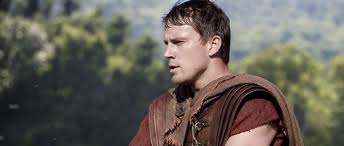 The Eagle's relationship to Gladiator is uncomfortably close right from the start. In the opening act, before Channing Tatum journeys over Hadrian's Wall, the film invokes or restages several key images from Ridley Scott's masterpiece, such as Marcus praying to the gods through smoke or laying out little figurines of his family. The first battle sequence is like the opening battle in Gladiator, only shot on a smaller scale and without a tripod. Last but not least, the central character is a soldier haunted by what has happened to his family, in this case the shame surrounding his father.
 There are other prominent references in the film which become all too apparent as the action plays out. The ending, where Marcus and Esca are pursued across the Scottish landscape by the Seal People, is very close to The Fellowship of the Ring. They are two small, vulnerable people being pursued by the 2nd-century equivalent of the uruk-hai, and Justine Wright's editing is very similar to those sequences. Even the sound design treads close to The Lord of the Rings, with the death throes of Marcus' horse sounding awfully similar to those of the cave troll.
 The crucial problem with The Eagle is that it fails to do what Gladiator did so well - namely balancing the macho and the metaphysical. Scott's film began and ended in the Elysian fields: its intense and often brutal battle scenes (including the fist-fight between Maximus and Commodus) were anchored around an exploration of politics, religion, gender and mortality. The Eagle doesn't have any such weight to carry around and its presentation is much more erratic: it amounts to lots of walking, then a battle, repeated a few times, with the odd little twist or idea thrown in along the way.
 A further comparison, this time with Scott's most recent effort, will help to shed further light on Macdonald's shortcomings. The central problem with Robin Hood was that it didn't know exactly what it wanted to be - a Batman Begins-like origin story, a political drama about working-class emancipation, or a bombastic action movie with pantomime villains. But even in the midst of making up its mind, Robin Hood did at least manage to tackle the political side of its story, albeit superficially.
 The Eagle has the opposite problem. It knows exactly what it wants to be, which is a very old-fashioned romp (and I use the term loosely) with characters which are all too clearly drawn and a fairly predictable storyline. Rosemary Sutcliff's novel, which had previously been adapted for Children's Hour in the 1950s, draws the battle lines between good and evil all too broadly, placing honour and valour over common sense and character development. Even when it's trying to subvert the central relationship between master and slave during the encounter with the Seal People, it still feels blinkered and obstinate as to where your loyalties should lie and to what extent.
 Whereas the novel was originally intended for children (more specifically young boys), there are numerous sequences in The Eagle which are unsuitable for younger audiences. For a 12 certificate film, it is pretty gruesome, with more than one instance of beheading and a fair amount of blood on screen. That said, you don't have to sit through all the really troubling stuff, like people's throats being slit (including a child's throat in one scene towards the end). And most of the time the battle scenes are so frenetic and rapidly edited that you can't exactly tell where people are getting hit, or with what - or, for that matter, why.
 The film is shot by Anthony Dod Mantle, whose credits include the Oscar-winning Slumdog Millionaire and Lars von Trier's controversial Antichrist. Dod Mantle is a pioneer of handheld digital photography, and he does add a number of notable visual touches which make The Eagle a little more distinctive. The opening shot on the river is like one of the woodland scenes in Antichrist: there is a similar sense of mystery in the wild surroundings of nature, albeit with less demonic threat. And some of his compositions are clever, such as showing characters' faces through water which is already reflecting the sky.
 But despite Dod Mantle's knowledge and expertise, the use of hand-held camera is inconsistent and ends up being detrimental. Notwithstanding the shortcomings of the battle scenes, the quieter sections find Macdonald's camera juddering and bouncing when the scene would be better served with a dolly or crane. Like the opening of The Bourne Supremacy, it takes a while for us to adjust to the aesthetic, and for the action to catch up with the frenetic camerawork. But whereas Paul Greengrass' film eventually got into its stride, The Eagle remains dodgy throughout, with Dod Mantle's camerawork hampering Macdonald's already lacklustre direction.
 What makes The Eagle so lacklustre is the lack of strong, charismatic performances. This is surprising considering Macdonald's back catalogue, which includes Forest Whittaker's terrifying performance as Idi Amin in The Last King of Scotland. Jamie Bell remains a decent actor with a certain amount of screen presence, and Mark Strong makes the most of a small supporting role. But all their best efforts are in vain due to Channing Tatum, who has the charisma and acting ability of a lump of granite.
 Because the film has no strong, charismatic protagonist, we aren't drawn into the story enough to make the substance feel intriguing. There is a couple of interesting ideas explored in The Eagle which are both interesting from a genre point of view and pertinent to 21st-century politics. One of these is the inherent instability of a conquering power, and the imperial force having to isolate an enemy rather than face it down and exterminate it. The very existence of Hadrian's Wall, as an imposed, artificial barrier between 'savage' and 'civilised', indicates that the occupying force is based upon fear, both in its methods of conquering and its view of other civilisations.
 When Marcus encounters the Seal People, he is confronted with a culture which operates along the same tribal lines as his own. There is a clear distinction made between Roman and Briton, observed in everything from speech patterns to physical features: there is a running comment about Roman soldiers being recognised by a helmet scar under their chin. Having spent all his life as part of the 'superior race', Marcus is forced into silence and submission as the master-slave relationship is reversed. Esca, meanwhile, is torn between his desire for vengeance against Rome and his professed loyalty to Marcus for sparing his life at the games.
 These are interesting ideas in and of themselves, but the film's structure never allows them to be explored in a satisfying amount of detail. More often than not The Eagle relies earnestly on genre expectations to sustain its appeal, giving us spectacle and plot devices but not much in the way of emotional engagement. The search for the missing roman standard, the eagle of the title, becomes almost secondary to the characters' endless wanderings, and the epilogue of them returning it to the senators is silly and clichéd.
 The Eagle is a big disappointment from Macdonald, failing as both a romp and a means of exploring interesting ideas within a genre. It's not without substance or individual scenes which are visually arresting: it's a better story than 300 and the battle scenes will just about satisfy teenage boys. But for those of us who want to think a little harder, it falls short of most of the marks set for it, never threatening Gladiator's mantle as the great historical epic of our time.
Rating:
Verdict: Macdonald's first real disappointment
Burke and Hare (UK, 2010)
Directed by John Landis
Starring Simon Pegg, Andy Serkis, Isla Fisher, Tom Wilkinson
Twelve years is a long time in filmmaking, and there are few directors who have recovered from such a prolonged absence. Even the late great Stanley Kubrick dropped the ball very slightly with Eyes Wide Shut. And considering the last few films that John Landis has made - The Stupids, Blues Brothers 2000 and Susan's Plan - there will be a great many people who would wish him to extend his 'retirement'. I say 'retirement', for in reality Landis has never gone away. He may not have made a feature film since 1998, but the most excitable director in American cinema has been very busy behind the scenes. On top of his TV work and a host of blink-and-you'll-miss-him cameos, Landis has spent his time re-mastering his classic works and directing commercials with his fees going to various charities. Like John Carpenter, Landis had become disillusioned with modern Hollywood and its obsession with marketing and opening weekends. He was offered several films during his hiatus, and turned them all because the scripts were just not up to snuff (no pun intended).
It's therefore no surprise that Burke and Hare sees Landis returning to his darkly comic roots. It's a film made exactly the way he wanted it, drawing on both the anarchy of his early comedies and his love of gothic horror and Ealing Studios. The result is a very funny comedy which is a million miles from the sacrilege of Blues Brothers 2000 or the banality of Beverley Hills Cop III. It isn't quite up there with his best work, but it is a very welcome return to form. Burke and Hare is essentially an old-fashioned Ealing comedy in the tradition of The Ladykillers and Kind Hearts and Coronets. This means dark humour, grotesque characters, and a central story about individuals doing questionable things to earn a crust, usually involving murder. Unlike the recent St. Trinian's reboots, Burke and Hare is not exploiting the Ealing label in a bid to bring in a wider audience; both its premise and execution are rooted in this 1950s tradition, and the film is knowingly affectionate towards these works.
Although the film is backed by Ealing Studios, its weaknesses smack of Hollywood's desire to be economical with the truth. Both director and main stars have referred to this as a 'Regency' film, when in fact by 1828 George IV had been on the throne for eight years; being of sound mind and having no heir, there was nothing to be Regent of. When characters speak of 'the King' or 'His Majesty', it's easy to think they're not sure to which king they are referring. Likewise there is the matter of accents. The film is accurate in giving the lead characters Irish accents, since Burke and Hare were Irish immigrants who had recently arrived in Edinburgh. But Landis apparently coached Simon Pegg and Andy Serkis by showing them Darby O'Gill and the Little People, a mid-1970s Disney offering notable for its farcical accents and Sean Connery singing (shudders). Their accents might not wander from country to country like Russell Crowe's accent in Robin Hood, but they are comedy accents in a way that might seem retrograde.
But to gripe about these things for too long is to miss the point. The film freely admits to play fast and loose with the truth, and there are certain details about the story of Burke and Hare which Landis gets right. Other versions of the story uprooted the characters to Victorian England, for the simple reason that there is an abundance of Victorian locations in which to shoot. Most of the shooting was done on location in Edinburgh, with the only set being the interior of the prison in the last ten minutes. The film also redresses the popular myth that Burke and Hare were body-snatchers or grave-robbers; they were something far more ingenious and entrepreneurial (if murder can be so described). Like his underrated comedy Into The Night, Burke and Hare is at heart a light-hearted, raucous romp with Landis' tongue firmly in his cheek. What he brings to the table is his not just his expertise when it comes to comic timing or staging set-pieces, but his love of mixing the gruesome with the hilarious. This is not a horror comedy in the manner of American Werewolf, but a lot of the jokes are designed to make you squirm in your seats, laughing out loud as the bones crack and the blood runs.
The film begins with Tim Curry, putting on a ripe performance as an old-school anatomist, conducting a vivisection. He slices through a man's leg, causing blood to spray all over his students, and gleefully remarks, "that would be an artery!". Then there is the sight of 'old Donald' 'lying' on Dr. Knox's table, having been folded in half to get him into a barrel. There are other, drier moments, such as Burke pretending to be William Wordsworth to get into a club, and Hare's comments about women "costing an arm and a leg".7 Burke and Hare is also visually impressive. The film is shot by John Mathieson, who has worked extensively with Ridley Scott since Gladiator. He captures the dark gothic quality of Edinburgh's streets, bringing a very Hammer-esque quality to the smoke-ridden passages through which drunken, lardy gentleman would wander to their doom. The film could almost be described as an affectionate parody of Hammer, combining stylish visuals with a modern, earthy sense of humour. This is supported by a brief cameo from Christopher Lee, who appears as a delirious soldier whom Burke and Hare ease into the next world (by sitting on him).
 This brings us nicely onto the issue of cameos. In the past Landis' desire to pack the screen with his best friends has often been distracting; in the second half of Into The Night, they pop up with such alarming frequency that we start to lose sight of the story. Here his choice of cameos is much more restrained and apposite; we still get old friends like Jenny Agutter turning up, but Landis times their appearances to perfection. In addition to Agutter's appearance as a hammy actress (knowing laugh), the best bit parts are Paul Whitehouse's drunken Scot, who survives being pushed down a hundred flights of stairs, and Michael Winner, who goes over a cliff in a stagecoach without so much as a "calm down dear!".
This restraint is what makes Burke and Hare so enjoyable, since it demonstrates that Landis has matured as a filmmaker. Most of the indulgences which marked his career after Into The Night have gone, as has his appetite for gratuitous nudity. Although both Isla Fisher and Jessica Hynes play bawdy, sensual roles, neither character is a bolt-on designed to bring in the lads' mag audience. Both characters end up as fleshed-out, ambitious, independent women, so that even during the sex scenes it doesn't feel like the plot is grinding to a halt to titillate teenagers. The film also deserves credit for addressing the moral issues surrounding Burke and Hare, rather than just playing out the story like Carry on Murdering. There is an interesting subplot involving an all-female production of Macbeth; while superficially a construct to bring Pegg and Fisher together, it is worked into the story very well. Pegg talks about Macbeth's internal struggle between good and evil, and his motivation lying ultimately in a desire to be loved. This and Dr. Knox's attempt to map the human body through photography tap into the central dilemma of their story. What Burke and Hare did was morally wrong, but does that make them vile people? And in the long term, were their gruesome killings strangely justified due to the advances in medicine?
 Burke and Hare is a welcome return for John Landis, both to the big screen and to form. The film succeeds as a comedy, with great jokes and great chemistry between Simon Pegg and Andy Serkis. Tom Wilkinson and Tim Curry relish their roles as the rivalling doctors, and Ronnie Corbett is very enjoyable as the head of the Militia. It may be old-fashioned and rough around the edges; certainly it's not up there with Trading Places or An American Werewolf in London. But it remains Landis' best work since Into the Night and could be the ideal starting point for a full-scale comeback.
Rating: 4/5
Verdict: A good old-fashioned return to form
Robin Hood (USA, 2010)
Directed by Ridley Scott
Starring Russell Crowe, Cate Blanchett, Mark Strong, Max von Sydow
There's only so many times you can put 'from the director of Gladiator' on a poster before the brand begins to get tarnished. Having previously left us underwhelmed with Kingdom of Heaven, Ridley Scott returns to the world of epic warfare with a revisionist prequel-of-sorts in Robin Hood. But though much of his talent and creativity remains on screen, this is a disappointing film, which fails to marry action and drama half as well as in Scott's previous ventures. Having been such a trailblazer in his early years, Scott is increasingly a 'bandwagon director', following film trends rather than making them. And there is much about his version of Robin Hood which we have seen done before and better. The film is a sister project of Kingdom of Heaven because of its setting around the Crusades and its prominent attempt to combine high politics with intimate drama. For all the problems with Kingdom of Heaven, it does hang together as a political thesis which (in its director's cut at least) makes an alternative view of history very accessible.
There is much less of this coherency in Robin Hood, something which could be attributed to the film's troubled production. The film was originally titled Nottingham, with the story focussing on a love triangle between Robin, Marian and the eponymous Sheriff. But over a two-year period the script was re-written, shifting the narrative onto one of Robin starting as the Sheriff before becoming an outlaw. It was not until 2008 that Scott opted for a more conventional viewpoint and brought in Brian Helgeland to do further re-writes. The result is like a mediaevalist Batman Begins, but without the singular focus on narrative and characters which made Christopher Nolan's film so superb. The opening 45 minutes are all over the place, being chaotically shot and feeling hurried. In Gladiator, the opening battle scene was a fantastic way to throw audiences straight into the story; by getting thrust into very dangerous circumstances, you had no choice but to choose your side and pray that your characters would survive. As a piece of choreography, the opening of Robin Hood is still impressive; there are very few directors who can structure on-screen battles so well. But the shooting style is much more incoherent, with many 'shaky-camera' close-ups which make the experience less involving.
Aside from its sub-Bourne camerawork, there are other aspects of Robin Hood's visual style which seem derivative. The cinematography is by and large good: John Mathieson, who also shot Gladiator and Kingdom of Heaven, bathes the landscape in earthy greens and browns and brings out the faded, greying look of the swords and chainmail. But many of Scott's compositions feel like direct copies of other films, something which you don't expect from such a talented director. The death of Robert Locksley in the woods closely resembles the death of Boromir in The Fellowship of the Ring, and the huge volley of arrows in the final battle is a direct lift from Zhang Zimou's Hero. On top of the visual difficulties, the central performances are not completely watertight. Crowe has already demonstrated in A Good Year that his English accent isn't great, but here it wanders from Ireland to Yorkshire via the Scottish borders, changing almost take by take. There are occasions when he gets it right, with the kind of neutral, growling bass which served him well in both Gladiator and Master and Commander. But most of the time its inconsistency distracts us and prevents us from bonding with his character.
Cate Blanchett is a little better, but even she can't quite decide how she should sound. Most of the time her Maid Marian is very regal, being all clipped consonants and long vowels, as in Elizabeth. But when we first meet her, she slips into an earthy brogue, which sits easier than Crowe's but not by much. Ridley does however make better voice choices with the supporting cast, with Mark Addy turning in a good performance as Friar Tuck and Scott Grimes' Welsh accent bringing a new side to Will Scarlett. There is also a fleeting but memorable performance by Simon McBurney, best known as the ex-pat tailor in The Last King of Scotland. Having started without much promise, the film really picks up in the middle third as it starts to tackle the complex political issues of the day. The story becomes less about Robin as a potential icon and more about the conflicts going on both within England and without it. Within England, we have a discontented lower class who feel no loyalty to the newly crowned king and are not prepared to be bled dry by taxation. Without, we have King John's desire for a divorce so he may lay claim to the Spanish throne, and a plot by Mark Strong's Godfrey to set the barons against the King so that the French army may invade.
This is where the idea of revisionist history works best. It completely dispels the myth of mediaeval England as one of ignorant serfs at the mercy of an all-powerful king. John is sinister and darkly charismatic, but he is also weak; there is a through-line between him and Commodus, since both are motivated to some extent by a desperate craving for affection. But John's is not the only reputation called into question; King Richard is challenged when he asks his soldiers whether their crusades will bring them reward in heaven. Billy Bragg was employed as an historical advisor on the film, which makes prominent reference to both the Magna Carta and the Forest Charter. It becomes a film about a people struggling for some kind of personal liberty and constitutional rights (although such terms are of course anachronistic). This is also the section of the film in which the light-hearted elements come together and work well. Alongside the serious scenes of plot and intrigue, we have the bawdy humour of the Nottingham peasants and the comic interplay between Robin and Marian. The story of these two pretending to be husband and wife and then actually falling in love seems like a natural continuation; their relationship reads like a happier version of The Return of Martin Guerre. Plus there are very few people who won't raise a smile during the ambush scene in the woods.
Towards the end, however, Robin Hood slips back into rather nonsensical action. In the final battle on the beach, we get one ridiculous image after another, and the use of slow-mo is a bad reminder of Braveheart. After Marian arrives at the battle in disguise, we get more blatant Lord of the Rings rip-offs as the camera follows the arrow that will kill Godfrey. Even if we accept that the English would somehow know on which beach the French would invade, it's fairly certain they wouldn't have to contend with the landing craft from Saving Private Ryan. Robin Hood is an interesting but heavily flawed attempt to retell a popular legend. It is not without substance, or moments of cohesion, but it can never really make up its mind as to how substantial or cohesive it wants to be. Its prominent desire to tackle complex issues makes it too serious-minded to be a fun romp, and the loose feeling of both the beginning and end make it hard to take everything seriously. It is one of the better adaptations of Robin Hood, being funnier than Men in Tights and a lot less po-faced than Prince of Thieves. But for a film of this scale, with people of this calibre, that's not a spectacular achievement.
Rating: 2.5/5
Verdict: Occassional brilliance amidst frequent disappointment


