


Reflections
-
It is weird to read my correspondences from the late August/early September
period, being the time of transition between my old function in life to my
new ...
14 years ago
The Adventures of Tintin: The Secret of the Unicorn (USA, 2011)
Directed by Steven Spielberg
Starring Jamie Bell, Andy Serkis, Daniel Craig, Simon Pegg
Because of the high regard in which Tintin is held around the world, it's fair to assume that any film adaptation would fall short of the mark in some way, shape or form. For all the charm and appeal of past adaptations, in film, TV and on the stage, none of them have truly captured the magic and intrigue of Hergé's iconic hero. With this in mind, Steven Spielberg and Peter Jackson have delivered a film of real brio and excitement which, while by no means definitive, is definitely worth your time. While the marriage between Spielberg directing and Jackson producing seems like a match made in heaven, both have been guilty recently of falling short of the mark - Spielberg with the unremarkable Indy 4, and Jackson with his misjudged take on The Lovely Bones. Likewise, it is not safe to assume that their combined affection for the source material will translate into a brilliant adaptation. Tim Burton has long professed his love for Alice in Wonderland, but when he finally got the chance to express said love, he came a cropper.
 Fittingly enough, the film begins with some Burton-esque opening credits, in which we are gradually introduced to the Tintin universe while the various names fly past. The opening animation gleefully replicates the feel of the comics, drawing on the plot of The Seven Crystal Balls and capturing every detail, right down to the drawn-on gasps. It has the same playful feel as the Pink Panther opening credits, and goes some way to both setting the scene and reassuring the fans that they are in safe hands.
 It is also a relief that Spielberg and Jackson's big creative decision quickly pays off (and no, I don't mean the 3D). The Adventures of Tintin was shot entirely in motion capture, with post-production taking nearly a year to accurately re-create the comics. The technology as employed here is the best it's ever been at capturing people: it is incredibly photorealistic but lacks the eerie, dead-eyed quality of Robert Zemeckis' efforts. As a side point, digital animation has a habit of making characters seem ballooned and bloated, which suits Haddock and the two detectives rather well.
 When War of the Worlds was released in 2005, Terry Gilliam remarked that Spielberg was a man who "makes brilliant scenes but can't make a movie anymore." Regardless of one's views on War of the Worlds (it's better than the original), it is undoubtedly true that the highlights of Tintin are the set-pieces. Of course, set-pieces in and of themselves do not make for a gripping piece of narrative. But to dismiss Spielberg and Jackson's expertise in this area is to do both of them a great disservice.
 The set-pieces in The Adventures of Tintin are consistently inventive and exciting. The pirate battle, which is told by Haddock in flashback, finds two ships getting locked by their masts at right angles during a storm; people are running up and down the various riggings with fire, water and gunfire all around them. It kicks all four Pirates of the Caribbean films into a cocked three-cornered hat, and reminds you of the classic pirate and swashbuckling films of old-school Hollywood.
 Equally spectacular is the city chase, in which the three scrolls containing the location of the treasure change hands on multiple occasions. During this ten-minute sequence, Tintin and Haddock chase the bad guys in a jeep, one of whom has a hawk carrying the scrolls. At one point Tintin's bike breaks in half and he uses the front-wheel as a zipwire to slide down a telegraph line and capture the scrolls. In another moment, he is literally hanging onto the hawk as it fights to stay in the air. While all this is going on, a tank careers into a hotel and starts rolling down a street with the hotel attached. It finally comes to a halt right on the sea front, and the owner comes out and adds another star to its rating - a witty pay-off that could only have come from the man who gave us Indiana Jones.
 Set-pieces like this are thrillingly executed, and leave the ten-year-old boy in me screaming "Wow!". But there is a side-effect to all the comparisons with Indy. The more the similarities keep stacking up, the more you wish that Spielberg could have gone back and simply filmed them for real. Most of the stunts I have listed would have looked amazing in real life and could be achieved without much in the way of CGI. Seeing it animated, especially in motion capture, deprives us of that raw physical thrill that we got from Indy, so that while the film as a whole is more exciting than Indy 4, it's a lot less endearing than the original trilogy.
 And it's not just Indy that Spielberg is tipping his fedora to in this film. There are multiple big references to Jaws: the first comes in the shark falling from the ceiling on board the ship, and the second with Tintin's quiff bobbing above water like a shark's fin as he sneaks up on the plane he downed with a pistol. References like this produce knowing laughs and are in a sense reassuring: we are definitely getting Spielberg in proper popcorn mode, whether by choice or through Jackson's gentle persuasion.
 More problematic than the Indy resemblances is the story itself. The film combines the narratives of three of the books - The Secret of the Unicorn, Red Rackham's Treasure and The Crab with the Golden Claws. There is some reasoning behind this, since many of the Tintin stories are quite short and self-contained. This is one reason why the series worked up to a point on TV and especially well on radio (regardless of Andy Serkis' best efforts, Leo McKern remains the definitive Haddock).
 Despite the assured writing talents of Edgar Wright and Steven Moffatt, The Adventures of Tintin's story is decidedly stodgy. It takes a good twenty minutes for the film to get into gear, not from adjusting to the visuals but from getting used to the massively expository tone. Combining three stories together means that plot points are merged and mashed together awkwardly, causing us to miss out on great moments and characters. There is no room for Professor Calculus, Max Bird or the sunken submarine. Leaving out the latter makes us question why it wasn't enough to do Unicorn and Rackham together, turning a two-part story into 90 minutes.
 The supporting characters in the film are enjoyable but all a little slim. Thomson and Thompson (Nick Frost and Simon Pegg) are quite funny in all their little scenes, but their limited role in the search for treasure leaves us wondering why they keep turning up at all. Bianca Castafiore, the opera singer whom Haddock despises, only turns up very briefly, and the film almost misses the big gag that she can't actually sing. Worst of all is Snowy: while physically expressive, he doesn't get to 'talk' or impart much of his inner thoughts to the audience. In the absence of a 'talking' Snowy, you need a stronger third character, like Professor Calculus, to complete the triangle.
 There seems to be a trend in modern screenwriting to take a sideways view at stories which are good and hardy enough to be told straight. Even if Disney had been constantly sanitising his vision, Burton's Alice in Wonderland would have been a much better film if it had told the story as it has always been enjoyed. While there is no such possible contempt shown for Hergé, it is something that should be borne in mind for when Jackson comes to direct the sequel.
 The Adventures of Tintin: The Secret of the Unicorn is a decent and enjoyable romp, at least when viewed in 2D. Neither Spielberg or Jackson are firing on all cylinders - though the latter's involvement with The Hobbit is as good an excuse as you need. But that said it is more enjoyable than Indy 4, and perhaps the closest that Spielberg has come to matching the spirit of Indy in the last ten years of his career. In the end it's flawed but good fun, and it will be interesting to see where things go from here.
Rating:
Verdict: Spectacular but narratively stodgy
Jaws (USA, 1975)
Directed by Steven Spielberg
Starring Roy Scheider, Robert Shaw, Richard Dreyfuss, Lorraine Gray
When interviewed for Bravo's The 100 Scariest Movie Moments, Clive Barker commented that sometimes the best ideas of how to scare people are so seemingly obvious that we overlook them without realising. In hindsight it seems absurd that no-one ever considered making a horror film about sharks before. And after Steven Spielberg set the bar with Jaws, no-one would ever come close again. Jaws is Spielberg doing what he does best: pure popcorn entertainment, with a school of memorable scenes, cracking dialogue and substance trickling through in amongst the thrills and spills. What seems on the surface to be a one-trick film drawn out over two hours gradually emerges as something which is not only scary but very well-made, with characters which are intelligently drawn and action scenes which communicate the themes rather than feeling like awkward set-pieces.
 Like Star Wars after it, you could be forgiven for hating Jaws given the legacy it has left behind. Apart from the three inferior sequels and dozens of derivative knock-offs, it was the film which invented both the summer blockbuster and the high-concept movie -a film which you could sum up in 25 words or less, which would be translated by producers Don Simpson and Jerry Bruckheimer into the aggressive money-driven ethos of modern Hollywood.
 Jaws has been blamed for everything from the death of New Hollywood to the infantilisation of mainstream cinema, and that's not to mention the recent criticism of conservationists about falling shark numbers. But whatever one's attitude to Spielberg in light of his subsequent career choices, it's at best guesswork and at worst sour grapes to argue that he intended any of these things to happen. Had he gone the path of his colleague George Lucas, and milked his hit for everything it had, only then would it be fair to pose such questions.
 With this in mind we have to re-assess Jaws as nothing more than a piece of entertainment. And on that level, it's undeniably brilliant. In adapting Peter Benchley's potboiler, Spielberg quickly dispensed of the melodramatic subplots involving extramarital affairs and power struggles on Amity Island. On this occasion, it was best to quite literally cut to the chase, with the shark becoming the centrepiece and fear being the driving force.
Spielberg once described Jaws as an aquatic version of Duel, his made-for-TV film from four year earlier about a man being chased by a truck. The comparison is very close both in Spielberg's knack for creating tension and in the characterisation of the villain. Both the truck and the shark are irrational forces of nature: they have no backstory, no character origin and no discernable motivation other than a relentless desire to kill. As a further connection, the deaths of both truck and shark are overdubbed with the sound of Godzilla dying from the 1954 original - an indication of Spielberg's affinity for B-movies and that he understands that monster movies can have a deeper significance. As with Duel, it doesn't matter that the monster in Jaws doesn't make a lot of sense. There was and is precious little to suggest that sharks prey on humans for sport; more people die every year from falling coconuts than being eaten by sharks. But the film is not so much about killer sharks as it is about characters being confronted by an unstoppable force which they never faced before and cannot hope to understand. It could almost be called the father of Hallowe'en in its contrast of peaceful, boring middle-class life with a ruthless, blood-hungry predator.
 This contrast is best observed in the opening section of the film. Having given us a great early jump with the death of the skinny-dipper, Spielberg withholds the shark to build up the relationships between the townsfolk. We see Roy Scheider's sleepy world slowly descend into panic and really feel his frustration when the town council and the press ignore his demands about closing the beach. As the children enter the water to swim and the attack begins, the dramatic irony kicks in and what was once a perfectly ordinary and rational community is torn apart forever.
 Much has been written about the production problems which Spielberg faced on Jaws which meant he could not shoot as much of the shark as he wanted. Three full-scale mechanical sharks were built for the production, and all three regularly failed due to everything from short circuits to corroding skin and getting caught in seaweed. Such failures were one of the main reasons the film went so far over-schedule and over-budget: what started as a $4m movie shooting for 55 days ended up as a $9m movie that shot for 159 days.
 In the end, the problems with the shark were not merely serendipitous: they helped to create one of the defining features of the film. Because he could not show the monster as he wanted, Spielberg had to improvise with different techniques which could hint at what the shark was capable of doing. It's testament to his ability as a filmmaker that he could achieve so much threat and suspense from little more than a dorsal fin and a few barrels - enhanced by his use of the former to comedic effect early in the film. Through these techniques, the shark takes on a quality of amorphous evil whose only real equal at the time was Rover from The Prisoner.
But as before, Jaws is less about the shark than the characters reacting to it, and no matter how much of the action revolves around 'Bruce', we keep coming back to the people. In its second hour, where most of the action takes places on the Orca, we genuinely bond with this foolhardy trio and soak up all the conflicts within their personalities. Brody's determination to protect his family is contrasted by Quint's obsessive streak and Hooper's feeling of being - no pun intended - a fish out of water. As with The Sting, Robert Shaw dominates every scene that he is in. His accent may be a little harder to pin down this time, but his piercing intensity and unkempt manner give him unrivalled screen presence. Although much of his early lines are played for comedy, to set him up as a loose cannon against the uptight Brody and Hooper, he gradually takes on a more intense, obsessive quality which lead you to wonder whether or not the shark has driven him mad.
 The best scene in Jaws comes when the three men are sitting in the boat at night and Quint begins talking about the sinking of the USS Indianapolis. In a speech co-written by John Milius (who scripted Apocalypse Now), he talks about his experience with sharks in the same way that Colonel Kurtz talked about horror - as something to be somehow embraced and understood, even at the cost of one's sanity or soul. The dialogue in this section is reminiscent of Ernest Hemingway's work in The Old Man and the Sea, with man and nature locked in battle, both mentally and physically, while all around there is only silence.
 Jaws remains a high-water mark in Spielberg's career and in those of all the performers. It isn't as relentless as Hallowe'en in its ability to sustain fear, and Spielberg's work on the Indiana Jones series would eventually surpass it. But that is mere nit-picking in the face of a film of great craft and vision, a film which proves that simple entertainment can be smart and that, under the right circumstances, people enjoy being scared.
Rating:
Verdict: Pure and simple terror
The Man Who Knew Too Much (UK, 1934)
Directed by Alfred Hitchcock
Starring Leslie Banks, Edna Best, Peter Lorre, Nova Pilbeam
Where some directors reach a creative peak from which further innovation becomes impossible, Alfred Hitchcock was constantly developing as a filmmaker, pushing the limits of what he could achieve on screen. But while this has given us some of the most superbly crafted films ever made, it has the downside of making his early work rather uneven. The Man Who Knew Too Much, like Murder! before it, finds the master still finding himself, and for all its qualities it cannot be considered a classic. There is some natural interest in The Man Who Knew Too Much as the only film which Hitchcock ever remade. Our first thought would be that 'Hitch' was somehow dissatisfied with the results the first time around; he was, after all, working with very little money at the height of the studio system where producers held sway. But such levels of dissatisfaction with his other movies in this period never prompted him to remake any of them. For years he would express regret for the bomb going off in Sabotage, but he never contemplated building a new one to have another go.
Instead, the reason for the remake lies in Hitchcock's career-long emphasis on technique over content. The remake starring Jimmy Stewart and Doris Day differs greatly from the original, not because Hitch didn't like the original, but because he saw great potential in telling the same story with more money in a slightly different way. Just as the Indiana Jones series re-imagined the classic serials of the 1930s as they would have been had they actually had budgets, so the remake is Hitchcock paying tribute to the bits of the original that work and updating those that don't. In terms of its story, The Man Who Knew Too Much is a decent thriller about ordinary people being caught up in espionage. It is perhaps the first of Hitchcock's films to have the 'ordinary people' trope - a recurring theme of seemly unremarkable characters getting involved in matters beyond their prior knowledge or control. The opening section at the ski resort is shot in such a pleasant and charming manner that it doesn't feel like a contrived way of putting our protagonists in danger.
 There are a couple of memorable scenes in the 'detective' section of the film, with the characters snooping around for clues as to when the assassins are planning to strike or where they have hidden the girl. The first comes in the backstreet dentist's, where Leslie Banks confronts a dentist who works for the mob, anaesthetises him and then switches clothes so he can listen in on Peter Lorre's conversations. The other comes shortly afterwards in the church, where Banks and his companion pose as sun worshippers in a bid to find out what is going on.
Both of these examples are like warm-ups for The 39 Steps, and the two films also share a common theme of loyalty to one's country being in opposition with personal loyalties and the need to save one's own skin. When Banks' daughter is kidnapped, he is informed that if he says anything to the authorities he will never see her again. He and his wife are so distraught at the prospect of her being killed that they refuse to say anything to the man from the Foreign Office. When he retorts that "not caring about unknown men" effectively led to WWI, they simply ask him to leave. From a technical perspective, The Man Who Knew Too Much is a pretty solid effort. It doesn't have the stagey quality that Murder! did for much of its running time, and the production values are a lot higher. The wide shots are especially accomplished, particularly the clay-pigeon shooting at the beginning and the tense sequence in the Royal Albert Hall when the assassination is due to take place. The attempted assassination at the opera during The Godfather Part III closely resembles this scene, although in that case the assassin fails to make an attempt, rather than making an attempt that fails.
 In other areas, however, the film is not so technically sound. Whether due to poor technology at the time or the age of the print, the sound quality is quite bad, and this becomes particularly noticeable in the scenes at the Royal Albert Hall. Some of Hitch's editing choices are quite unusual, with characters' conversations being cut off before they seemed to have been properly resolved. And the cinematography is nothing remarkable: Curt Courrant would later shoot Jean Renoir's La Bete Humaine, but here he seems to be phoning it in with fairly standard contrasts and compositions.
 The film fares much better in its performances. At the time of filming Peter Lorre could barely speak English: he learned all his lines phonetically, picking up bits and pieces from the crew between takes. Despite the language barrier his characterisation is great, creating a villain who has a childlike, almost babyish quality while also being ruthless, intolerant and deaf to any form of mercy. Drawing on his earlier performance in Fritz Lang's M, he creates a villainous archetype which can be seen in everything from Richard Attenborough's Pinkie Brown in Brighton Rock to Ron Lacey's sadistic Gestapo in Raiders of the Lost Ark.
 The performances around Lorre are also pretty solid. Nova Pilbeam was only 15 when filming began but she does very well with so little screen time. Her career crossed paths with Hitchcock twice more, as she was considered first for Margaret Lockwood's role in The Lady Vanishes and later for Joan Fontaine's part in Rebecca. Leslie Banks and Edna Best make a convincing couple, balancing fear and trepidation with some level of resourcefulness, whether it's spying or using a gun. And George Curzon makes the best he can of the sidekick Gibson, with his role being the bumbling Watson to Banks' Sherlock Holmes.
 The big problem of The Man Who Knew Too Much lies, ironically enough, in its suspense. Because it reveals its hand so early on, there is far less in the way of intrigue or tension than there might have been or could have been from such a story. The film is one of Hitchcock's shortest features at only 75 minutes long, and if it were being made today its plot would barely stretch to an hour-long episode of Poirot.
The source of this problem is in the lack of another Hitchcockian trope, the McGuffin. Once it is clear that Abbott is plotting an assassination, there is nothing for the action to hide behind: it becomes more or less a case of watching all the pieces fit together and letting the set-pieces do the rest. There's still the pleasure of seeing the story being resolved without any plot holes or ridiculous twists, but it doesn't have the climactic thrill we have come to expect from Hitchcock. In The 39 Steps, the final confrontation between Richard Hannay and the spies was built up successfully through increasingly elaborate set-pieces, so that by the time we reached the final scene it carried some form of emotional significance rather than just bringing the story to a close. But on this occasion, the big climax - a shootout between assassins and police - feels tacked-on and somewhat shapeless. Rather than building bit by bit, it goes on for a certain amount of time until Hitch sees fit for some of the bullets to hit their targets, and Lorre dies in a way which seems underwhelming for such a memorable character.
 The Man Who Knew Too Much is a solid, jobbing effort from Hitchcock on a par with his earlier work in Murder!. It's nothing to write home about in terms of its story or execution, and like much of Hitch's earlier films it has not stood the test of time all that well. But there is just about enough in the quality of the performances and aspects of its technical execution to pass muster for a decent, if forgettable, evening's entertainment.
Rating:
Verdict: Solid but slightly forgettable
The Boys from Brazil (USA, 1978)
Directed by Franklin J. Schaffner
Starring Gregory Peck, Laurence Olivier, James Mason, Jeremy Black
From the sadistic Amon Goeth in Schindler's List to the pantomime Gestapo in Raiders of the Lost Ark, Nazis have consistently proven themselves to be Hollywood's most reliable villains. The costumes, accents and mannerisms are so easy to recognise and replicate that a wide range of characters can be created. Nazis on film can be cold, ruthless and heartless, or scenery-chewing cannon fodder - the enemies of democracy, or something more playful and harmless. Coming three years before Raiders, The Boys from Brazil attempts to have the best of both worlds. It attempts to explore serious ideas about history repeating itself and the dangers of scientific progress, within the confines of a pulpy plot and a great deal of hammy acting. In the end it does veer sharply towards the silly end of things, but even if it can't compete with Steven Spielberg, there is still much to cherish and enjoy.
 Considering the context in which it was made, it's fair to assume that The Boys from Brazil carried a great deal more weight than would appear immediately obvious. Coming only 16 years after the capture of Adolf Eichmann, it was still faintly credible to believe that there were dozens of ex-Nazis hiding out in South America, harbouring bitterness and plotting to 'put things right'. Likewise this was nearly 20 years before Dolly the Sheep was created; cloning was still the stuff of science fiction, and the lack of palpable examples in nature made the prospect of a Fourth Reich all the more terrifying.
 This feeling of weight is compounded by the talent on both sides of the camera. The film is based on a novel by Ira Levin, whose previous works, Rosemary's Baby and The Stepford Wives, had captivated the public both in print and on the big screen. Franklin J. Schaffner had demonstrated his ability to combine politics and populist entertainment in both the original version of Planet of the Apes and the Oscar-winning Patton. And then we have the two male leads, one a beloved Hollywood veteran, the other hailed as the greatest actor ever to grace the English stage.
 With the bar set so high, you could be forgiven for reacting badly to the finished film. There is a conflict between the serious talent involved and the essentially pulpy, trashy nature of the story, which means the film has neither has the grace or poise to be a truly 'serious' work, nor the knowingness needed to take it into Flash Gordon territory. Some of the sillier moments of the film may produce the same belly-laughs and face-splitting grins that Mike Hodges achieved, but for the most part it is sadly unintentional.
 Part of this silliness, as has been mentioned, comes from innate contrivances in the plot. While there is great potential in the idea of old Nazis cloning Hitler to bring back their great empire and enslave the world all over again, the idea falters when the actual technology is examined. We are asked to believe that the cloning technology we see on screen is both cutting-edge - according to Bruno Ganz - and would have been available some 25 years ago, so that Gregory Peck's Dr. Mengele could have come up with such a scheme in the first place.
 If you manage to get beyond this initial trifle, there are various other contrivances and plot holes surrounding the mystery element of the film. Even if Ezra Lieberman were the most highly-skilled Nazi hunter in the world, it seems unfeasible that he could pick up the trail so quickly simply by sorting through newspaper clippings of civil servants. Furthermore, if Mengele's plan is to condition the young Hitler clones, why does said conditioning start with the fathers being murdered? Surely to be properly effective, the boys would have to be encouraged to be artistic rather than just assuming that they would be genetically? Finally, there is the small matter of the money - for all the stories about Nazi gold hidden in Swiss bank accounts, it's hard to imagine James Mason and his associates living quite so lavishly without detection.
 Then there are the performances to consider. Peck had recently returned to public prominence through his role in The Omen, which avoided becoming preposterous by the gravity and subtly of his performance. In this, however, he is hamming it for all his worth, scowling at the camera, chewing the scenery and spitting out his lines in a German accent which, to be kind, comes and goes. Laurence Olivier is equally ripe, although his accent is more ridiculous and wanders more obviously. The fact that he was Oscar-nominated for his performance is proof that the film, and perhaps the Academy, had gotten sillier with age.
In a way, though, the performances hold the key to enjoying or understanding the film. Once you accept the hammy tone both Peck and Olivier are going for, your opinion slowly adjusts from one of mild disappointment to embracing the film as a piece of trashy fun. From this point of view the two leads are enjoying themselves, and in their final confrontation much of that enjoyment rubs off on us. Considering that both actors were well over 60 (and Olivier was recovering from kidney surgery), it's a thrill that they could actually do the fight scene, let alone do it so well. If the fight scene is a case of 'spot the stunt double', then the supporting cast is one of 'spot the famous face'. One of the murdered fathers is played by Michael Gough (Batman's butler), and his wife is Prunella Scales, best known for playing Sybil in Fawlty Towers. Walter Gotell, famous for his role as a Soviet agent in the Bond films, makes an appearance as one of Mengele's oldest allies. He gets one of the funniest lines in the film early on, when he remarks: "And by killing this old mailman I will be fulfilling the destiny of the Aryan race?".
Bruno Ganz, who would ironically play Hitler in Downfall years later, shows up later on as a professor specialising in cloning. He makes the most of what is essentially the Basil Exposition role: his job is to explain how cloning works so we and Olivier can join the dots and unleash the twist. There is also a very good performance by Jeremy Black, who goes through a multitude of accents and one very bad haircut to convincingly play all the different clones of Hitler. The film also has its fair share of B-movie special effects which somehow make it more endearing. Aside from fairly standard acts, like a dummy being thrown off a dam and Bobby's dad falling strangely after being shot, we have the sequence of Peck being mauled to death by several Alsatians. Here we get false arms dangling off Peck's body, obvious make-up (with scars that are raised up off his forehead) and bucketloads of giallo-red blood.
 Within these final scenes The Boys from Brazil attempts - and partially succeeds - to touch on the serious issue at the heart of its story. It explores the danger of fascism or other tyranny returning if people forget about it; Mengele's experiment is possible because even those charged with bringing Nazis to justice have lost faith in their cause. There is also an argument about pre-emptive justice, i.e. should the clones be killed for what they may become, or should they be left to develop and choose their own destinies. The film does well in showing both sides of the argument; Lieberman destroys the list of the 94 boys, but then in a classic Levin twist, we see Bobby Wheelock in his dark room, staring with a morbid fascination at Mengele being ripped to shreds...
 The Boys from Brazil is an interesting and enjoyable if completely silly film, which brings several interesting issues to the fore while providing ample in the way of entertainment. It's not as successful as Rosemary's Baby or The Stepford Wives, either as an adaptation of Levin's work or as a deeply disconcerting piece of filmmaking. But once we have embraced its hammy exterior, and forgiven its more obvious shortcomings, it emerges as something with bombast, brio, and just a little bite.
Rating:
Verdict: Suspenseful but silly
Big Trouble in Little China (USA, 1986)
Directed by John Carpenter
Starring Kurt Russell, Dennis Dun, Kim Cattrall, Victor Wong
One of the ironies of being in the film business is that when you finally get the chance to make your dream project, it often ends up being your worst film. In 1985 John Carpenter was on a roll, enjoying both the commercial success of Christine and the Oscar buzz for Starman. Having long dreamed of making a martial arts movie, he leapt at the chance to direct Big Trouble in Little China - a decision which ended his relationship with Hollywood, and ultimately resulted in one of his weakest films.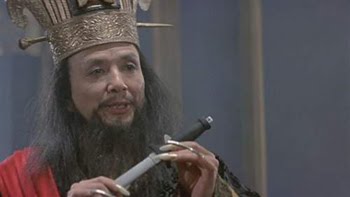 As with Prince of Darkness, Carpenter's subsequent failure, there is something inherently interesting in the central concept of this film. It aims to do for martial arts movies what Indiana Jones did for matinee idols: take all the clichés and conventions of those films, restage them with the budgets they deserved, and pay tribute to the aspects that worked while sending up those that didn't. The twist with Big Trouble is that this story does not have a period setting, with Carpenter attempting to marry ancient Chinese mythology to the technology and social attitudes of the 1980s.
 Carpenter may not have Steven Spielberg's track record when it comes to blockbusters, but he had shown his knack for directing action movies on Assault on Precinct 13 and, to a lesser extent, Escape from New York. And to give credit where it's due, the design elements of Big Trouble are pretty good. Dean Cundey, Carpenter's long-time cinematographer, gives the film a grainy B-movie look while utilising anamorphic lenses (another Carpenter trademark) to make the action feel very modern. The stunt choreography by James Lew is balletic but playful, creating stunts which are cartoonish without prompting us to look where all the wires or trampolines are hidden.
Unfortunately all the good work of Carpenter and his colleagues comes to nothing. After a pretty decent opening, Big Trouble in Little China slowly descends into the very formulas it was trying to send up, resulting in a film which is repetitive, uninvolving and lacking in narrative direction. The central problem lies in a further comparison to Indiana Jones, namely in the business of being tongue-in-cheek. Although Raiders of the Lost Ark was clearly motivated by a desire to send up its subject matter, Spielberg understood that it wasn't enough to simply stand around making fun of old film clichés. In order to sell the film to an audience, it had to be entertaining in its own right, with enough in the way of pace and punchy action to wow an audience who hadn't grown up on John Ford or Howard Hawks.
 One of the great successes of Raiders - in fact, of all the original trilogy - was its combination of pace and narrative; the story was pulpy enough to be gripping when married to the action, but even if you weren't that interested in what was going on, you could just sit back and enjoy the spectacle in blissful ignorance. Big Trouble in Little China doesn't have this perfect pacing: it barrels along so quickly that the story keeps getting lost, with characters having to stop and explain the plot to each other in an increasingly incoherent manner.
 Because the film keeps losing its narrative thread (what there is of it), its ability to work as an affectionate pastiche or parody begins to gradually desert it. Certain elements remain faintly subversive, such as Dennis Dun's character, whose resourcefulness and intelligence sends up Indy and Short Round in Temple of Doom. But elsewhere the film bears an uncanny resemblance to The Fiendish Plot of Dr. Fu Manchu, Peter Sellers' final film which attempted (unsuccessfully) to send up similar stereotypes. The film forgets about its desire to be ironic as soon as it becomes convenient, settling for spectacle where we expect to see so much more.
 Even if we attempt to enjoy Big Trouble as empty-headed entertainment, we still don't get very far. One of the pleasures of classic martial arts films was the scale of the fights and the seamless way in which they were filmed. Bruce Lee's fight scenes would be filmed like Gene Kelly's dancing, in long continuous shots which created a natural sense of scale and continuity. A lot of both Lee and Kelly's film work was somewhat lacking narratively, but again it didn't matter because of the inherent physicality and tactility of their fighting and dancing respectively.
 Big Trouble, on the other hand, has precious little in the way of physicality. The fight sequences may be inventively choreographed, but they are shot from such odd angles and edited so rapidly that you can't tell what's going on or who is fighting whom. Then there are the cheesy special effects, which include beams of light coming out of people's mouths or characters conjuring up lightning like Emperor Palpatine. These effects were created by Boss Films, who did the effects for Ghostbusters, and as with that film the characters become lost in a lot of uninvolving visual trickery.
 In most cases, the special effects in Big Trouble are there to pad out the action rather than contribute to the story. The laser beam fight between Victor Wong and James Hong, in which imaginary warriors are conjured from rings and battle it out, is like watching a boring video game and breaks up the more interesting duel involving Dennis Dun. Even the old-fashioned monsters are no good, with neither the wookie-like creature nor the floating head with many eyes getting anything like the screen time they need to set them up as sustained and believable threats to the characters.
 On top of all that, the film is populated by a cast of characters which are poorly drawn and unlikeable. Kurt Russell, who has never topped his performance in The Thing, spends most of his time mugging at the camera. While his Clint Eastwood impression in Escape from New York had a certain amount of appeal, his John Wayne impression in this film is off-putting and obnoxious. Kim Cattrall is equally annoying and largely wooden, and the film only seems properly interested in her when she's been dolled up in buckets of rouge. Dennis Dun's character is underdeveloped beyond his one-liners with Jack, and Victor Wong is as criminally underused here as he was in Prince of Darkness.
 One factor that might mitigate Big Trouble's poor execution is the conditions under which it was made. The film went into production around the same time as the Eddie Murphy vehicle The Golden Child; Carpenter was hired because he could work fast, enabling the studio to get their film out first. Certainly one cannot accuse Carpenter of bottling it in the presence of more money; as his 1990s output shows, he was capable of making bad films regardless of how much they cost. But even with the rushed production schedule, you would have expected someone of his mettle and genre experience to come through with the goods.
 Big Trouble in Little China resembles a dumb mix of Indiana Jones and Year of the Dragon, albeit without the overt racism of the latter. It disappoints as empty action and as an attempted subversion of martial arts clichés. It still has pockets of humour, whether intentional or otherwise, which keep it from being either depressing or Carpenter's worst film. But it simply doesn't cut the mustard either as a Carpenter film or on its own terms - it's no fun, and nothing but trouble.
Rating:
Verdict: Incoherent, irritating and uninvolving


