


Reflections
-
It is weird to read my correspondences from the late August/early September
period, being the time of transition between my old function in life to my
new ...
14 years ago
The Eagle (UK/ USA, 2011)
Directed by Kevin Macdonald
Starring Channing Tatum, Jamie Bell, Donald Sutherland, Mark Strong
When Gladiator reinvigorated the swords-and-sandals epic, it was quickly followed by a host of films which sought to replicate its success by imitating part or all of its formula. But whatever the qualities of Troy, Alexander or even 300, there was always a niggling sense that we were getting something inherently inferior. Adding to this list of disappointments is The Eagle, the first big hiccup in Kevin Macdonald's career.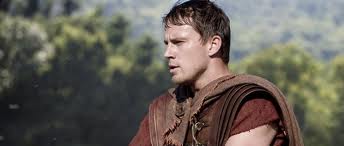 The Eagle's relationship to Gladiator is uncomfortably close right from the start. In the opening act, before Channing Tatum journeys over Hadrian's Wall, the film invokes or restages several key images from Ridley Scott's masterpiece, such as Marcus praying to the gods through smoke or laying out little figurines of his family. The first battle sequence is like the opening battle in Gladiator, only shot on a smaller scale and without a tripod. Last but not least, the central character is a soldier haunted by what has happened to his family, in this case the shame surrounding his father.
 There are other prominent references in the film which become all too apparent as the action plays out. The ending, where Marcus and Esca are pursued across the Scottish landscape by the Seal People, is very close to The Fellowship of the Ring. They are two small, vulnerable people being pursued by the 2nd-century equivalent of the uruk-hai, and Justine Wright's editing is very similar to those sequences. Even the sound design treads close to The Lord of the Rings, with the death throes of Marcus' horse sounding awfully similar to those of the cave troll.
 The crucial problem with The Eagle is that it fails to do what Gladiator did so well - namely balancing the macho and the metaphysical. Scott's film began and ended in the Elysian fields: its intense and often brutal battle scenes (including the fist-fight between Maximus and Commodus) were anchored around an exploration of politics, religion, gender and mortality. The Eagle doesn't have any such weight to carry around and its presentation is much more erratic: it amounts to lots of walking, then a battle, repeated a few times, with the odd little twist or idea thrown in along the way.
 A further comparison, this time with Scott's most recent effort, will help to shed further light on Macdonald's shortcomings. The central problem with Robin Hood was that it didn't know exactly what it wanted to be - a Batman Begins-like origin story, a political drama about working-class emancipation, or a bombastic action movie with pantomime villains. But even in the midst of making up its mind, Robin Hood did at least manage to tackle the political side of its story, albeit superficially.
 The Eagle has the opposite problem. It knows exactly what it wants to be, which is a very old-fashioned romp (and I use the term loosely) with characters which are all too clearly drawn and a fairly predictable storyline. Rosemary Sutcliff's novel, which had previously been adapted for Children's Hour in the 1950s, draws the battle lines between good and evil all too broadly, placing honour and valour over common sense and character development. Even when it's trying to subvert the central relationship between master and slave during the encounter with the Seal People, it still feels blinkered and obstinate as to where your loyalties should lie and to what extent.
 Whereas the novel was originally intended for children (more specifically young boys), there are numerous sequences in The Eagle which are unsuitable for younger audiences. For a 12 certificate film, it is pretty gruesome, with more than one instance of beheading and a fair amount of blood on screen. That said, you don't have to sit through all the really troubling stuff, like people's throats being slit (including a child's throat in one scene towards the end). And most of the time the battle scenes are so frenetic and rapidly edited that you can't exactly tell where people are getting hit, or with what - or, for that matter, why.
 The film is shot by Anthony Dod Mantle, whose credits include the Oscar-winning Slumdog Millionaire and Lars von Trier's controversial Antichrist. Dod Mantle is a pioneer of handheld digital photography, and he does add a number of notable visual touches which make The Eagle a little more distinctive. The opening shot on the river is like one of the woodland scenes in Antichrist: there is a similar sense of mystery in the wild surroundings of nature, albeit with less demonic threat. And some of his compositions are clever, such as showing characters' faces through water which is already reflecting the sky.
 But despite Dod Mantle's knowledge and expertise, the use of hand-held camera is inconsistent and ends up being detrimental. Notwithstanding the shortcomings of the battle scenes, the quieter sections find Macdonald's camera juddering and bouncing when the scene would be better served with a dolly or crane. Like the opening of The Bourne Supremacy, it takes a while for us to adjust to the aesthetic, and for the action to catch up with the frenetic camerawork. But whereas Paul Greengrass' film eventually got into its stride, The Eagle remains dodgy throughout, with Dod Mantle's camerawork hampering Macdonald's already lacklustre direction.
 What makes The Eagle so lacklustre is the lack of strong, charismatic performances. This is surprising considering Macdonald's back catalogue, which includes Forest Whittaker's terrifying performance as Idi Amin in The Last King of Scotland. Jamie Bell remains a decent actor with a certain amount of screen presence, and Mark Strong makes the most of a small supporting role. But all their best efforts are in vain due to Channing Tatum, who has the charisma and acting ability of a lump of granite.
 Because the film has no strong, charismatic protagonist, we aren't drawn into the story enough to make the substance feel intriguing. There is a couple of interesting ideas explored in The Eagle which are both interesting from a genre point of view and pertinent to 21st-century politics. One of these is the inherent instability of a conquering power, and the imperial force having to isolate an enemy rather than face it down and exterminate it. The very existence of Hadrian's Wall, as an imposed, artificial barrier between 'savage' and 'civilised', indicates that the occupying force is based upon fear, both in its methods of conquering and its view of other civilisations.
 When Marcus encounters the Seal People, he is confronted with a culture which operates along the same tribal lines as his own. There is a clear distinction made between Roman and Briton, observed in everything from speech patterns to physical features: there is a running comment about Roman soldiers being recognised by a helmet scar under their chin. Having spent all his life as part of the 'superior race', Marcus is forced into silence and submission as the master-slave relationship is reversed. Esca, meanwhile, is torn between his desire for vengeance against Rome and his professed loyalty to Marcus for sparing his life at the games.
 These are interesting ideas in and of themselves, but the film's structure never allows them to be explored in a satisfying amount of detail. More often than not The Eagle relies earnestly on genre expectations to sustain its appeal, giving us spectacle and plot devices but not much in the way of emotional engagement. The search for the missing roman standard, the eagle of the title, becomes almost secondary to the characters' endless wanderings, and the epilogue of them returning it to the senators is silly and clichéd.
 The Eagle is a big disappointment from Macdonald, failing as both a romp and a means of exploring interesting ideas within a genre. It's not without substance or individual scenes which are visually arresting: it's a better story than 300 and the battle scenes will just about satisfy teenage boys. But for those of us who want to think a little harder, it falls short of most of the marks set for it, never threatening Gladiator's mantle as the great historical epic of our time.
Rating:
Verdict: Macdonald's first real disappointment
The Proposition (Australia, 2005)
Directed by John Hillcoat
Starring Guy Pearce, Ray Winstone, Richard Wilson, John Hurt
In any kind of ideas-driven film, there has to be a balance between the ideas being addressed and the characters through whom such ideas are conveyed. And in any genre film it's easy to get the balance wrong because of the availability of stock plots and characters - something which is especially true with westerns.
At one end of the spectrum, we have There Will Be Blood - a film with substance pouring from its every orifice, but only one convincing character through which this can be channelled. Because no-one else can rival Daniel Day-Lewis, none of the ideas about imperialism, economics and religion create anything like the emotional impact they should. At the other end, we have The Proposition, a western with many rich performances from a very well-chosen cast, but which is ultimately a little too straightforward in its execution. On the good side, The Proposition does a very good job of demonstrating just how hardy the western genre is, showing how its conventions can be applied to any environment with the same effect. Until we first hear Guy Pearce's Irish lilt or Ray Winstone's throaty London growl, we could have sworn that we were back in the Wild West. In throwing us off so cleanly in its opening section, the film amply demonstrates how the familiar trademarks of westerns are not restricted or confined by geography, any more than the ideas which such films attempt to address.
 This hardiness is cemented by the central performances, which take the various stock characters and adapt them to their new surroundings to create a number of memorable turns. Ray Winstone's troubled Captain Stanley is the outback's equivalent of the battle-worn sheriff, someone who has seen one too many gunfights and longs for peace while despairingly mindful that it is impossible. On top of his usual gruff posturing and natural aggression, Winstone brings a vulnerable quality to the part which makes him more compelling.
 The other performers are equally impressive. Emily Watson continues to be the go-to actress for delicate, sensitive female characters. She succeeds where Meryl Streep has so often failed, namely being emotionally wrought and highly strung without being showy or attention-seeking. David Wenham casts off the mantle of Faramir as the uptight, lip-curling Eden Fletcher, who seeks order and justice without really understanding what is needed to achieve either. And Guy Pearce remains one of the most underrated actors of his generation: very few people could go from the grimy, scuzzy Charlie Burns to Andy Warhol in under 12 months.
 With this rich cast in place, we begin to appreciate the various ideas which The Proposition is trying to raise. The setting of 1880s Australia instinctively raises the issue of imperialism, and that is confirmed by the early section of the film. Stanley constantly talks about his desire to "civilise this land" by whatever means. His clashes with Fletcher are not simply a difference in personality, but a reflection of differing attitudes to justice and 'the colonials'.
 Fletcher is the new boy in town and wants to do things by the book: he insists on having Mickey Burns flogged to death since the 'proposition' was not binding in law. Stanley, meanwhile, has been out there long enough to know you sometimes have to compromise, letting a small evil slip through the net so you can deal with the big evil. But he has not become entirely lost to the landscape, retaining his military dress and insisting upon turkey at Christmas.
 Although there is imperial politics hanging over the events in The Proposition, the focus is much more on the personal than the political. To a certain extent the film argues that the actual working nature of the British Empire was determined more by individual desire than anything more noble or idealistic (insofar as empire-building could be either of those things). Neither Stanley nor Fletcher ever mention 'the old country' or appeal to high ideals to justify their actions. It could even be argued that Stanley's motivations behind his deal with Charlie Burns was motivated out of nothing more than wanting peace with his wife (which makes his final scene all the more ironic).
 Coming from a script by Nick Cave, The Proposition has its fair share of grim Biblical imagery. The brutal dilemmas faced by the characters mirror various stories in the Old Testament about individuals being called upon to commit murder in the name of justice and righteousness. Charlie's act is both a betrayal of his own kin and an attempt to save it, mirroring Cain's conflicted nature when he murdered Abel in Genesis. And the level of violent retribution is worthy of anything in the book of Judges; the raping of Stanley's wife is no less repulsive than Ehud's murder of the fat king Eglon, or Jael driving a tent peg through her master's temples as he slept.
 Like Winter's Bone a few years later, The Proposition also has atmosphere to spare. John Hillcoat shoots the scenes of Charlie Burns' quest with a completely unfussy eye, letting the landscape speak for itself. While he does become more intrusive, he shoots conversation in close-up so that we can almost taste the sweat and feel the flies on the characters' faces. Music plays its role as well: in addition to the original score by Nick Cave and fellow Bad Seed Warren Ellis, the opening shootout is carefully choreographed so that the bullets hitting the brothel become a form of percussion.
 However, The Proposition also has the same basic flaw as Winter's Bone - namely that the story is far too thin even for its short running time. Atmosphere and score can only do so much in pulling us in, before the actual narrative and themes have to step in and take over. Sadly, once all Cave's music and sense of dread is stripped away, the remaining story is deceptively and disappointing simple, and nothing is resolved in a satisfying manner.
The sequences in the outback have great potential within them in terms of generating tension. The fearful comments of the Aborigines hint towards Apocalypse Now, with Charlie going deeper into the wilderness in search of his own personal Kurtz. But as with Hillcoat's subsequent film The Road, neither the script nor the direction allow a genuine sense of horror to build, and it becomes more about the journey itself than the meaning behind it. The scenery-chewing performances by John Hurt and Danny Huston may be good fun, but they undercut the sense of dread, making us feel like we are going round in circles. This increasing lack of dread means that the existential implications of the story are also stifled. In No Country for Old Men, the relatively simple progression of the story was married to a deep-rooted examination of the nature of evil and the motivation behind it. You therefore felt that even when something happened which was abrupt or overly straightforward, there was a reason for it. The Proposition simply doesn't have that sense of weight which makes a good western into a great one, and that makes the violence in the last twenty minutes feel all the more gratuitous.
 The Proposition is a promisingly decent debut for Hillcoat, who on the basis of The Road seems to be improving as a filmmaker. All the ingredients for a well-executed western are to be found in it, and in its acting and aesthetics it is well-crafted. But like Mad Max 3 before it, the film never lives up to the promise of the ideas that it raises, resulting in a film which is enjoyable but only memorable in passing.
Rating:
Verdict: Great characters, shame about the story
Alice in Wonderland (USA, 2010)
Directed by Tim Burton
Starring Mia Wasikowska, Johnny Depp, Helena Bonham Carter, Crispin Glover
There's been a lot of nonsense written about Tim Burton in the past few months. Way in advance of Alice in Wonderland's release, detractors from all sides were bemoaning his supposed decline, accusing him of everything from selling out to never being any good in the first place.
In the face of this huge backlash, most of it unwarranted and much of it stupid, I wanted to be the one to stand up for Tim Burton. After all, his last three films - Big Fish, Charlie and the Chocolate Factory and Sweeney Todd - have all been great, and the latter is on a par with his masterpiece Ed Wood. But all good things must come to an end, and in the case of Alice in Wonderland the end is quite a bitter one.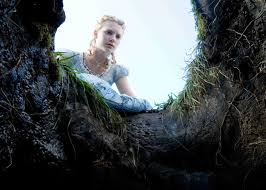 What makes Alice in Wonderland so depressing is that there is so much potential within both the story and Burton's approach to it. Both the original novels are about the role of childhood fantasies in preparing one for the traumas of adult life. The heroine is an outsider who doesn't fit into the world being designed for her - she is a classic Burton protagonist in the manner of Winona Ryder in Edward Scissorhands. And considering his knack for creating dark and exuberant visual worlds, Burton would seem the ideal choice for the drug-induced majesty of Lewis Carroll.
But in spite of all the good omens, the finished product is as banal and directionless as Terry Gilliam's The Brothers Grimm. Both films appear on the surface to be the directors' dream project, considering Gilliam's fascination with fairy tales which stretches back to Jabberwocky. But both Grimm and Alice are clear examples of an artistic, distinctive and often mad director having their visions suppressed or suffocated in favour of a bloated and anodyne mainstream blockbuster. For starters, the script for Alice in Wonderland is little short of pathetic. Its relationship to Carroll's works is at best stand-offish and at worst completely patronising - it borrows famous lines (like the Mad Hatter's riddle) and then rephrases them in such a way that sucks all the fun and insanity out. This becomes all the more shocking when we discover it's written by Linda Woolverton, who wrote Beauty and the Beast and co-wrote The Lion King. How could someone who made her name retuning fairy tales for family audiences have got this one so damn wrong?
 The biggest crime of the script, however, is not its contempt for Carroll's language. The biggest crime is that all the central ideas of both the novels and Burton's work are swiftly trampled underfoot, in favour of something a lot more generic and predictable. All the ideas about Alice being independent are quickly overruled by the central plot involving the compendium: one cannot be independent if your destiny is predetermined. In the face of this revelation, Alice as a character descends into the very thing that Burton sought to avoid: despite the best efforts of Mia Wasikowska, she comes across as little more than a sniffy, spoilt brat.
 The central plot of this 'reimagining' of Alice is also massively derivative. The idea of a plot built around the poem 'Jabberwocky' was handled, albeit unevenly, in the Gilliam film, while having Alice re-enter the fantasy world of her youth is a blatant rip-off of The Chronicles of Narnia. Then there is the design of the White Queen's castle, which looks like a cross between Lothlorien and Minas Tirith, and various elements lifted from the Harry Potter saga - the final battle on the chess board recalls The Philosopher's Stone, while the design and defeat of the bandersnatch owes something to the basilisk in Chamber of Secrets.
 The problem with all these derivative details is that the twisted, quirky and often creepy darkness of Burton's work can't get a word in edgeways. Despite occasional design elements which are quintessential Burton, this has none of the strange whimsy of the original Disney version, nor the haunting and absurdist quality of Jonathan Miller's take. There are also very few attempts to address how Wonderland (or Under-land) has changed since Alice left: we get a flashback sequence with a village being burned, but not much else. Even when the characters become fractured, like the Mad Hatter changing accents, it's played as a gimmick instead of a lead-in to something more substantial.
What we end up with is a film with all the structure and balance of a rollercoaster. The script keeps hurling us in four different directions, and we can't stop for more than two minutes without something exploding or being hurled at the screen. The film never quietens down for long enough to let the story work on its own terms, and with the exception of The Cheshire Cat (voiced by Stephen Fry), the characters rarely resemble anything more than one-trick ponies. This is the legacy of Pirates of the Caribbean, producing a film which even at 108 minutes feels bloated, baggy and boring. Then there is the 3D to consider. Many individual shots in Alice in Wonderland seem to have been designed solely for the 3D version - something that is obvious even when watching in 2D. The extended sequence of Alice falling down the rabbit hole, or the Mad Hatter's flying drapes, or even the floating Cheshire Cat, add nothing to the story and feel bolted on, much like the 3D itself: the film was shot against green-screen and then retro-fitted in post-production. The experience of shooting so much in green-screen actually made several of the actors nauseous, and there are endless examples in the finished film of mismatched eye-lines and bad continuity, of the kind that you thought only George Lucas was capable of doing.
 The role of CGI in the composition of special effects hints at the major deficiency in Burton's visual approach. When he was making his early films with entirely mechanical effects, there was always a feeling in the back of one's mind that the limitations of animatronics and make-up meant that only so much of his unique vision was finding its way out of his head and onto the screen. As the role of CGI has grown in harmony with organic effects, more and more of Burton's designs have been physical realised in a way which was both elaborate and believable. But Alice in Wonderland relies so heavily on CGI that it comes to resemble the heaven sequences in The Lovely Bones: there is the same sense of a world of many mismatched parts, whose logic and composition are being made up as its director goes along.
 On top of all that, we have a number of plot holes to digest. We readily accept that Alice can change size by eating cakes and drinking from bottles, but why don't her clothes change size with her, for decency's sake if nothing else? Why does the Bandersnatch change sides so readily having previously given Alice a nasty wound? Why does the Mad Hatter speak in a Scottish accent at carefully selected moments? And why, if Crispin Glover's knave had his eye on the throne all along, did he wait until he was being banished to try and kill the Queen?
 Alice in Wonderland is Burton's biggest failure since Mars Attacks!. The debate is not so much whether the film is any good, as to how much of the end product is his fault. In spite of everything there are moments in which his true colours shine through: certain scenes with the Red Queen or Cheshire Cat spring to mind. Burton has been known to bounce back quickly, having followed Mars Attacks! with Sleepy Hollow and Planet of the Apes with Big Fish. But he will have to work twice as hard to prevent this obvious blip from becoming the start of his epitaph.
Rating: 1/5
Verdict: A soul-crushing experience
The Sting (USA, 1973)
Directed by George Roy Hill
Starring Paul Newman, Robert Redford, Robert Shaw, Charles Durning
It is very tempting to hate The Sting for beating The Exorcist to the Best Picture Oscar. Some would even go so far as to rank it alongside Crash and How Green Was My Valley is one of the Academy's greatest faux pas. But whatever vitriol the other two deserve, The Sting still holds up as a damn fine film, with all the essential ingredients of a proper American caper. Like Butch Cassidy and the Sundance Kid, The Sting is very deliberately nostalgic and old-fashioned. Both films romanticise key aspects of American history, something which is evident in everything from the jazz-inflected dialogue to the washed-out visuals, right down to The Sting's family-friendly PG certificate. One of the most obvious expressions of this old-school approach is the editing. William H. Reynolds' transitions are all slow wipes and frames twisting on each other, and the film ends with an iris wipe of our two heroes walking off into the distance, like the characters in Looney Tunes.
 In line with this romantic depiction of 1930s Chicago, The Sting's tone is playful and breezy even in its most threatening moments. The Scott Joplin ragtime soundtrack gives every scene a precise sense of pace and momentum, and as with Howard Shore's work on The Lord of the Rings, the action fits the music so well you can't believe the actors weren't choreographing their movements to it on set. The film nestles somewhere between a Technicolor musical and the original version of Scarface, combining all that bright and cheerful about melodramas with all that is suspenseful about crime films.
 Aside from its similarity to Butch Cassidy, the closest comparison to The Sting would have to be Chinatown, since both films depict a similar era from a 1970s vantage point and have incredibly twisty stories. In terms of the period touches and historical accuracy, you couldn't put a playing card between them. But Chinatown is the better film, not because it is darker or more hard-hitting, but because it has more conscious and lucid intentions.
Because Roman Polanski approached the Californian water wars as an outsider, he could be as savage as he liked about the American dream and drive home his arguments about contemporary America. For all its period glamour and elegant noir touches, Chinatown feels like it is constantly driving forward and asking you to keep up, with Polanski leaving nothing to chance to reel you in and break your heart. Because George Roy Hill has such massive affection for the period and lifestyle he is depicting, The Sting occasionally feels like a film which wants to stop and admire the view even when things are becoming crucial. At two hours long, it's still an efficient piece of storytelling, but it does feel like a film with a lot less to say. There are two aspects of The Sting which hold the film together, both as a piece of breezy entertainment and as a really good thriller in which everything adds up. The first is the storytelling, which is accessible without being facile and complex without being convoluted. The use of old-fashioned title cards explains where we are for people not old or informed enough to understand the twists, while the various cheats and increasingly elaborate bluffing keeps the rest of us guessing.
The Sting is a film about conning in which everyone is conning or being conned by everyone else - a premise that could quickly get out of hand. But Hill and the cast get around this, drawing the audience in with the charm of the characters so they we not only indulge their play-acting, we encourage it. In the opening con involving Robert Redford and Robert Earl Jones (the father of Darth Vader), Hill's camera is there as a passive observer, never intervening by getting in close and thereby making their actions look believable. Hence when we find out what was really in the wallet, we not only don't feel bad for being tricked, but we find ourselves rooting for these guys. The other key aspect is Robert Shaw, whose performance as Doyle Lonnegan is the best of his career. Lonnegan is the most complex character in the film, someone who has hidden his own past to shore up credibility and who has risen to the top by outsmarting his opponents before cutting them out of their own operations. Shaw is a naturally intimidating screen presence, and in sharp contrast to Paul Newman and Redford his actions are constantly restrained and understated.
 As is so often the way, the most interesting part of Shaw's characterisation happened by accident. A week before filming, he slipped on a wet handball court and split all the ligaments in his right knee. Rather than delay filming, Shaw had to wear a knee brace under the wide trousers, resulting in a staggered and uneven gait. The impediment is noticeable when Lonnegan enters the salon, keeping his right leg absolutely straight as he slowly hobbles the steps. This subtle touch gives the character extra reasoning behind his ruthless approach, while also reassuring the audience that he is not invincible.
 The best scene in The Sting is the poker game which Newman joins on the train between New York and Chicago (ironically posing as a bookie called 'Shaw'). Instead of Scott Joplin, the scene is given rhythm by the background noise of the train, making the silences all the more unbearable. Shaw's face barely alters save for little flickers in his eyes and his mouth, and yet he manages to move from calmness to smirking confidence to seething fury all in five minutes. And then there is the great guessing point - how on earth did Gondorff manage to cheat?
 This latter point hints at the other great success of The Sting: the lack of excessive exposition. The film expects audiences not only to follow the plot but to have a working understanding of poker - or at the very least, be aware of the wider significance of the cards being played. Despite the fact that at no point the rules of either poker or the cons are explained in any great detail, you don't have to be an expert in either to follow the story. Compare that with the poker in The Cincinnati Kid, in which every move is explained and the camera is darting all over the place, desperately trying to make the scenes dramatic but having the opposite effect.
 Alongside Shaw's performance, there are other dark elements of The Sting which reference characters familiar to filmgoers of the day. The character of Snyder, the rogue FBI agent hunting down Hooker way outside his jurisdiction, bears some similarity to Popeye Doyle in The French Connection: like Gene Hackman, he pulls no punches and leaves no stone unturned to do his job. The idea of female assassins had become popular in the James Bond series, with such characters appearing in both From Russia with Love and Thunderball. And the black leather gloves worn by the hidden figure tailing Hooker is a possible reference to Dr. Strangelove.
 The Sting is not an unqualified success. It is ultimately very light-headed even in its serious moments, and in the conclusion of the final con involving the FBI it does descend a little into silliness. But it is very hard to take against a series of such enjoyable and well-judged performances, complimented by an engagingly complicated story. While it doesn't have the cult appeal of Butch Cassidy, it is an improvement on that work, and remains a must-see 1970s crime film.
Rating: 4/5
Verdict: Breezy, twisty and damned enjoyable
The Lovely Bones (USA/ New Zealand, 2009)
Directed by Peter Jackson
Starring Saoirse Ronan, Mark Wahlberg, Rachel Weisz, Stanley Tucci
When I reviewed The Imaginarium of Doctor Parnassus, I commented on how it was possible to admire the intentions of a director while acknowledging that their film simply doesn't work. Gilliam's good intentions and body of work maintain his status as a trusted filmmaker, even if his last three films have completely missed the mark. It is much the same story with The Lovely Bones, Peter Jackson's adaptation of Alice Sebold's novel which depicts a family in crisis from the viewpoint of a murdered girl. Jackson is a great filmmaker who has tackled this area before in Heavenly Creatures. He has demonstrated that he can film the un-filmable (The Lord of the Rings) and do justice to a much-loved and revered original (King Kong). And everything since The Frighteners has proved that he is skilled with CG effects, giving his films a consistent and believable physicality even in the most elaborate of circumstances.
Unfortunately, all of this goodwill towards both project and director make the reality of The Lovely Bones all the more infuriating. It is a huge misstep for Jackson, serving as ample ammunition for his critics who claimed the success of The Lord of the Rings had gone to his head and damaged his craft. In the end, like Gilliam's recent work, the film is an admirable failure, made with all the right intentions but so heavily flawed that the wound it leaves takes time to heal. On the plus side, there are two very strong performances which effectively carry the film. Saoirse Ronan is terrific as Susie Salmon, giving a really nuanced performance which progresses through a series of challenging emotional developments with complete naturalism. Ronan was 14 when filming began, and yet she delivers lines and holds her face like someone who has been acting for 20 years. Her only real rival here is Stanley Tucci, whose serial-killer-next-door is skin-crawlingly creepy. His performance combines the eeriness of Richard Attenborough in 10 Rillington Place with the intriguing distance that he honed playing Stanley Kubrick in The Life and Death of Peter Sellers.
 The first also has a number of scary scenes which are initially well-handled and effective at shocking an audience. The best of these is the nightmarish sequence where Susie walks around the bathroom with her killer lying in the bath and blood stained on the sink. The walls are the same shimmering, intrusive white as in Kubrick's A Clockwork Orange, and the stillness of that scene goes some way in suggesting what kind of brutal acts have been committed. As Tucci slowly rises from the bath and takes the flannel off his face, there's not much you can do to stop gripping your seat in a desperate bid not to scream.
But the effectiveness of this sequence hints at the first big problem with The Lovely Bones. There are huge, unmanageable lurches in tone between the tough, melancholic scenes surrounding Susie's death and the attempts at cheery sentimentality in between. Like so many of Steven Spielberg's 'serious' films, what starts off as dark, interesting and downbeat is quickly compromised by various decisions which undermine or eliminate the film's emotional impact. Susan Sarandon's character of the cantankerous alcoholic grandmother is a totally unnecessary attempt to bring quirkiness and eccentricity to the situation. What we want to see in the scenes not set in the afterlife are of a family struggling to stay together in the midst of total despair - kind of like Ordinary People, only good. But instead Jackson opts for goofiness over hard work, giving us a montage of Grandma playing in foam and setting things on fire, and thereby losing sight of the emotional thread.
A bigger problem lies in Jackson's decision about depicting heaven or the afterlife. Some films only hint at the afterlife, letting the imaginative power of the audience do the leg-work. Think of the ending of Faraway, So Close!, Laura's angel in Twin Peaks: Fire Walk With Me, or the Grey Havens in Jackson's The Return of the King. Other efforts depict heaven as somewhere universally recognisable but with a subtle twist, such as the busy black-and-white offices in A Matter of Life and Death, or the hospital-cum-railway station in The Exorcist III. In these films the familiarity of heaven is immediately comforting, but it feels different enough for it to not just be a different part of Earth. Instead, Jackson opts for a computer-generated 'in-between', coating Susie's entire world in bucket-loads of digital animation which owe a great debt to Vincent Ward's What Dreams May Come. Jackson knows how to make special effects work, and in The Lord of the Rings every CG effect feels seamless and physical, or at least bound by the same physical rules. But the difficulty in depicting the afterlife is that such a place does not have to play by the same rules - we can have landscapes which defy gravity or roses flowering under frozen lakes. The result of this difference is that no matter how seamless or well-rendered the visuals are, it does feel like Jackson is making it up as he goes along, until eventually his whole rendering of 'heaven' looks and feels like a Day-Glo video game.
 This wouldn't be so bad if the film established a convincing link between what happens in the real world and what happens in the 'in-between'. But Susie's world always feels disconnected from what happens to her family, and the film keeps changing its mind about where and when reality intervenes. When Mark Wahlberg smashes all his ships-in-bottles, that is carried over, but when the gazebo collapses there's no clear reason for it. Because Susie cannot influence her 'heaven' in any consistent or significant way, the version of 'heaven' on screen stops being her own perfect world and becomes neither more nor less than lazy symbolic shorthand.
 Even more troubling than the visuals is the film's emotional heart. Films surrounding death and family disintegration are among the most manipulative when done badly, and The Lovely Bones continues this trend, serving up a brace of very uncomfortable moral messages which play out in a deeply insensitive manner.
Its first message is that death, or being murdered, can actually make a person happier. Although Susie is initially and understandably horrified by what has happened to her, she seems to get over it surprisingly quickly and only returns to the pain of her family towards the end. There have been a number of film which have handled the passage from life to death or explored death as a means to escape pain - think of Shadowlands or the ending of Return of the King. The Lovely Bones takes a potentially interesting concept and is so heavy-handed and preachy that it makes Ward's work look subtle. The other, arguably worse message surrounds vengeance from beyond the grave. This is a staple of ghost and horror stories, and so you would again expect Jackson to do a half-decent job. But whether by bad judgement or the content of the book, what should be a story about forgiveness and catharsis becomes a film about revenge, hatred and judgement from on high. The prospect of Susie's family healing and moving on is only hinted at in the epilogue, while most of the film strives to make us wish death upon Tucci's character. His eventual comeuppance, involving the recurring image of an icicle, smacks of the kind of moral duplicity which long seemed to have died out with Cecil B. De Mille.
 In spite of its massive failings, The Lovely Bones remains an admirable effort for Jackson. It may well be that the book is genuinely un-filmable, and that in years to come this effort will be held up as proof. As it is, the film doesn't work on any level, as a spiritual paean, a family drama or a straightforward whodunit, and it is easily Jackson's weakest film since Meet the Feebles. But in the midst of disaster, there are individual moments and performances which suggest that this is merely a very obvious false note, rather than the death knell of an entire career.
Rating: 1.5/5
Verdict: An admirable but blatant failure


