
Reflections
-
It is weird to read my correspondences from the late August/early September
period, being the time of transition between my old function in life to my
new ...
14 years ago
The Muppet Christmas Carol (USA, 1992)
Directed by Brian Henson
Starring Michael Caine, Dave Goelz, Steve Whitmire, Jerry Nelson
There are so many versions of A Christmas Carol out there that it soon becomes tiresome arguing about their individual merits. The only faintly reliable indicator of an adaptation's success is in its lifespan over subsequent Christmases, specifically how often it will turn up in the double editions of the Radio Times. The Muppet Christmas Carol is not the finest version of this story, but neither is it by any means the worst, and there are many elements which have cemented its status as a festive family favourite. Purely as a matter of principle, The Muppet Christmas Carol is among the more faithful adaptations. A number of small changes have been made - there is no mention of skating penguins or rubber chicken factories in the original. But otherwise the film follows the arc of Dickens' story very closely, and the dialogue doesn't feel like it is being lazily paraphrased to prevent a modern audience from thinking.
What is often forgotten is that the original story was a pot-boiler, a shorter, more incidental work designed to keep the money coming in (presumably so Dickens could afford his Christmas shopping). Its subsequent status as one of the most fondly familiar of English texts was by no means intended, a factor which makes the film's fortunes all the more apt. It has slowly grown from breaking even at the box office to be embraced as a stalwart of Christmas television. The Muppet Christmas Carol is also the film to which Michael Caine ultimately owes his recent career revival. Aside from a BAFTA win for Dirty Rotten Scoundrels, the late-1980s had not been kind to him and he continued to make bad career choices. He famously could not collect his Oscar for Hannah and Her Sisters because he was on location in the Bahamas making Jaws: The Revenge. But the eventual goodwill caused by this performance, along with a revived interest in his 1960s work, would eventually lead to richer roles and a second Oscar for The Cider House Rules.
Actors who have played Ebenezer Scrooge have emphasised different aspects of the character - George C. Scott's version plays on his aggressive grumpiness, Bill Murray's version his worldly-worn weariness, and Alastair Sim's version his grim fastidiousness. Caine cherry-picks the best aspects from past portrayals and makes it his own, showing his range and placing himself in the top five all-time Scrooges. He sings well, looks great in period costume, and there are a number of brilliantly memorable moments. The scene of him shouting "UNEMPLOYED!" in a tight close-up at the book-keepers is hugely entertaining and wins over an audience immediately. Although it is primarily a children's film, The Muppet Christmas Carol is not afraid to tackle the darker aspects of the story. Because it's the Muppets you're not going to see anything questionable, and even to talk about it in terms of 'fantasy violence' is to dress things up a bit too much. But there is an appropriately creepy Gothic side to the film, and it handles the darker aspects of the story much more ably than the recent Robert Zemeckis version. Death is only hinted at, but those hints are enough, and the film is on its surest footing with the Ghost of Christmas Yet To Come.
 The design of The Muppet Christmas Carol is the key to understanding its successes and failures, and as with Zemeckis' version the film rises and falls on its portrayal of the ghosts. The Ghosts of Christmas Past and Future are very well-designed, the former as a childlike spirit recalling the paintings of L. S. Lowry. The latter is especially good, resembling a Ringwraith and being surrounded by Gothic churchyards and plenty of fog. There is something inherently creepy or eerie about a faceless ghost, and the film handles this very well.
But then we come to the Ghost of Christmas Present, and to the first problem with the film. Where the other two ghosts felt bespoke and purpose-made for the story, Christmas Present is a lot less memorable and a lot more annoying. Because the character has to age on screen, we are forced to confront the shortcomings of both puppetry and visual effects. The Ghost's disappearance is well-handled, but his sudden greyness after the flashback looks like someone dumped a vat of flour on him. The present-day section of the story is the hardest to get right because it contains the moment where Scrooge has his change of heart; the final Ghost's actions are little more than a confirmation of his volte-face when faced with his own death. Despite the presence of Animal in a brief cameo, this section of the film is saggy and sentimental in a way which sits awkwardly with the attempts to send up Dickens' tale. In an age where Shrek has sent up so many of Disney's conventions, seeing the Tiny Tim sequence played straight is little short of toe-curling.
The songs in The Muppet Christmas Carol are a little hit-and-miss. When they work, they work well: 'Thankful Heart' has a good, hummable melody which captures the upbeat tone without overcooking the feel-good factor. 'One More Sleep 'Til Christmas' and 'There Goes Mr. Humbug' are fine, having their moments but being more sustained by visual gags than a compelling set of lyrics. But 'Bless Us All' feels forced and cloying, as if the writers were trying too hard to be charming, and as a result it comes across as quite the opposite. Like the subsequent Muppet films, the film relies on the characters we know and love slotting into their allotted roles in the story. While in later films whole sequences had to be invented just to get Miss Piggy on the screen, in The Muppet Christmas Carol the characters fit like a glove. Gonzo treats Dickens' narrator with the tongue-in-cheek approach it deserves, and the double act he has with Rizzo works well. Kermit fits snugly into Bob Crackett, playing him as a well-meaning coward, and seeing him and Miss Piggy finally married on screen is something many fans had been waiting for years to see. As with Shrek, it works so long as you don't think too much about the children.
 The film is also notable as a passing of the torch from Henson's personal involvement to the characters living on without him. Steve Whitmire, who took over the voice of Kermit, told a story of how Henson appeared to him in a dream and gave his blessing. The film is directed by Henson's son Brian, who would also direct Muppet Treasure Island, and of all the post-Henson films it is the best, being made with both charm and affection tied up in a tribute to the great man.
 The Muppet Christmas Carol may not be the finest version of Dickens' story by any stretch of the imagination. Its weaknesses are obvious and older viewers may struggle to sit through its concessions to sentimentality. But as a means of introducing young children to the story, it is very good indeed. Michael Caine holds the film together with a fine performance and there is enough charm and well-meaning embedded in the film to tempt even the biggest miser to purchase a copy. Essential viewing.
Rating: 3.5/5
Verdict: A flawed but fun family classic
The Secret Garden (UK, 1993)
Directed by Agnieszka Holland
Starring Kate Maberly, Andrew Knott, Heydon Prowse, Maggie Smith
There is a long tradition in British cinema of great films being made as a collaboration between British and foreign talent. Many films which are considered classics are distinctive because of this marriage of different national and cultural outlooks: Michael Powell had Emeric Pressburger, and James Ivory had Ishmael Merchant.
It therefore makes absolute sense for The Secret Garden, a quintessentially English story by Frances Hodgson Burnett, to be scripted by a Briton but directed by a Pole. Like her contemporary Krzysztof Kieslowski, Agnieszka Holland is a director who knows how to bring out the delicate humanity of any given scene. Her sensitive approach to the material and knack for working with child actors combine beautifully, to create a masterful adaptation on a par with Shadowlands and Three Colours - Blue. The Kieslowski comparison is not a frivolous one, since Holland collaborated with him on the screenplay for Three Colours - Blue. And while her body of work is nowhere near as powerful or consistent, she shares Kieslowski's humanist sensibility and an understanding of the subtleties of human emotion. She has the same knack for expressing complex themes through the most subtle and innocent of interactions, conveyed through visuals which are effortlessly beautiful. There is also an incidental link in the casting: Irene Jacob, who appears briefly as Mary's mother, played the central role in Three Colours - Red.
The Secret Garden is a beautiful film from whichever angle you approach it. It was shot by Roger Deakins, who would later win a BAFTA for his work on No Country for Old Men. Deakins contrasts the early, drained-out footage of the gardens, filled with pale greens and faded browns, with later lush images of what seems like the whole world in bloom. The film also includes some beautiful time-lapse footage of the garden changing from winter to spring, with flowers blooming and butterflies emerging from cocoons. The film has a genuine sense of wonder which is tragically absent from many more contemporary children's films. This point can be illustrated perfectly by comparing The Secret Garden with the family films of Chris Columbus. Regardless of Columbus' other shortcomings as a director (of which there are many), his attempts at 'wonder' or 'fantasy' feel incredibly manufactured. The first two Harry Potter films feel like they have been test-screened to within an inch of their lives, and all the imagination has been sucked out in a bid to not offend the fans.
 The Secret Garden, on the other hand, manages to be faithful to its source material without taking off any of its dark or slightly rough edges. Like all great children's films, there is a balance between joy and tragedy, and the film doesn't shy away from letting the audience share in the characters' misery. Just like James and the Giant Peach, the story starts with the parents of the central character being tragically killed (in the book it is cholera, in the film it's an earthquake). We follow Mary through the lonely aftermath as she struggles to fit into the forbidding new world that is laid before her, and as with James it takes something quite magical to bring her round.
But despite its references to Indian religion and the rather uncomfortable scene of the children 'summoning' Colin's father, the film's 'magic' is rooted firmly in Christianity. Burnett was a prominent exponent of Christian Science, a doctrine of Christianity rooted in the belief that all of God's creation (that is, all nature) is made in His image and therefore inherently good. While this proposal might seem hard to stomach, The Secret Garden does have a very prominent Christian thread running through it, which is no more threatening or disagreeable than the fiction of C. S. Lewis (hence the Shadowlands comparison). Viewed through a Biblical prism, the garden at Misslethwaite Manor starts out as essentially Eden, with Colin's parents more or less as stand-ins for Adam and Eve. The tragic death of Colin's mother (a literal Fall, if you like) causes 'man' in the form of his father to leave the garden and barricade it up. He is shutting out all that is good because of his own guilt and shame, choosing the darkness as penance for what he believes he has done.
When Mary enters the garden, finding it overgrown and in desperate need of care, she is like Lucy when she first wanders through the wardrobe: the world is special and has signs of life, but the overall mood is one of sorrow and neglect. She rediscovers the joy of nature through her innocence and curiosity, and in discovering the 'magic' she learns to live with herself and to appreciate the good in others, rather than spurning them or treating them as servants. From a slightly different angle, the scenes involving Colin reuniting with his father could be compared with Jesus' time in the Garden of Gethsemane - perhaps what the garden had to go through to regain its former glory. These scenes are of a father rediscovering his son having turned his face away for so long, returning to a place that once embodied death and not only finding life but being welcomed. The final conversation between Mary and Lord Craven is like the encounter between Jesus and Mary Magdalene outside the tomb: the line about Mary "bringing them back to life" may be corny, but it does convey the idea of redemption through acceptance.
But there is more to The Secret Garden than just good old-fashioned morals. The film is thoroughly entertaining, thanks to the elegant dialogue in Caroline Thompson's screenplay. The three child actors are all highly enjoyable and convincing, with Kate Maberly and Heydon Prowse showing wisdom and grace beyond their years. Maberly may spend the first half-hour constantly in a strop, but she has a Puck-like quality which keeps her character interesting. The adult performers are also entertaining, with Maggie Smith turning in a typically domineering performance as Mrs. Medlock and John Lynch holding his own as Lord Craven (even if his long hair and moustache make him unduly resemble Colin Farrell). There are a couple of small faults with The Secret Garden. Although it does generally succeed in being charming under its own steam, it does drift into Disney convention as more animals appear. There's only so many times you can show cuddly deer before we start to feel manipulated. The ending is sentimental and a little cloying, and highlights once again the presence of unnecessary narration. It may be a children's film, but that doesn't mean you have to state the bleeding obvious at any given moment.
 The Secret Garden is a very fine children's film which recalls the best work of Richard Attenborough and Lionel Jeffries. Its Christian morals are presented in a very subtle way for such a prominently allegorical work, and it is every bit as fresh and entertaining now as when first released. As a spiritual film about or involving children it is on a par with Shadowlands, and as a children's film in general it is an amiable companion to The Railway Children. The film is touching, charming and captivating in equal measure, and despite its little faults it is essential viewing.
Rating: 4/5
Verdict: An evergreen family favourite
WALL-E (USA, 2008)
Directed by Andrew Stanton
Starring Ben Burtt, Elissa Knight, Jeff Garlin, Sigourney Weaver
Asking what is Pixar's best film is something of a loaded question. The studio's immense acclaim has meant on the one hand that arguing between Finding Nemo and Toy Story 2 amounts to little more than splitting hairs, and on the other hand that a certain vindictive breed of critics are waiting in eager anticipation for when the big flop arrives. But despite a couple of wobbles (The Incredibles is too long and Ratatouille too shiny), said group of critics is going to be kept waiting just that little bit longer.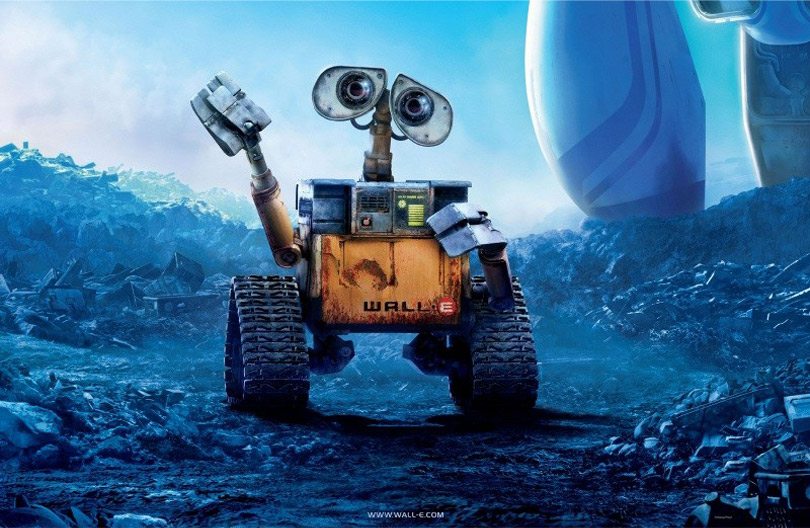 WALL-E is further proof not only of the genius of Pixar as both animators and storytellers, but of the ongoing relevance of both highbrow science fiction and the conventions of silent movies. It is also a continuing demonstration of the ability of so-called 'children's films' to be perfectly pitched towards everyone, whatever their age or inclination. On top of that, the film has a visual beauty and a striking sense of humanity which give even the likes of Toy Story a run for their money.
For the opening 20 minutes, WALL-E is effectively a silent movie. There is next to nothing approaching dialogue, and the actions of our central character are a mix of menial routines and knock-about, Laurel and Hardy slapstick. The latter aspect is brought out by Thomas Newman's score: its prominent use of oboes and clarinets reflect the classical grandeur of 2001: A Space Odyssey, but the individual riffs are playful and are timed to coincide with the jokes. Add in the great sound editing, by Ben Burtt and Matthew Wood, and you have an opening act of both humour and poignancy. We've all seen various attempts to parody silent films; Richard Attenborough's Chaplin managed to stage the filming of one which made us simultaneously laugh with and at what was going on. But despite all the advances in technology, watching WALL-E reminds you just how much of the manner of silent cinema remains, and of how useful it is. Sure, the 'actors' may no longer wear black-and-white make-up, and we don't find the need to use inter-titles any more. But so much of WALL-E relies on the prominent use of physical gesture to convey subtle emotions - WALL-E's eyes are always prominently shot so that the smallest movement is amplified and the character becomes more recognisable.
WALL-E owes a large debt to a number of science fiction films. 2001 looms over it, not just in the score but in the grand scale of human civilisation in space, and of course in the villain. The Autopilot looks exactly like HAL, the only difference being his voice; in 2001 HAL is the most human-sounding character, while Auto's voice was created by a Macbook. There are also references to E.T. and Short Circuit both in the design of WALL-E and the film's prominent sentimentality. Fortunately it never feels as mawkish or manipulative as either of these, and so you forgive it even when the highly predictable ending comes along. But by far the biggest influence on WALL-E is Silent Running. The first 20 minutes are literally Silent Running, both in the plot resemblance and in the lack of sound (boom boom). Both films begin with the premise of humans having to abandon the Earth due to the high levels of waste and pollution that have devastated natural life. The humans that remain in space have grown lazy and apathetic; they don't understand about how plants grow or how important it is to care about natural life, because everything they need can be delivered through a straw. Even their clothes can be digitally altered as fashions change (though Doug Trumball could have only dreamed of such an effect).
Where WALL-E differs from Silent Running, along with most other environmental films, is that it is not in the least bit preachy towards its subject matter. Silent Running, for all its virtues, quickly gets bogged down with Bruce Dern giving sanctimonious speeches about the need to take care of the Earth. Like An Inconvenient Truth, such speeches contain much that can be agreed upon, but they are delivered in such a way that you grew to dislike the character giving them and thereby disregard his words of wisdom. Because so much in WALL-E is subtle and underplayed, even when it is being very sentimental, we never feel alienated from its generally positive message. WALL-E's strength from a thematic point of view is that it manages to convey ideas about the environment and human emotion without either patronising the audience or giving them a negative lecture. The sight of humans being unable to walk because their bones have withered in zero gravity is more than enough to get children up and exercising; such images are so well-constructed that there is no need for the human characters to stand up and start wagging their fingers at the screen. The environmental lessons which the film focuses on revolve around positive action (i.e. take care of the Earth, do more exercise etc.) rather than simply berating the audience for all the damage they have done.
The visuals of the film are an aid to this. It's very easy to complain that all CGI looks the same, but actually much of the designs of WALL-E are above and beyond what we have come to expect. Although the entire film is digitally animated, it has a feeling of intimacy to it. This is not just intimacy in the relationship we have with the central character, but with the world in which he finds himself. The film has a beautiful cinematography, capturing a multitude of hues and tones among even the most sterile of surfaces: the inside of the spaceships are shot so brightly, they look like fairgrounds. The film doesn't feel like just another corporate knock-off which is made for the sake of advertising software, as the more recent Shrek movies have seemed. On top of all the intelligence, substance, humanism and beautiful music, WALL-E is also a great children's movie because it's really good fun. It never gets bogged down in the complexities of its subject matter, or hampered by the sense of smugness which seems to occur when Brad Bird is at the helm. Andrew Stanton, who co-directed Finding Nemo, understands not only for the need to balance light and shade, but that the two can be intertwined - bringing us right back to the pathos-ridden comedy of Charlie Chaplin. Some of the darkest moments in WALL-E are lifted by little sparks of comedy, like the little robot with a brush trying to clean WALL-E just after he has been badly damaged.
 WALL-E is a really intelligent children's film, which like all proper children's films is able to be fully enjoyed and appreciated by adults. Although its central relationship isn't as adventurous as one might like (i.e. the boy-robot and girl-robot end up together), there is very little else about the film which one could object to without being accused of sour grapes. The film is charming, humorous, sensitive and smart; you feel completely involved in the world of the characters and are left wanting more at the end. A real must-see.
Rating: 4.5/5
Verdict: A children's film with brains (and heart)
Danny, The Champion of the World (UK, 1989)
Directed by Gavin Millar
Starring Jeremy Irons, Samuel Irons, Ronald Pickup, Robbie Coltrane, Jimmy Nail, Jean Marsh
For as long as books have been adapted into films, there has been a trend for taking off any rough edges to give said film a wider audience. There is a particular trend for giving downbeat books and plays happy endings, which more often than not cheapen the entire experience of watching them. Take the ending of Anthony Asquith's Pygmalion, in which Eliza Doolittle reconciles with Henry Higgins rather than escaping with the man she loves. Or the ending of Nicolas Roeg's The Witches, in which the main character miraculously turns back into a boy instead of remaining as a mouse. While no such act of heresy has been attempted with Danny, The Champion of the World, it remains a disappointing take on one of Roald Dahl's lesser-known works. It lacks the genuine sense of creepy darkness which Tim Burton and Henry Selick captured on their respective efforts, and is nowhere near as exciting as it needs to be to pass muster as a proper slice of family entertainment.
The first big problem with this adaptation is the involvement of Thames Television at a production level. Couple that with director Gavin Millar, now most famous for Foyle's War, and you have something which resembles an early-evening ITV drama. This is not inherently a problem; to criticise a TV film for being televisual as every bit as obtuse as attacking a book for containing words. But it becomes a problem when the film has a theatrical release, even a limited one. Put up on the big screen this version of Danny feels cheap and ropey; it lacks even the earthy, gritty glamour of the best work of Handmade Films. The bigger problem which emerges from this is that the source material has been made more cosy and 'family-friendly'. The book may not have anything as twisted and strange as the Head Witch or the Cloudmen, but there is a more earthy darkness to it in both the danger faced by the central characters and the political undercurrents surrounding them.
The book is to some extent a Robin Hood story, chronicling the small but significant victories of the poor commoners (Danny's surname is Smith) over the greedy and selfish rich. Danny's father justifies the act of poaching as a great tradition, something that was necessary after enclosure to keep alive those who had earned their crust at the expense of those who hadn't. The morality of poaching is never questioned, but neither is it never trivialised into being 'just good fun'.
Unfortunately, the film doesn't completely avoid this trap. There are certain scenes of genuine suspense or something approaching this, the best being where Danny is driving the Austin 7, first to escape the police and later to rescue his dad. They are not directed with any kind of pizzazz, but the score provided by Stanley Myers keeps things moving along. But outnumbering these are any number of scenes which at best miss the mark and at worst dumb things down; the slow-motion shots of the pheasants falling are very cloying, completely spoiling the moment of triumph. Although the film is narratively faithful to the book, the script lacks the rich, syllable-stretching language we associate with Dahl. This is after all the man who gave the English language 'snozzcumbers', 'gnoolies' and 'vermicious knids'. But here all his wonderful neologisms seem to have been ironed out. Captain Lancaster, whose appearance is quite different to the book, is nowhere near as scary if he doesn't refer to cheaters as "guttersnipes and dandyprats". Here is still threatening, but in a more generic way, and hence is only memorable up to a point.
Much of the acting is rather below-par, from a cast that reads like a who's-who of English character actors. Jeremy Irons reverts to his Brideshead Revisited mumble, so that we can either barely hear him or barely understand him. In the year before he won his Oscar, he is embarrassingly out-acted by his real-life son Samuel, who is generally likeable and matches Paul Terry's performance in James and the Giant Peach. Ronald Pickup and Jimmy Nail make the very least of their parts, and Robbie Coltrane is largely phoning it in as Victor Hazell. The one really notable performance is the social worker played by Jean Marsh, familiar to many younger viewers as the title character in the acclaimed Ghost Hunter series.
As an exercise in straightforward adaptation, Danny doesn't seem to cut the mustard. But it does manage to partially redeem itself with some of its creative decisions which depart from the book. The script adds in a subplot about Victor Hazell wanting to buy up the land for the specific purpose of building a new town. The reason he needs the Smiths' garage is that their plot of land is slap bang in the middle of his new development. This is an interesting decision because it fits in with the themes of the book while putting a more personal stamp on the finished product. With this in place, the character of Hazell becomes more complex and conniving in his motives, and more heartless in his methods. The story becomes somewhat more akin to The Wind in the Willows, which has a huge subtext about the old ways of the English countryside being overrun by the creeping, steel-and-concrete shadows of modernity. From a 'family friendly' point of view, the idea of the whole town pulling together to be in on the 'heist' reinforces the theme of standing up for your friends. Much like Henry Selick's decision to exclude the Cloudmen from James, the film remains different in story but identical in tone to its source, and that is a promising achievement.
Certain aspects of the set design are also quite quaint and charming. The Smiths' caravan is very nicely designed and decorated, and the interior scenes are well-staged and shot. It is very easy to be nostalgic about old cars and paraffin lamps, and the film doesn't attempt to force this nostalgia onto the audience as its main source of appeal. Oliver Stapleton lights the garage scenes quite well, giving us a sense of its scale and of the rudimentary upbringing Danny has received. Despite little moments or aspects which left the viewing experience, Danny, The Champion of the World is by and large innocuous, pedestrian and ropey. It's a half-decent slice of escapist viewing which will just about satisfy on a lonely weekend. But there is nothing about either the performances or the presentation which are memorable; it is too safe, too anodyne and too orientated towards broad viewership to properly capture the spirit of Dahl. Tim Burton's Charlie and the Chocolate Factory remains the superior Dahl adaptation (with Selick's James a close second), and nothing in this attempt can hope to challenge that.
Rating: 2/5
Verdict: Too drab to do Dahl justice


