

Reflections
-
It is weird to read my correspondences from the late August/early September
period, being the time of transition between my old function in life to my
new ...
14 years ago
The Eagle (UK/ USA, 2011)
Directed by Kevin Macdonald
Starring Channing Tatum, Jamie Bell, Donald Sutherland, Mark Strong
When Gladiator reinvigorated the swords-and-sandals epic, it was quickly followed by a host of films which sought to replicate its success by imitating part or all of its formula. But whatever the qualities of Troy, Alexander or even 300, there was always a niggling sense that we were getting something inherently inferior. Adding to this list of disappointments is The Eagle, the first big hiccup in Kevin Macdonald's career.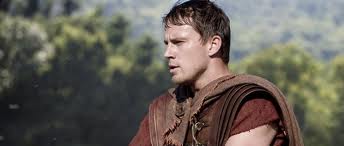 The Eagle's relationship to Gladiator is uncomfortably close right from the start. In the opening act, before Channing Tatum journeys over Hadrian's Wall, the film invokes or restages several key images from Ridley Scott's masterpiece, such as Marcus praying to the gods through smoke or laying out little figurines of his family. The first battle sequence is like the opening battle in Gladiator, only shot on a smaller scale and without a tripod. Last but not least, the central character is a soldier haunted by what has happened to his family, in this case the shame surrounding his father.
 There are other prominent references in the film which become all too apparent as the action plays out. The ending, where Marcus and Esca are pursued across the Scottish landscape by the Seal People, is very close to The Fellowship of the Ring. They are two small, vulnerable people being pursued by the 2nd-century equivalent of the uruk-hai, and Justine Wright's editing is very similar to those sequences. Even the sound design treads close to The Lord of the Rings, with the death throes of Marcus' horse sounding awfully similar to those of the cave troll.
 The crucial problem with The Eagle is that it fails to do what Gladiator did so well - namely balancing the macho and the metaphysical. Scott's film began and ended in the Elysian fields: its intense and often brutal battle scenes (including the fist-fight between Maximus and Commodus) were anchored around an exploration of politics, religion, gender and mortality. The Eagle doesn't have any such weight to carry around and its presentation is much more erratic: it amounts to lots of walking, then a battle, repeated a few times, with the odd little twist or idea thrown in along the way.
 A further comparison, this time with Scott's most recent effort, will help to shed further light on Macdonald's shortcomings. The central problem with Robin Hood was that it didn't know exactly what it wanted to be - a Batman Begins-like origin story, a political drama about working-class emancipation, or a bombastic action movie with pantomime villains. But even in the midst of making up its mind, Robin Hood did at least manage to tackle the political side of its story, albeit superficially.
 The Eagle has the opposite problem. It knows exactly what it wants to be, which is a very old-fashioned romp (and I use the term loosely) with characters which are all too clearly drawn and a fairly predictable storyline. Rosemary Sutcliff's novel, which had previously been adapted for Children's Hour in the 1950s, draws the battle lines between good and evil all too broadly, placing honour and valour over common sense and character development. Even when it's trying to subvert the central relationship between master and slave during the encounter with the Seal People, it still feels blinkered and obstinate as to where your loyalties should lie and to what extent.
 Whereas the novel was originally intended for children (more specifically young boys), there are numerous sequences in The Eagle which are unsuitable for younger audiences. For a 12 certificate film, it is pretty gruesome, with more than one instance of beheading and a fair amount of blood on screen. That said, you don't have to sit through all the really troubling stuff, like people's throats being slit (including a child's throat in one scene towards the end). And most of the time the battle scenes are so frenetic and rapidly edited that you can't exactly tell where people are getting hit, or with what - or, for that matter, why.
 The film is shot by Anthony Dod Mantle, whose credits include the Oscar-winning Slumdog Millionaire and Lars von Trier's controversial Antichrist. Dod Mantle is a pioneer of handheld digital photography, and he does add a number of notable visual touches which make The Eagle a little more distinctive. The opening shot on the river is like one of the woodland scenes in Antichrist: there is a similar sense of mystery in the wild surroundings of nature, albeit with less demonic threat. And some of his compositions are clever, such as showing characters' faces through water which is already reflecting the sky.
 But despite Dod Mantle's knowledge and expertise, the use of hand-held camera is inconsistent and ends up being detrimental. Notwithstanding the shortcomings of the battle scenes, the quieter sections find Macdonald's camera juddering and bouncing when the scene would be better served with a dolly or crane. Like the opening of The Bourne Supremacy, it takes a while for us to adjust to the aesthetic, and for the action to catch up with the frenetic camerawork. But whereas Paul Greengrass' film eventually got into its stride, The Eagle remains dodgy throughout, with Dod Mantle's camerawork hampering Macdonald's already lacklustre direction.
 What makes The Eagle so lacklustre is the lack of strong, charismatic performances. This is surprising considering Macdonald's back catalogue, which includes Forest Whittaker's terrifying performance as Idi Amin in The Last King of Scotland. Jamie Bell remains a decent actor with a certain amount of screen presence, and Mark Strong makes the most of a small supporting role. But all their best efforts are in vain due to Channing Tatum, who has the charisma and acting ability of a lump of granite.
 Because the film has no strong, charismatic protagonist, we aren't drawn into the story enough to make the substance feel intriguing. There is a couple of interesting ideas explored in The Eagle which are both interesting from a genre point of view and pertinent to 21st-century politics. One of these is the inherent instability of a conquering power, and the imperial force having to isolate an enemy rather than face it down and exterminate it. The very existence of Hadrian's Wall, as an imposed, artificial barrier between 'savage' and 'civilised', indicates that the occupying force is based upon fear, both in its methods of conquering and its view of other civilisations.
 When Marcus encounters the Seal People, he is confronted with a culture which operates along the same tribal lines as his own. There is a clear distinction made between Roman and Briton, observed in everything from speech patterns to physical features: there is a running comment about Roman soldiers being recognised by a helmet scar under their chin. Having spent all his life as part of the 'superior race', Marcus is forced into silence and submission as the master-slave relationship is reversed. Esca, meanwhile, is torn between his desire for vengeance against Rome and his professed loyalty to Marcus for sparing his life at the games.
 These are interesting ideas in and of themselves, but the film's structure never allows them to be explored in a satisfying amount of detail. More often than not The Eagle relies earnestly on genre expectations to sustain its appeal, giving us spectacle and plot devices but not much in the way of emotional engagement. The search for the missing roman standard, the eagle of the title, becomes almost secondary to the characters' endless wanderings, and the epilogue of them returning it to the senators is silly and clichéd.
 The Eagle is a big disappointment from Macdonald, failing as both a romp and a means of exploring interesting ideas within a genre. It's not without substance or individual scenes which are visually arresting: it's a better story than 300 and the battle scenes will just about satisfy teenage boys. But for those of us who want to think a little harder, it falls short of most of the marks set for it, never threatening Gladiator's mantle as the great historical epic of our time.
Rating:
Verdict: Macdonald's first real disappointment
The Lord of the Rings: The Return of the King (New Zealand, 2003)
Directed by Peter Jackson
Starring Elijah Wood, Ian McKellen, Viggo Mortensen, Andy Serkis
There are so few third instalments of trilogies which genuinely work. Mad Max Beyond Thunderdome is an enjoyable disappointment, with good action sequences but a cliché-ridden plot ripped off from Peter Pan. Day of the Dead is less tense than its predecessor and less threatening in its political subtexts. And Army of Darkness is plain and simple pants. But with The Return of the King, Peter Jackson has done it: he has crafted a trilogy of masterpieces which also get progressively better. The Return of the King is the darkest and scariest of the trilogy, building on both the creepy supernatural elements of The Fellowship of the Ring and the frighteningly real battle scenes of The Two Towers. But it is not just a case of bigger or darker being better, for the film is also the most absorbing of the three when taken as a work of fantasy. Without wishing to insult the brilliance of the first two films, this climactic instalment is the one which immerses you most in Middle Earth. You stop using the brief lulls to process the allegory and use those instead as breathing points as the darkness threatens to engulf everything.
As with Two Towers, part of the film's success lies in raising the stakes faced by both the hobbits and the world of men. At the end of the previous film, Gandalf remarks that "the Battle for Helm's Deep is over... the Battle for Middle Earth is about to begin." The intensity and scale of the film, with many different races coming together and clashing, makes even the most elaborate and thrilling elements of Two Towers fee like an opening skirmish. You really get the sense of a world not only the brink of collapse, but teetering over the abyss like a spinning sword that must eventually topple. Return of the King achieves this through a number of openly scary scenes as Frodo and Sam inch further towards Mordor. Seeing Minas Morgul lit up in green light is creepy, and as the column of energy rises shrieking from the tower, you feel the shivers running down your spine. Shelob the spider is terrifying, and the quieter moments with her on screen are proof that this trilogy does not rely solely on its score to create tension. There is genuine, petrifying fear as she stalks Frodo on the narrow road to Cirith Ungol, even for the lucky ones who aren't arachnophobic.
 But the most chilling moment of the film comes, ironically, in the hottest place on Middle Earth. In the centre of Mount Doom, at the end of their quest, Frodo stands holding the ring over the lava, ready to destroy it. As the lightning flashes all around him, his face is lit up like a skull as pure evil dangles right in front of him. When he turns to face Sam, he has the look somewhere between a possessed man and a frightened child - and then he takes the ring, smiles and disappears. Just when we have been convinced that our hero will do the right thing, evil rushes up in one last subtle push, and delivers a blow every bit as shattering as the ending of Chinatown.
 So much of Return of the King explores the theme of temptation, broadening it out beyond Frodo, Sam, Gollum and the ring. Early on in the film Pippin looks into the palantir and almost loses his mind as he comes into contact with Sauron. This is on the one hand a dark foreshadowing of what will happen to Frodo, and on the other hand a reflection of the curiosity of Smeagol, a curiosity which eventually turned him into Gollum. But in the eventual fate of the latter, the film puts a clever twist on its running theme, portraying Gollum's temptation or desire for the ring as the ultimate cause of its defeat. Gollum gives into his own temptation and inadvertently redeems the world in the process.
The film also gives us a rich character study in the form of Denethor. The character is Lear-like in his rejection of one of his offspring at the expense of another, and both Boromir and Faramir have elements of Cordelia about them. His descent into madness, whether out of grief, despair or paranoia, is a truly Shakespearian descent, and there is a rich counterpoint between Denethor and Theoden. The former clings to authority for its own sake, believing himself to be more worthy than any heir and disregarding the well-being of his people. The latter doubts his worth as King of Rohan, marching to his own death if it will defend those he seeks to love and honour. In the midst of these two kings, we have the man who would be king (apologies to Sean Connery). Return of the King finds Aragorn wrestling with his own demons and identity, having to finally decide whether to accept his fate at all costs (as has Theoden) or to remain alive at the expense of his people (Denethor). The scene of Aragorn calling on the army of the dead is more than simply a test of physical courage. In summoning this army he is forcing himself to confront and accept the responsibilities and pressures that would come from being king; it is as much a rite of passage as the trial run for the final battle.
 These rich characters both old and new quickly find themselves in a series of brilliant battles. You quickly stop trying to spot which shots are with effects and which aren't because you're so caught up in the action, thanks to the flawless design of the creatures and the internal logic and spontaneity of the battles. But as before, in the midst of this darker, more serious tone, there is still so much of Jackson's humour in the film which means it doesn't have to be watched with a stony face. The on-going rivalry between Gimli and Legolas is great fun, particularly when the latter brings down an entire Oliphant. There are also further hints of Jackson's horror past: the club-handed orc captain resembles the aliens out of Bad Taste, and there are hints of Brain Dead in the dead army's design (but sadly, no kung foo-fighting priests).
 There has been much debate over the ending of the film, with even its biggest fans complaining that it is too long and baggy. When Jackson's latest film, The Lovely Bones came out, critics pointed to this section as the birth of an indulgent streak which had carried through into King Kong and finally caught up with him. But in fact, all things considered, it is the only reasonable way that it could have ended.
Firstly, the goal of the trilogy was to faithfully represent the book, taking creative decisions where necessary which retained the themes and spirit of Tolkien's leviathan. The decisions to leave out the scourging of the Shire, or the epilogue involving the deaths of all the fellowship, are as much about judging tone as judging an audience's patience. Jackson gets the balance perfect, with all the important stories being rounded off and all the other ones hinted at in a way which explains everything. It is important to see the reunion of Aragorn and Arwen, but the blossoming love between Eowyn and Faramir as less significant. Secondly, the slower, more dreamlike execution is these scenes is appropriate. After all the rapidly cut battle scenes, with every story intertwining from multiple camera angles, having scenes which are longer and more languid might seem anticlimactic. But the purpose of these scenes is to adjust us sufficiently to make Frodo's farewell all the more heart-breaking. At the heart of these scenes is Frodo's struggle to readjust not just to life in the Shire, but to life itself. The quest did claim his life as Galadriel predicted: not by physically killing him, but by eroding his very self until he can no longer function or belong in the real world. The elves become like the angels in Wings of Desire, observing Man's woes and preparing Frodo for heaven, that he need no longer suffer the pain of his wounds or the torment of his memories.
 The Return of the King is a magnificent climax to a wonderful series of films. There is not a single scene or shot which feels badly assembled or out of place, and as always the impeccable design will have you wide-eyed with wonder. But like its predecessors, The Return of the King offers so much more than dazzling visuals. From its first to last frame it holds your heart in the palm of its hand, its ability to scare equalled by its subtlety with themes, characters and story. A true triumph.
Rating: 5/5
Verdict: The perfect end to a perfect trilogy
The Lord of the Rings: The Two Towers (New Zealand, 2002)
Directed by Peter Jackson
Starring Elijah Wood, Viggo Mortensen, Bernard Hill, Andy Serkis
In the words of actor John Rhys-Davies, "Part One was a damn wonderful film. You ain't seen nothing yet." The Two Towers is every bit as brilliant, if not slightly better than its predecessor. The stakes are raised and the story is darker, but it's also a film which demonstrates Peter Jackson's knack for balancing multiple storylines, serving up eye-popping spectacle while keeping an unshakeable grip on the substance he introduced in The Fellowship of the Ring. Where Fellowship took its time to set up the world of the hobbits and flesh out the backstory surrounding the ring, The Two Towers doesn't have any kind of initial exposition or recap to pull us back into the story. It doesn't need to: the opening sequence, which takes us back into Moria and shows us what happened next, is as heart-in-mouth as you could possibly want. It pulls us back into Middle Earth without simply retreading old ground, so that by the time that Frodo awakes from his dream, we know exactly where we are and are raring to go.
A common claim made about trilogies is that the second and/ or third instalments do not stand up as films in their own right. But Two Towers defies this, feeling every bit as well-crafted and distinctive as the first film. 'The Lord of the Rings trilogy' is a misnomer, since Tolkien wrote it as one book which was then split into three by the publishers. This is not a trilogy of one film with sequels, like Harry Potter or The Chronicles of Narnia. It is the second part of one story, and all three parts blend together seamlessly. It is this seamless progression from one book to another which made it sensible to shoot the films simultaneously, and is also this quality which allows Jackson's more obvious creative decisions to work. The single biggest change is that Frodo's death-defying encounter with Shelob is delayed until the start of the third film, confounding expectations of those who had read the book. In other circumstances this would have been a costly error, but the level of skill present on screen leads you to implicitly trust the filmmaker, so that even when there are noticeable alterations they remain within the tone of the film as a whole.
 As before, the film's production values are superb. Every prop, costume and item of set is meticulously detailed and beautifully ornate, absorbing you as a spectator and making you feel immersed in the cultures of Rohan and Ithilien. The difference is that these designs now have to contend with far more kinetic and larger action set-pieces than anything in the first film. If Fellowship laid the groundwork for both the story and the scale on which it would take place, the second film builds on these foundations and flexes its muscles to show what can be achieved.
To create the Battle of Helm's Deep, Jackson and his production team created a computer program called MASSIVE, which entails creating hundreds of individual CGI figures capable of independent thought. This makes the battles more believable, with battalions of otherwise faceless armies taking on individual qualities, if only for a moment. The merging of CGI with reality is every bit as convincing as the amphitheatre scenes in Gladiator, but the organic effects are also terrific. Treebeard has all the physicality which comes from animatronics but none of the jerky drawbacks, and the continued use of forced perspectives works as well as anything on Eternal Sunshine of the Spotless Mind. Two special effects stand out more than any. The first is the de-ageing of Theoden, where the zombie-like King of Rohan loses 40 years in a single shot. Not only does his hair recede and change colour, but the entire structure of his face is subtly altered, and yet it feels as tactile as the make-up he wears at the beginning. The other, of course, is Gollum. Like the introduction to Hobbiton, this was a death-or-glory moment for the trilogy; since Gollum is one of the connecting pieces in the story, if we did not accept this portrayal than all would be lost. But Andy Serkis succeeds with effort to spare, putting in a tireless performance and truly inhabiting the character.
 The Two Towers is a darker, more threatening film than its predecessor, a mood which is brilliantly conveyed in its battle scenes. Being a 12 certificate film, we are still in fantasy violence territory; the focus is on the suggestion of injury rather than lingering on blood like Gladiator or Braveheart. For all the spearings and decapitations, which again hint back to Jackson's horror past, the focus on violence is briefer and when individual pain is addressed (as with Haldir), it is largely implied. But despite the scale and the huge number of characters, we still feel a huge emotional attachment and so the pain and fear is very real.
 Although Tolkien wrote The Lord of the Rings as a mythic pre-history of Europe, The Two Towers brings out its allegorical connotations which are embedded in the author's experiences of war. Tolkien served in WWI and wrote the bulk of the story during WWII, and there is an obvious comparison between the battle for Europe and the battle for Middle Earth. The union of the two towers is analogous to the war-time union between Germany and Russia, moving like a pincer on Eastern Europe - or perhaps Germany and Italy, since one power is overrun part way through the story.
 The film places a twist on the theme of nature and machines clashing for the future of humanity. In the first film, the machines had it all their own way, but with the arrival of the Ents, the "shepherds of the forest" who in turn control the trees, nature is beginning to fight back. However, as the war turns the way of greenery on one front with the flooding of Isengard, at the other end the machinery of Mordor is making mincemeat of the divided forces of Gondor.
In the middle of both these conflicts, you have man and machine locked in combat for control of the world. The central battle, between Frodo and the ring, stands on a knife-edge, and it is increasingly unclear as to who is controlling whom. As before, the beauty of The Lord of the Rings is its harmony of the epic and the personal, with all parties caught up in a conflict which is both physical and metaphysical. As with Fellowship, what really sticks with you after many viewings is the film's note-perfect marriage of darkness and light. In light of its imitators (some pleasant, some not), we depict it as wholly dark, bleak and brooding in a bid to drum up its heft and credibility. But there is a lot of humour laced among even the darkest scenes. The rivalry between Gimli and Legolas is beautifully judged, and the scene of the latter killing soldiers while using a shield as a skateboard is straight out of Bad Taste. Even Sam's speech at the end about the 'great stories', which teeters on 'message moment' schmaltz, works as an expression of hope amidst a gathering storm.
 The Two Towers is every bit as magnificent as its predecessor, if not slightly moreso. Like Mad Max 2 or The Evil Dead 2, it builds on everything that was brilliant in the first instalment while carving out its own identity. Howard Shore's score is brilliant, especially in the dream sequences with Arwen, and Jackson's direction is note-perfect, beautifully judging the emotional impact of every last shot. Whether as a brilliantly constructed epic or an intimate story of struggle and temptation, a frightening allegory or a fascinating fantasy, there is something in The Two Towers for absolutely anyone.
Rating: 5/5
Verdict: The perfect trilogy continues
The Lord of the Rings: The Fellowship of the Ring (New Zealand, 2001)
Directed by Peter Jackson
Starring Elijah Wood, Ian McKellen, Viggo Mortensen, Christopher Lee
When New Line Cinema first offered a relatively unknown director a budget of $285m, to make a trilogy of films from a source that was deemed un-filmable, you could have been forgiven for assuming we would have another Heaven's Gate on our hands. Likewise, as more and more big-screen imitations have turned up and fallen short, it is easy to be cynical about The Lord of the Rings because of the legacy it has left. But as is so often the way with these things, it only takes a quick revisit of the trilogy for all fears to be laid to rest and for all the magic to once again take hold. Even if the other instalments of this trilogy had never seen the light of day, The Fellowship of the Ring remains a masterpiece in its own right, an epic with substance and emotional power which rewrites the rulebook for fantasy filmmaking. Considering the enormity of the project and the ambitious scope of J. R.R. Tolkien's novel, it is something of a miracle that it was even made at all. But what is a bigger miracle is that a film this long, with this many characters and this much introduction, should be so flawlessly executed that it holds up even after 20 or 30 viewings.
Part of what makes the film so magical is the sheer level of craftsmanship and attention to detail, both in the visual representation of Middle Earth and the deeply affectionate treatment of Tolkien's story. Before even the prologue has finished you are utterly convinced not only that Peter Jackson was the right choice to direct but that every effort has been expended to do justice to the material. There are no dodgy special effects, no props which have been built down to a price, and no locations which feel like the real world is being frantically kept off screen. When designing the film, Jackson and WETA's Richard Taylor sought to create a world and series of cultures which would expand beyond the four corners of the screen. Everything about the film, from the hair on the hobbits' feet to the grandest building, feels completely bespoke, and in being so detailed the smallest object like a belt or a sword can come to embody and define an entire culture. Because of this level of detail, you never have that awful experience of recognising a prop or set piece. You won't find the tankards in The Prancing Pony hiding in the back of your cupboards, and the woodland communities are not simply jumped-up versions of Endor in Return of the Jedi.
 But although the world of Middle Earth is rich with its own cultures, this is balanced out by a desire to be realistic in the film's depiction of characters and situations. The battle scenes may be fantasy violence, but the violence is structured realistically. You don't always need to show blood to understand that people are getting hurt, and unlike the Star Wars prequels we don't end up with fights which defy the laws of physics because of an over-indulgence in CGI. Tolkien wrote The Lord of the Rings as a mythic pre-history, as something that could have existed in a forgotten dark age. And that same spirit has been replicated here: we believe enough in the mechanics of this world to accept it, but there is also plenty of magic in which to lose oneself.
Fellowship is the gentlest film in the trilogy, with more focus in its first hour on Hobbiton and setting up the idyll of the Shire. On the surface this would seem like the easy part of the whole project, since it doesn't involves epic battles with a cast of thousands or scenes of enduring physical pain. In fact, this is the part of the trilogy that Jackson simply had to get right. These scenes have to demonstrate not just the idyllic and sheltered lives of hobbits, but the pure and harmonious way of life which Frodo undertakes his quest in order to preserve. And they succeed wholeheartedly, making us feel part of this community, at home with its customs and laid-back means of existence. Hence when the first elements of darkness creep in with the arrival of the Ringwraiths, we are every bit as terrified as the hobbits or inhabitants of Bree. Even though it is the gentlest in the trilogy, the film has real darkness and builds the creeping sense of horror really well. In the first encounter with the Ringwraith, we see insects crawling away from the tree in which the hobbits are hiding, like the whole of creation is repulsed or terrified by the very presence of this fallen king. The scenes in Moria are deeply claustrophobic; even before the orcs and goblins turn up you feel like you are walking through the bowels of hell, on a thin path of light between two immerse darknesses. The Balrog and the Uruk-hai are terrifying, the former especially since its presence is subtly suggested through the evocative use of red light, and when revealed it is every bit as monstrous as one would have hoped.
 What is really striking about The Lord of the Rings, and Fellowship especially, is how this progression of increasing darkness is counterpointed by humour. Though this aspect is less prominent in the books, it makes sense for there to be some form of comic relief amidst the gathering gloom and destruction of human souls. Jackson comes from a background in horror comedy, having made his name in the 'splatstick' horror of Bad Taste and Brain Dead. There are clear hints of this macabre humour in the battle scenes, and the comic interplay between Merry and Pippin as is much comic relief as a naïve, absurdist reaction to the strange, dark worlds ahead of them.
 Tolkien likened the ring to a machine: something which is cold, clinical, calculating and by its very nature heartless. Tolkien was not a Luddite, but he was aware of the way in which technology could be used to eradicate human will. One of the delicious ironies of the story is that the enemy is both a distant concept (like 'technology') and something which must be carried with them (like a sword). Characters are seduced by the concept or potential of the ring - Boromir, believes it will help his people and save his country. But what is designed to bring victory can just as swiftly bring defeat, and just as men die upon their own swords, so the ring will destroy those who carry it.
 Much of Fellowship examines the rise of industry and man's relationship with nature. The elves, who have a harmonious relationship with nature, are in the autumn of their years and are beginning to leave Middle Earth. The orcs and Uruk-hai, meanwhile, represent the march of progress, technology and modernity, exploiting and trampling on nature in the name of power. Sauron's decision to tear down his trees and replace them with machinery is a symbol of civilisation advancing at the expense of nature, a development which creates competition for resources and causes humanity to turn on itself. While Sauron creates a pure, almost Aryan race in the Uruk-hai, mankind stands on a knife-edge, unsure of which direction in which they should proceed.
 The film also has a breathtaking soundtrack, which contains some of Howard Shore's very best work. Because The Lord of the Rings is a deeply emotional story about worlds colliding and civilisations collapsing, it is necessary for the score to be prominent and for it to embody and encapsulate the different cultures. In this case, it fits so perfectly that you can't believe that the actors weren't mapping out their movements to it. From the tender scene between Aragorn and Arwen to the drums matching the Uruk-hai's tempo through the woods, the music never misses a beat and succeeds where so many melodramas fail, matching emotion to music without compromising the performances.
 The Fellowship of the Ring is a barnstorming masterpiece, which balances its multiple stories effortlessly. Although it has an easier job than its brothers in this respect, you never feel as though characters are being ignored or getting left behind, and every performance in the ensemble has depth and conviction. The film is visually spectacular, from the ethereal beauty of Lothlorien to the gloomy depths of Moria. Its set-pieces are as intimate and thrilling as its romantic scenes, and Jackson's direction is flawless. It is the perfect start to a perfect trilogy.
Rating: 5/5
Verdict: A perfect start to a perfect trilogy


