

Reflections
-
It is weird to read my correspondences from the late August/early September
period, being the time of transition between my old function in life to my
new ...
14 years ago
Repulsion (UK, 1965)
Directed by Roman Polanski
Starring Catherine Deneuve, Ian Hendry, John Fraser, Yvonne Ferneaux
Whatever else may be true about Roman Polanski, there can be no denying that he makes a damn good thriller. With Repulsion, his first English-language feature, he established many of the techniques and motifs which came to define his career, particularly his unique ability to unnerve an audience while flattering their intelligence. More than 45 years later, it remains one of the most unsettling films of the 1960s, and one of Polanski's best early works. Repulsion is the first instalment of what would become Polanski's 'Apartment Trilogy', the others being Rosemary's Baby and The Tenant. On top of their common setting, all three films are built around the idea of architecture being able to express, harbour or reflect a given horror. Repulsion is the most straightforward of the trilogy in this respect, insofar as the architecture of the apartment changes and decays along with the mental state of our heroine: plaster cracks and falls off the wall, and the skinned rabbit lies slowly rotting in the living room.
 Repulsion owes a big debt to two previous entries in the canon of psychological thrillers. Like Black Narcissus, it deals openly with the issue of sexual repression, and how the introduction of overtly sexual, male forces into a pure and female environment can lead to some form of madness. Carol Ledoux is like a warring hybrid of Sisters Clodagh and Ruth: on the surface she is like the former, pure and disinterested, but her vivid fantasies or nightmares hint towards deeper, murkier desires or fears. And like Psycho, the main character with whom the audience identifies happens to be insane - although quite how insane is left for us to judge.
 Like Alfred Hitchcock, Polanski is not content for us to sit back and discuss Carol's madness as if it were entirely academic. Instead he put us through the mill constantly throughout, pulling us headlong further and further into her madness so that by the end we feel like we are lucky to be alive. But unlike a lot of Hitchcock's work, there is no moment of relief, no tidy pay-off that makes us "come out giggling". By the end of Repulsion you feel like you have lived in that apartment and experienced everything that Carol has, and your only response is to sit, near-catatonic with fear, and marvel at what has been created.
 The film is anchored by the terrific central performance of Catherine Deneuve, who was only 22 when filming began. Deneuve has the most amazing eyes, which convey the slightest shifts in her mental state. Her right eye follows the opening credits as they dart across the screen in close-up, and there is a recurring shot of one eye hidden in darkness, showing what horror lies beneath such glacial beauty. Deneuve manages to portray a character who is aloof, aimless and very shy while making her constantly intriguing. The men who fall for her may be initially attracted to her physically, but their continued interaction is (seemingly) motivated by an equal desire to understand and study her.
 Repulsion is primarily an examination of androphobia, or the fear of men. The cause of Carol's affliction is never entirely established; although the photographs imply she was molested as a child, it is not clear whether the man in the photograph is her father, her uncle or a total stranger. The film raises the question of the motivation behind Carol's exact responses to men, particularly in the case of the murders. Were they simply extreme reactions, the end result of concentrated exposure to her fear? Or is there a more aggressive element of Carol which wants vengeance, and therefore actively pursued these killings?
 In the end, however, the exact reason for Carol's mental state is rather secondary. The film is less about the 'twist' contained in the final photograph than about convincingly depicting an individual's descent into madness and paranoia. Polanski succeeds in this by surreally physicalizing the fears of our protagonist, projecting her fears onto her surroundings so that the apartment becomes Carol's own private haunted house.
 Repulsion is filled with nightmarish imagery which even out of context has the ability to send shivers down one's spine. Certain moments are played initially for shock value - for instance, the man first appearing in the mirror or the hands bursting through the wall to grope her. But these are accompanied by more subtle touches in the cinematography which point to the film's Freudian undercurrents. The central corridor of the apartment is permanently in shadow, and every time she enters it she is immediately confronted by her fear - whether it's the hands coming out of the walls or finding Ian Hendry shaving in the bathroom.
But what makes such imagery truly disturbing, rather than simply creepy, is the ambiguous response of the central character. Deneuve never shrieks or screams, maintaining some form of dignified façade even as she grows more and more deranged. When she first imagines a man breaking into the flat and forcing himself on her, she is naturally repulsed by it. But the more it happens, the more we entertain the possibility that it is less of a nightmare than a dark fantasy - that in the midst of being terrified she accepts it - or perhaps, in a warped way, she enjoys it.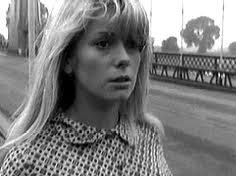 Because the central character is so conflicted, she gradually ceases to be a reliable narrator. But by the time that has happened, we have grown to trust and empathise with her so much that there can be no escape. The level of claustrophobia Polanski creates is astonishing, and the incidental score by jazz drummer Chico Hamilton keeps things at fever pitch. Occasionally the score drifts a little too close to the work of Bernard Hermann with the constant cymbals resounding, but considering the film's relationship with Psycho such indulgences are kind of appropriate.
This marriage of character conflict and intense music to create unbearable claustrophobia is brilliantly demonstrated in the murder of John Fraser's character. The scene begins with no score and the camera on Deneuve's face as she bashes Fraser's head in, out of shot, with a candlestick. We are not seeing the actual perspective of the killer, but we are seeing her mind-set, which seems calm and considered. Then, after he is dead, the reality of what she has done hits her and the score kicks in to complete the effect. We are still looking at her rather than through her, but we still feel what she feels - and that is really smart filmmaking. Repulsion could also be construed as the forerunner of Hard Candy and Teeth in its treatment of men as sexual predators. Its male characters are all defined by a desire for satisfaction in the hands of the opposite sex - whether out of love, in the case of John Fraser, or something more cold-hearted as practised by the young men in the bar. The film is a cautionary tale, advising men to think twice if they think they can dominate women just because they appear more vulnerable. Carol's actions in this respect are an extreme and irrational expression of women's desire to be independent, of both men and gender expectations (for instance, cooking and working in a beauty parlour).
 Repulsion is an excellent psychological thriller which bewitches, excites and terrifies in equal measure. It isn't quite a masterpiece, being slightly too slow in its opening minutes and with a score with is occasionally over-cranked. But this is more than made up for by the central performances, Polanski's masterful direction and the sheer amount of tension which both parties have managed to ring out of such a simple premise. A watershed moment for Polanski and a real must-see.
Rating:
Verdict: A deeply disturbing masterclass in tension
Black Swan (USA, 2011)
Directed by Darren Aronofsky
Starring Natalie Portman, Vincent Cassel, Mila Kunis, Barbara Hershey
What is it about ballet and madness that continues to entrance filmmakers? In the 1940s we had The Red Shoes, Powell and Pressburger's masterful look at art, love, jealousy and fantasy set against the backdrop of a ballet company. In the 1970s we had Suspiria, Dario Argento's brutal masterpiece about the fate of a young ballerina modelled on Snow White. And now we have Black Swan from Darren Aronofsky, one of the maddest and most unrelenting films you will see all year. Aronofsky has always been an uncompromising director, having put his audiences through the mill with Requiem for a Dream and tested their patience with The Fountain (think Terrence Malick in space, only not as good). Black Swan continues this trend, beginning at a point of nerve-shredding intensity and never letting you relax until our heroine lies bleeding at the end. In the hands of a less confident director, the film's shrieking intensity and over-cranked visual style would have made the finished project nothing short of ridiculous. But for all the elements which don't quite work, it somehow holds together, for good or bad, as something genuinely jaw-dropping.
 As so often happens, the release of Black Swan has prompted a discussion about the nature of its subject matter, specifically over how realistic is its depiction of ballet, both physically and psychologically. On the first point, the film is one of the best in recent memory at putting dancing up on screen. Natalie Portman and Mila Kunis went through six months of intense training for the roles, so that they physical resemble ballerinas as well as being able to do most of their own dancing. Aronofsky does not rely overly on editing to show the best possible version of a given routine, giving us a sense of scale which Rob Marshall's works do not.
 Ultimately, however, to focus on whether or not Black Swan accurately depicts the world of ballet is to somewhat miss the point. The film is much more of a study of a character in disintegration, about the physical and emotional consequences that come from devotion to one's art, and how such devotion can quickly tip over into obsession and delusion. The film's status as a full-on visual experience is mitigated only by the deep emotional attachment we have for the central character, who appears in every frame and is the only thing we have approaching a reliable narrator.
In both its subject matter and execution, Black Swan is a deeply cine-literate film which references a whole host of other works. It is at heart a genre piece, combining elements of psychological and expressionist horror with the character study elements of an introspective thriller. This does not denigrate or compromise the boldness of Aronofsky's vision, but it is worth being aware of these references as a means of explaining and responding to the film. The film owes a large debt to the works of Powell and Pressburger, particularly The Red Shoes and Black Narcissus. Like the former, it is not so much a film about ballet as a film about personal trauma which just happens to have ballet in it. It is every bit as melodramatic (in the best possible way) and similar themes are explored, such as the jealousy of the various dancers and the way in which the pursuit of perfection leads to hallucination or fantasy.
Both films are striking in their use of colour, from the strobe-red lighting in the nightclub to the beaming white stage lamps during the actual performance. But where Powell goes for wide-eyed, almost childlike fantasy, Aronofsky is much more lurid in approach, playing up the sexual currents in the story rather more. After a fundraising evening, Vincent Cassel tells Natalie Portman to lighten up by going home and touching herself, and earlier on he dismisses her attempts at dancing the Black Swan as un-seductive, adding that her male colleagues wouldn't look at her twice. Stripped of all its trappings, Black Swan is a relatively simple story about the conflict between light and darkness and the need to be in touch with the latter. Nina's physical conflict is plain to see; aside from all the shots of her skeletal body, the film devotes many painful frames to splitting toenails, cracking feet and disguising the strange rashes on her shoulder blades. But like Black Narcissus, Aronofsky's main means of expressing the difference between dark and light is through an exploration of sexuality.
 The relationship between Nina and Lily is to a large extent a restaging of the clash in Black Narcissus between Sisters Clodagh and Ruth. In their confrontation towards the end of the film, these two are offered up to us as two opposing sides of womanhood, with the latter being driven almost to madness by her overt sexualisation and the former being stymied by her desire for purity. Nina's purity is not only physical (she is a virgin) but technical, which in the end prevents her from being a great dancer as opposed to a very good one. Lily meanwhile has all the wild spirit and seduction needed to be great, but she turns up late, picks up strangers and parties all night long.
 While this dichotomy works well, it is ironically in its most lurid aspects that the film begins to come apart. Even if we accept the hysterical tone of the film, certain moments still feel out of place or overdone. The scene of the dirty old man eyeing up Nina on the train is very uncomfortable and far too literal-minded in a film which is trying to be symbolic. And then there is the hallucinatory lesbian sex between Nina and Lily, which represents the same act of symbolic self-love of Betty and Rita in Mulholland Drive. But whereas in David Lynch's film that scene felt relatively substantial, in Black Swan it doesn't feel quite so essential, and its ability to titillate certain audience members threatens to drag the whole story into route-one exploitation.
 Fortunately, the film redeems itself by not letting these wobbles undercut the general narrative. It drifts between fantasy and reality so seamlessly that the barriers between them eventually crumble, so that by the last 20 minutes, you no longer have the luxury of knowing what is real and what is not. This forces you to trust Nina, so that whatever happens on screen becomes reality in that moment and cannot be solidly questioned. No other film could string together the body-horror metamorphosis of David Cronenberg's The Fly and the blood-drenched giallo of Suspiria, two traditions which on paper are miles apart.
 This portion of Black Swan highlights the biggest debt of the film, which is to the work of Dario Argento; Mark Kermode famously described the ending of Black Swan as "Dario Argento on crack". Suspiria runs throughout these scenes, with the bitchy chorus line standing in for the coven of witches plotting our heroine's downfall, and Lily's alternate taking the place of the mother witch whom she must defeat. The colour palette is stretched to the outer limits, with the blood and Black Narcissus eyes being the same Day Glo red as the blood as Argento's work. For all the well-executed mirror tricks and CGI doppelgangers, this is the moment in which the film fully takes flight.
 Black Swan is an utterly mad film which manages somehow to hang together in the face of many striking and rivalling elements. Its closest comparison from a structural viewpoint is The Man Who Fell to Earth: many scenes are indulgent, or uncomfortable, or downright unnecessary, but the overall effect is quite profound. Natalie Portman gives her best performance in a decade, banishing the memories of the Star Wars prequels and hinting at a possible new maturity in her line of work. It's not perfect, or entirely satisfying, but it remains a truly frightening experience.
Rating: 4/5
Verdict: Breathtakingly bonkers
Black Narcissus (UK, 1947)
Directed by Michael Powell & Emeric Pressburger
Starring Deborah Kerr, Roger Farrar, Kathleen Byron, Sabu
The two worst devices in film criticism are nostalgia and the arrogance of youth. On the one hand it is foolish to assume that all films from the past have a natural superiority over those made today, just as it is foolish to say that a hand-written letter is entirely superior to e-mail. On the other hand, in an age where almost anything can be said or done legally on screen, it is stupid to assume that a film like Black Narcissus doesn't still hold up. At first glance, Black Narcissus would seem like a lot of other melodramas released around the Second World War: emotionally shallow, overly simple, badly constructed and ultimately dull. But after its off-putting theatrical opening, the film quickly begins to defy our expectations and serves up a lot more in the way of both style and substance. What starts off shakily ends up as a brilliantly gripping, intense psychological thriller with great performance and stunning expressionist visuals.
 To give credit to the cynics, the opening ten minutes are a little uneven. Their style is much more quirky and offbeat than we would expect from Powell and Pressburger, even considering the level of quaintness in A Canterbury Tale. May Hallatt's role as the elderly caretaker is very off-balance in both her performance and its surroundings. The opening is also laden with exposition, and as the camera lingers on the luxurious décor of this former seraglio, we struggle to engage with our surroundings for more than a few moments.
Once the nuns arrive, however, the film takes off and you forgive all its subsequent quirks of fate. The film is a visual delight, with Jack Cardiff's Oscar-winning cinematography bringing real character to both the costumes and the architecture. Most Technicolor films are praised for how bright their primary colours are, but in Black Narcissus what sticks with you is the white on screen, from the shimmering robes of the nuns to the pale walls of the convent and the flickering candles in between. The production design is so effective that you soon forget that all of this was shoot at Pinewood Studios, and all the vistas of the Himalayas are either murals or matte paintings. Black Narcissus is an intriguing exploration of sexual repression, made intriguing by its relative subtlety and understatement. Some of this is down to the context in which the film was made; even though Powell considered it "his most erotic movie", there is no open consummation of love or lust, and if such scenes had been attempted they would never have got passed the censors. But most of it is down to Powell's brilliant camerawork and Pressburger's slow-burning script. The camera is fixed on the nuns' faces to reveal every little twitch or slight smile that reveal more than words ever could.
 The film explores sexual repression through a number of interesting opposites. The most obvious of these is the relationship between Sister Clodagh (Deborah Kerr) and Mr. Dean (Roger Farrar). The camera treats these two characters very differently: when Clodagh is in shot, the camera focuses on her face and she is never seen out of her habit, to show her purity and resilience. With Mr. Dean, on the other hand, we get to see a whole lot more: there are many wide shots of him stomping around in short shorts, and at least one close-up on his hairy chest. Farrar is the antithesis of everything Clodagh stand for - wild at heart, uncouth, unkempt, and massively attractive.
 Under these circumstances, the easy thing would be to focus solely on the rivalry between these two characters and end up with Sister Clodagh resigning from the order to be with him. But Pressburger is too clever to let that happen, and instead the story plays out like a duel of principles with the prize being right rather than being in love. Both Dean and Clodagh are established as intelligent, determined and resourceful characters whose conflict comes primarily from a conflict of opinion rather than a botched desire to suppress Freudian urges.
As the plot develops and Sister Ruth becomes a more prominent character, we begin to understand the intelligence behind this decision. For most of the film in which Sister Ruth plays no massive part, we are led to believe that Dean is an obstacle to the nuns' success, someone whose disregard for their religion and way of life threatens both the success of the convent and the purity of their order. But once we discover Ruth's fate, we realise that the source of evil or temptation was not so much Dean as the nuns' perception of him. In the eyes of the film, temptation is not something that comes from 'out there', beyond the safety of Christian walls. It is inside of all of us, and more often than not we drive ourselves to give into it. If we think of Black Narcissus as a version of Adam and Eve, that helps to illuminate its spiritual and psychological theses. At the beginning we believe that the convent is like Eden, a safe, perfect place surrounded by a strange land, and with Dean as the serpent who enters the Garden bringing temptation with him. But after we see what has happened to Ruth, the story departs from this in one of two ways. Either we are still seeing a Christian myth play out, but with more emphasis on perception and delusion than on physical evil. Or what we are seeing is something more humanist, where the evil is simply the torment of opposites coming together under one roof.
The key scene in Black Narcissus comes when Sister Clodagh stumbles into a room and finds Sister Ruth wearing a dress and red lipstick, looking immensely proud and increasingly wanton. Here we have opposing depictions of womanhood: one is intensely sexual to the point of madness, the other pure and virginal but also naïve. Both Clodagh and Ruth are driven by a kind of faith - Clodagh by her belief in God and her need to prove herself, and Ruth by her belief that Dean loves her and that no-one must stand in her way. When Dean spurns her, shouting "I don't love anyone!", it is as much a loss of faith as Clodagh's departure, if not moreso. Fantasy plays a prominent part in Black Narcissus. Throughout the story we see flashback to Clodagh's youth in Ireland, and slowly realise her motivation behind becoming a nun. She remembers the man she loved through objects; the emeralds worn by the general's son remind her of those given to her for her wedding day which never took place. These scenes were banned when the film was first released, presumably because of its insinuation that nuns were simply failed lovers, women who didn't measure up to the men of this world. And then we have the ending, which takes us straight to the heart of expressionist horror. The way in which the screen turns red as Sister Ruth faints, or the terrifying close-ups of her eyes, foreshadow the great work of Dario Argento in Suspiria.
 The film also has a strong but subtle political elements. The film was released around the time of India's independence from Britain, and its final scenes have been interpreted as Britain trying to make a dignified exit from a land it could neither control nor understand. The culture clash between different religions (in this case Christianity and Hinduism) is played out very subtly, and foreshadows the more frightening and hysterical clashes in The Devils and The Wicker Man. Crucially, the film doesn't fall into the imperialist trap of portraying the British as wholly rational and the 'natives' as overtly savage. As the nuns start to disintegrate and more intelligent Indian characters come forward, such accusations become redundant.
 Black Narcissus is a great effort from Powell and Pressburger which is almost up there with The Red Shoes. The performances are superb, with Deborah Kerr managing to seem composed and conflicted simultaneously and Kathleen Byron scaring us to death as Sister Ruth. The film remains visually astounding, the script is subtle even in its maddest moments, and there is enough tension and brains bubbling beneath the surface to keep anyone enthralled. A hugely compelling piece and a must-see for thriller fans.
Rating: 4.5/5
Verdict: Smart, sexy and scintillating


