
Reflections
-
It is weird to read my correspondences from the late August/early September
period, being the time of transition between my old function in life to my
new ...
14 years ago
Of Time and the City (UK, 2008)
Directed and narrated by Terence Davies
There are two main problems with contemporary documentary filmmaking. The first is that the films often become more about the personality of the people making them than the facts and arguments they are trying to present. Michael Moore may be the greatest culprit, but this trend can be traced back to Nick Broomfield’s Driving Me Crazy, in which all the dead-ends and failures of filmmaking were filmed in real time and included in the finished product.
The second, resulting problem is that the vast majority of documentaries end up, in some form or another, preaching to the converted. Environmental films in particular start out with the best intentions and a solid amount of resources, but a number of factors intervene which prevent them from having ‘mainstream appeal’. The subject matter may be too esoteric, the content may lecture the audience, or in the case of An Inconvenient Truth, you find yourself agreeing with everything being said whilst being bored senseless by the man who’s saying it. Of Time and the City should therefore be congratulated for avoiding both traps. Although it is unquestionably Davies’ most personal film, it is not marked by anything which could resemble arrogance or vapid self-promotion. It is instead a film of contrasts and contradictions, examining the ambivalent relationship one has with one’s origins, whether physical or cultural. It is a poignant and emotional examination of ageing, memory and coming to terms with one’s past.
 Things don’t get off to a very convincing start. The opening five or ten minutes, which feature contemporary shots of Liverpool’s religious iconography, feel very televisual. Part of this might be down to our reaction to seeing archive footage on the big screen – we are so used to seeing black-and-white newsreels in TV documentaries than it is easy to forget they were originally shown in cinemas. But even if certain elements of said footage are cinematic, they are still assembled and structured in a manner more befitting of television. Just as Danny, the Champion of the World suffered from the involvement of Thames Television, so the funding and expertise of BBC Films may explain the uneasy position Of Time and the City occupies on the big screen.
 The other immediate obstacle is Davies’ narration. Anyone expecting a film about Liverpool to be narrated by someone with a whining, nasal Scouse accent is going to be surprised (perhaps pleasantly). Davies’ voice is one of long, dolorous vowels and nervous consonants, and he expresses his opinions on a spectrum ranging from suppressed fury to jowly mourning via open-mouthed rapture. He resembles an old-school university lecturer, brought out of retirement to teach his favourite subject to a class of disinterested first-years. For anyone too young to remember Wallace Greenslade or John Snagge, it takes some getting used to.
But after this uneasy first quarter of an hour, the film begins to build and you start to get swept up in the images that unfold. There is no central narrative or thesis beyond a loose chronology, which takes us spontaneously from the Second World War to the present day. In one beautiful moment, Davies recalls a childhood memory of catching a ferry on a day trip across the Mersey. He narrates: “people got on board in black-and-white… they disembarked in colour”, and the footage mimics his narration. Even if it were little more than a collection of photographs set to music, one cannot deny that Davies is a skilful compiler. His choice of music and images mesh together beautifully, creating moments of great power in which one enhances the other. In one very poignant moment, he shows a collection of black-and-white images of abandoned factories, scoring them with Brahms’ Lullaby. It’s a tender and elegiac combination, casting a grey cloud of sadness over an already dark time in the city’s history.
Of Time and the City is on one level profoundly elegiac, with Davies mourning or remembering sadly all the images and traditions of his childhood years. There is something about black-and-white which brings out the earthy ruggedness in people, bringing all their crags and wrinkles to the fore. The section of Davies recalling Christmas in the 1950s is very evocative; it brings to mind the traditional seasonal images of Christmas past, without feeling in any way picture-postcard or chocolate box. But more deeply, Of Time and the City is about identity and memory, and how one shapes the other. The film is a cinematic scrapbook with Davies retracing his footsteps, trying patiently to hang on to his memories and to the city he once knew. Late in the film, he mournfully asks what has happened to his city, showing a montage of new housing developments and the changing shape of the riverside. But this is not some boring old fool moaning about the youth of today; this is a man remembering what he had, with mixed emotions, and trying to find glimpses of the good he knew in what he sees today.
Davies’ relationship with the past is far from straightforward, and the film is neither a breathless rant nor sentimental hagiography. There are great sections of him getting angry or expressing disillusionment with what was then the status quo. He lays into the monarchy during scenes of Elizabeth II’s coronation, calling it ridiculous to preserve such a thing out of tradition, and finding it obscene to stage such lavish ceremonies while millions were still on rations. In one laugh-out-loud moment he remarks: “the problem with being poor is that it takes up all your time; the problem with being rich is that it takes up everybody else’s.” On more than one occasion, he expresses distrust of the church, recalling how he discovered “it was all a lie” and calling himself a proud atheist. He even finds time to express contempt for The Beatles. But amidst his bouts of passionate fury, there are also plenty of moments with Davies embracing his past. He waxes lyrical about his love of film, expressing an almost religious passion for cinema as images of Gregory Peck and Ava Gardner grace the screen. He reads from T. S. Eliot’s The Four Quartets and P. B. Shelley’s Ozymandius like a priest might read from the Gospels: with reverence and a dry sense of humour.
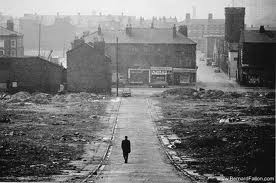 Of Time and the City is a deeply evocative film which examines memory, time and identity in the midst of a conflicted portrait of Liverpool. It takes a while to embrace its every idiosyncrasy, and its deeply personal tone may be alienating to some. But it crucially succeeds by not being entirely esoteric, providing a wide range of scenes and images which reach out to the viewer and invite you into this forgotten world. As a documentary it succeeds by conveying its message in an appealing and stimulating way, and by having an emotional core which feels honest and inviting.
Rating: 4/5
Verdict: A moving and elegaic portrait of Liverpool
Danny, The Champion of the World (UK, 1989)
Directed by Gavin Millar
Starring Jeremy Irons, Samuel Irons, Ronald Pickup, Robbie Coltrane, Jimmy Nail, Jean Marsh
For as long as books have been adapted into films, there has been a trend for taking off any rough edges to give said film a wider audience. There is a particular trend for giving downbeat books and plays happy endings, which more often than not cheapen the entire experience of watching them. Take the ending of Anthony Asquith's Pygmalion, in which Eliza Doolittle reconciles with Henry Higgins rather than escaping with the man she loves. Or the ending of Nicolas Roeg's The Witches, in which the main character miraculously turns back into a boy instead of remaining as a mouse. While no such act of heresy has been attempted with Danny, The Champion of the World, it remains a disappointing take on one of Roald Dahl's lesser-known works. It lacks the genuine sense of creepy darkness which Tim Burton and Henry Selick captured on their respective efforts, and is nowhere near as exciting as it needs to be to pass muster as a proper slice of family entertainment.
The first big problem with this adaptation is the involvement of Thames Television at a production level. Couple that with director Gavin Millar, now most famous for Foyle's War, and you have something which resembles an early-evening ITV drama. This is not inherently a problem; to criticise a TV film for being televisual as every bit as obtuse as attacking a book for containing words. But it becomes a problem when the film has a theatrical release, even a limited one. Put up on the big screen this version of Danny feels cheap and ropey; it lacks even the earthy, gritty glamour of the best work of Handmade Films. The bigger problem which emerges from this is that the source material has been made more cosy and 'family-friendly'. The book may not have anything as twisted and strange as the Head Witch or the Cloudmen, but there is a more earthy darkness to it in both the danger faced by the central characters and the political undercurrents surrounding them.
The book is to some extent a Robin Hood story, chronicling the small but significant victories of the poor commoners (Danny's surname is Smith) over the greedy and selfish rich. Danny's father justifies the act of poaching as a great tradition, something that was necessary after enclosure to keep alive those who had earned their crust at the expense of those who hadn't. The morality of poaching is never questioned, but neither is it never trivialised into being 'just good fun'.
Unfortunately, the film doesn't completely avoid this trap. There are certain scenes of genuine suspense or something approaching this, the best being where Danny is driving the Austin 7, first to escape the police and later to rescue his dad. They are not directed with any kind of pizzazz, but the score provided by Stanley Myers keeps things moving along. But outnumbering these are any number of scenes which at best miss the mark and at worst dumb things down; the slow-motion shots of the pheasants falling are very cloying, completely spoiling the moment of triumph. Although the film is narratively faithful to the book, the script lacks the rich, syllable-stretching language we associate with Dahl. This is after all the man who gave the English language 'snozzcumbers', 'gnoolies' and 'vermicious knids'. But here all his wonderful neologisms seem to have been ironed out. Captain Lancaster, whose appearance is quite different to the book, is nowhere near as scary if he doesn't refer to cheaters as "guttersnipes and dandyprats". Here is still threatening, but in a more generic way, and hence is only memorable up to a point.
Much of the acting is rather below-par, from a cast that reads like a who's-who of English character actors. Jeremy Irons reverts to his Brideshead Revisited mumble, so that we can either barely hear him or barely understand him. In the year before he won his Oscar, he is embarrassingly out-acted by his real-life son Samuel, who is generally likeable and matches Paul Terry's performance in James and the Giant Peach. Ronald Pickup and Jimmy Nail make the very least of their parts, and Robbie Coltrane is largely phoning it in as Victor Hazell. The one really notable performance is the social worker played by Jean Marsh, familiar to many younger viewers as the title character in the acclaimed Ghost Hunter series.
As an exercise in straightforward adaptation, Danny doesn't seem to cut the mustard. But it does manage to partially redeem itself with some of its creative decisions which depart from the book. The script adds in a subplot about Victor Hazell wanting to buy up the land for the specific purpose of building a new town. The reason he needs the Smiths' garage is that their plot of land is slap bang in the middle of his new development. This is an interesting decision because it fits in with the themes of the book while putting a more personal stamp on the finished product. With this in place, the character of Hazell becomes more complex and conniving in his motives, and more heartless in his methods. The story becomes somewhat more akin to The Wind in the Willows, which has a huge subtext about the old ways of the English countryside being overrun by the creeping, steel-and-concrete shadows of modernity. From a 'family friendly' point of view, the idea of the whole town pulling together to be in on the 'heist' reinforces the theme of standing up for your friends. Much like Henry Selick's decision to exclude the Cloudmen from James, the film remains different in story but identical in tone to its source, and that is a promising achievement.
Certain aspects of the set design are also quite quaint and charming. The Smiths' caravan is very nicely designed and decorated, and the interior scenes are well-staged and shot. It is very easy to be nostalgic about old cars and paraffin lamps, and the film doesn't attempt to force this nostalgia onto the audience as its main source of appeal. Oliver Stapleton lights the garage scenes quite well, giving us a sense of its scale and of the rudimentary upbringing Danny has received. Despite little moments or aspects which left the viewing experience, Danny, The Champion of the World is by and large innocuous, pedestrian and ropey. It's a half-decent slice of escapist viewing which will just about satisfy on a lonely weekend. But there is nothing about either the performances or the presentation which are memorable; it is too safe, too anodyne and too orientated towards broad viewership to properly capture the spirit of Dahl. Tim Burton's Charlie and the Chocolate Factory remains the superior Dahl adaptation (with Selick's James a close second), and nothing in this attempt can hope to challenge that.
Rating: 2/5
Verdict: Too drab to do Dahl justice


