


Reflections
-
It is weird to read my correspondences from the late August/early September
period, being the time of transition between my old function in life to my
new ...
14 years ago
The Ninth Gate (France/ Spain/ USA, 1999)
Directed by Roman Polanski
Starring Johnny Depp, Lena Olin , Frank Langella, Emmanuelle Seigner
With the notable exception of Se7en, numerical horror-thrillers are utter rubbish. With their ridiculous twists, over-the-top acting and an overreliance on special effects, they epitomise all that is banal and disappointing about these two genres. You would think that Roman Polanski, the man who gave us Repulsion and Rosemary's Baby, would be able to handle such well-worn material in at least a workable manner. But instead we end up with a ripe old stinker every bit as disappointing as Prince of Darkness. Polanski has always been a fan of absurdist, quirky comedy, being greatly influenced by France's crown prince of absurdity, Eugene Ionesco. While absurdity in and of itself is no bad thing, Polanski has always been at his best when this aspect of his sensibility has been minimised, or at least properly accommodated. You have to admire him for being able to switch between bleak, serious works like Tess and The Pianist, and something more fun and frothy like Frantic. But his out-and-out exercises in comedy have dated very badly, with What? being the worst example.
 Further doubts are raised by Polanski's attitude towards the source material. When interviewed in 1999 he said that he didn't believe in the supernatural - something you would never have guessed from Rosemary's Baby. He was drawn to the novel El Club Dumas by Arturo Pérez-Reverte because it was an opportunity to play with the clichés of a genre that he enjoyed. The consequence is that we aren't sure how seriously Polanski is taking things, and therefore how seriously we should be taking him.
 The Ninth Gate starts off quite atmospherically, with good pacing, dusty books and nice gothic colours. Film noir touches are evident throughout, from the archetype of the downbeat detective (or "book detective" in this case) to the enigmatic women in his life. Like so many noirs or Hitchcock films, the blond is enigmatic but for the most part on the hero's side, while the brunette is seductive and passionate to the point of being pure evil.
 Having set things up quite nicely in the first ten minutes, The Ninth Gate starts to crumble as more and more ridiculous elements encroach. We might swallow the story about the three copies of The Nine Gates, if only because Frank Langella sounds authoritative as he wades through exposition. But subsequent developments are so clouded or convoluted that we quickly give up trying to figure it all out, insofar as there is anything to figure out. It feels like the sort of thing that Polanski could have done in his sleep - and for much of the film, he might as well have done.
 All the big plot points in The Ninth Gate can be anticipated because they borrow all too heavily from better genre efforts. Having Dean Corso commissioned to search for The Nine Gates is exactly the same set-up as Angel Heart, but with a book instead of a jazz musician. His infiltration of a secret ceremony is lifted from The Wicker Man, and the mansion scenes strongly resemble Eyes Wide Shut, although this may be coincidental. There are also very standard references to The Omen in the use of 666, for instance, The NINE Gates being published in 1666. There is even a nod to An American Werewolf in London, as Corso arrives at the castle in a truck full of sheep.
 Having given up on taking The Ninth Gate seriously, the next logical step is to try and enjoy it as a comedy, perhaps as an unintentional one. But the comedic elements are so completely at odds with Polanski's execution of the twists that they feel like they have escaped from a different film. The twin brothers, who are played by the same actor via split screen, bumble their way through their lines like a cross between Thomson and Thompson from Tintin and Alf Garnett in Till Death Us Do Part.
 The silliness of the supporting characters increases as the film moves on. Baroness Kessler, played by Barbara Jefford, is introduced as a formidable character of real threat to Dean Corso - who then slips almost immediately into pantomime villain mode when we discover that she only has one hand. Corso later finds her slumped in her motorised wheelchair having been strangled: he turns the wheelchair around, only for her to go careering through the double doors, like Mason Verger's death in Hannibal two years later.
 Like many numerical thrillers, The Ninth Gate suffers from dodgy special effects. It's hardly a dull car crash like End of Days, in which Gabriel Byrne demonstrates his demonic power by blowing everything up, and Arnold Schwarzenegger try to stop him with a grenade launcher. But alongside bad continuity and an unconvincingly burnt book, there are at least two examples of dodgy wire work, in which Emmanuelle Seigner floats down into a scene, without any prior clue that she could fly.
 The Ninth Gate is littered with irritating plot holes which leaving us scratching our heads even in the moments when generic convention could fill in the gaps. There is no explanation of the serpent tattoo on the brunette's back, nor of Boris Balkan's ability to know exactly where Corso is at any one time - which is, conveniently, always within reach of a phone. But more annoying than either of these is Polanski's contempt for the subject matter. It's hard to believe that either Corso or Balkan know or care so much about rare tomes when they treat them so carelessly. They don't bother to handle them with gloves, flip through ancient pages like they were airport paperbacks and carry them around in scruffy bags which get flung everywhere.
 This care-free attitude spills over into the performances. Johnny Depp had wanted to work with Polanski for some time, but Polanski didn't tell him that he wasn't giving the performance that he wanted - in other words, he was almost completely undirected in the role. To be fair to Depp, he gets the physical stuff right, modelling himself on Raymond Chandler and being more convincing than he is in Secret Window. But otherwise it's pretty phoned-in, with Polanski being unable or unwilling to tease out the greatness that Tim Burton or Terry Gilliam had managed.
 Frank Langella is no stranger to trashy villains, having played Skeletor in the awful He-Man movie, Masters of the Universe. He does the best with a surprisingly underwritten role, looking a little bit like Michael Redgrave in The Dambusters. Lena Orin has far too little to do beyond flashing her stocking tops in the first half-hour and then dressing up like the actress from Scottish Widows for the satanic ceremony. As for Seigner, she does a good demon stare, but otherwise she's too airy-fairy, wafting through the scenery as if she doesn't really care who she's playing or what she's doing. In any case, it's essentially the same character she plays in Frantic - the quirky outsider who helps the male protagonist, only this time she's the devil as well.
 The final nail in The Ninth Gate's coffin comes with its ending, which is hopelessly dragged out and completely incoherent. We get to see Langella self-immolate and fail to pass through the Ninth Gate - but that's not the end. Seigner makes love to Depp against the flames with her demon eyes, the camera zooms in on Depp as if he realises who she is all along, and he seems about to scream - but that's not the end. After the two drive back, and Seigner remarks "is that it?" (to which the answer is "no"), Depp goes back to the bookshop and finds the missing page - but that's not the end. Depp then goes back to the castle and the screen fades to white, in one of the most shambolic and unsatisfying endings in 1990s cinema.
 The Ninth Gate is an example of what happens when a great director indulges themself to the extent that they no longer feel the need to try. As an exercise in supernatural horror it is every bit as rubbish as Prince of Darkness: Polanski's film looks better, but Carpenter's was shorter. In attempting to put his stamp on overly familiar elements, Polanski fails to deliver chills, thrills or knowing laughs. Thank God that he redeemed himself beyond all recognition just three short years later.
Rating:
Verdict: One of Polanski's few bad films
Ghosts of Mars (USA, 2001)
Directed by John Carpenter
Starring Natasha Henstridge, Ice Cube, Jason Statham, Pam Grier
The 1990s were a bad time for John Carpenter. Having returned to form with They Live, the man who was once the king of low-budget horror served up a series of disappointments, from the Near Dark rip-off Vampires to the witless Escape from L.A.. But none of these misfires incite such fury and frustration as Ghosts of Mars, one of the lousiest, stupidest and worst thought-out movies outside Michael Bay's back catalogue. For starters, Ghosts of Mars looks really, really cheap. At a budget of $28m, it was among Carpenter's more expensive efforts, and yet it looks for all the world like it was made for less than a tenth of that. The film was shot in a gypsum mine in New Mexico, with all the rocks being painted red to make it vaguely resemble a Martian settlement. Every scene bar one is shot at night, in a move designed to disguise this low-tech approach but which only serves to emphasise it. The film's aesthetic is worryingly similar to Vampirella, a little-known 1990s turkey starring Roger Daltrey as a renegade vampire who lays low on Earth by posing as a rock star.
 The story of Ghosts of Mars finds Carpenter shamelessly ripping off his back catalogue. The idea of prisoners and cops constantly changing sides and teaming up to fight a greater foe is taken from Assault from Precinct 13, but with all the intelligence and social commentary taken out. The idea of ancient ghosts being bent on revenge is from The Fog, and the manner in which people become possessed by these ghosts is like a cross between The Thing and Prince of Darkness.
Ghosts of Mars also rips off at least a dozen other films, borrowing their respective styles at the expense of their collected substance. Being an action movie set on Mars with horror overtones and lots of violence, there is a natural comparison with Total Recall. But whereas Paul Verhoeven was able to use flesh-ripping violence to draw an audience into the story, Carpenter borrows the full-on gore and doesn't use it for anything other than shock value. The designs of the Martian base are not original either. With the angular sandy buildings and metal doors with circles in the middle, they look exactly like Tatooine at night. It's almost as though George Lucas met Carpenter for lunch, agreed to lend him the sets and had them shipped to New Mexico. There are other Star Wars knock-offs too: the sequence of the soldiers breaking into the power station is unforgivably close to Return of the Jedi, where the rebels break into the shield generator on Endor. Add in some grimy interiors from the Alien series and possessed miners who are somewhere between Braveheart and Mad Max, and you have one desperately derivative movie.
 The problem is not simply that Ghosts of Mars is made of seriously well-worn parts. There are dozens of films made each year which use familiar genre tropes and make for passable if forgettable viewing. The problem with Ghosts of Mars is that it is completely stone-faced about its place in the genre. It doesn't show contempt for science fiction or action-adventure, but it takes itself deadly seriously when what it should be doing is having fun. It is to Total Recall what Xanadu was to Flash Gordon: po-faced, naff, and completely misjudged.
 The story of Ghosts of Mars is almost non-existent. There is the thinnest of plots involving the transport of a dangerous convict from A to B, which is complicated by the fact that evil ghosts which used to live on Mars have been released from a mine. But the film ignores or dismisses every possible chance to spice things up, trotting through the backstory of how the ghosts got there and throwing away a potentially interesting idea about Mars being run by a matriarchal society. Such nuggets are treated like the dust on the planet's surface: characters ignore it as best they can and see it as a nuisance when it gets in the way.
 In the absence of any real story, the plot plays out like a video game. Every five minutes there has to be a big action sequence where faceless miners get killed, beaten or blown. And because killing the miners will just unleash the ghosts to possess someone new, there is an endless supply of cannon fodder on which the protagonists can empty their magazines in ever-more pointless shootouts. We keep going round and round in circles until the train arrives, and as soon as our heroes are on the train, one of them insists on going back to try and blow them up!
 The stupidity of Ghosts of Mars can be seen in its numerous plot holes. If the ghosts are indeed ghosts, how come they cannot pass through walls and doors: what is it about them which make them need to possess humans? And if they need human hosts to survive, what was keeping them 'alive' before the seal on the mine was broken? Were there other creatures on Mars before humans arrived that the ghosts preyed on? What caused them to be ghosts in the first place? Why are they here?!
 Then there are various technical questions about Mars itself. Martian gravity appears to be the same as it is on Earth, but there is no attempt to explain this via some kind of 'gravity field generator' or other such device. The planet has only been partially terra-formed, and yet the film expects us to believe that characters can tolerate this by wearing the kind of safety specs worn by A-Level chemists. None of the weapons seem to have been customised or built specifically for Mars, and despite there being less oxygen in the air, the fireballs are every bit as big as they would be on Earth.
 When Carpenter made Assault on Precinct 13, he was very careful to focus on the ethics of law enforcers trusting criminals with their guns. He kept the number of times that guns changed hands to a minimum, so that the claustrophobic tension would not be compromised. Ghosts of Mars is almost a parody of film shootouts in its complete disregard for common sense. There's barely a scene involving Ice Cube where the tables aren't turned or people pull out guns they never had before. This idiocy culminates in a scene where the criminals have their weapons confiscated, only to be armed with new ones seconds later.
 The acting in Ghosts of Mars is universally bad. Ice Cube plays a caricature of himself, attempting to exude attitude via scenery chewing but ending up as little more than obnoxious. Natasha Henstridge, who was cast at the last minute, seems to have only one facial expression and has no chemistry with her co-stars. Because the whole film is narrated by her in flashback, we already know that she will survive: there is no tension or reason to care, and because she is the only one found on the train, all the other characters are expendable.
 The supporting cast fare no better. Jason Statham tries his best but is nowhere near as enjoyable as The Transporter series, or even his brief appearance in Mean Machine. Pam Grier turns up to give the film some kind of genre credibility, but before long the script deems her unnecessary and she literally loses her head. Worst of all is Joanna Cassidy, most famous for playing Zhora in Blade Runner. She spends half her time bouncing off the walls pretending to be mad and half the time staring blankly into space, wondering what happened to her career.
 To say Ghosts of Mars is an abject failure would be doing a disservice to abject failures. It is easily the worst film of Carpenter's career, containing none of the wit, substance, polish or ambition of his heyday. The characters are paper-thin and dull, the acting is terrible, the script is weaker than dishwater and the direction is almost non-existent. It ranks alongside Captivity as an example of a once-great director hitting rock bottom, and is nothing short of dull, dumb and deeply depressing.
Rating:
Verdict: Mind-numbingly terrible
Big Trouble in Little China (USA, 1986)
Directed by John Carpenter
Starring Kurt Russell, Dennis Dun, Kim Cattrall, Victor Wong
One of the ironies of being in the film business is that when you finally get the chance to make your dream project, it often ends up being your worst film. In 1985 John Carpenter was on a roll, enjoying both the commercial success of Christine and the Oscar buzz for Starman. Having long dreamed of making a martial arts movie, he leapt at the chance to direct Big Trouble in Little China - a decision which ended his relationship with Hollywood, and ultimately resulted in one of his weakest films.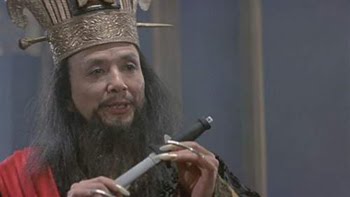 As with Prince of Darkness, Carpenter's subsequent failure, there is something inherently interesting in the central concept of this film. It aims to do for martial arts movies what Indiana Jones did for matinee idols: take all the clichés and conventions of those films, restage them with the budgets they deserved, and pay tribute to the aspects that worked while sending up those that didn't. The twist with Big Trouble is that this story does not have a period setting, with Carpenter attempting to marry ancient Chinese mythology to the technology and social attitudes of the 1980s.
 Carpenter may not have Steven Spielberg's track record when it comes to blockbusters, but he had shown his knack for directing action movies on Assault on Precinct 13 and, to a lesser extent, Escape from New York. And to give credit where it's due, the design elements of Big Trouble are pretty good. Dean Cundey, Carpenter's long-time cinematographer, gives the film a grainy B-movie look while utilising anamorphic lenses (another Carpenter trademark) to make the action feel very modern. The stunt choreography by James Lew is balletic but playful, creating stunts which are cartoonish without prompting us to look where all the wires or trampolines are hidden.
Unfortunately all the good work of Carpenter and his colleagues comes to nothing. After a pretty decent opening, Big Trouble in Little China slowly descends into the very formulas it was trying to send up, resulting in a film which is repetitive, uninvolving and lacking in narrative direction. The central problem lies in a further comparison to Indiana Jones, namely in the business of being tongue-in-cheek. Although Raiders of the Lost Ark was clearly motivated by a desire to send up its subject matter, Spielberg understood that it wasn't enough to simply stand around making fun of old film clichés. In order to sell the film to an audience, it had to be entertaining in its own right, with enough in the way of pace and punchy action to wow an audience who hadn't grown up on John Ford or Howard Hawks.
 One of the great successes of Raiders - in fact, of all the original trilogy - was its combination of pace and narrative; the story was pulpy enough to be gripping when married to the action, but even if you weren't that interested in what was going on, you could just sit back and enjoy the spectacle in blissful ignorance. Big Trouble in Little China doesn't have this perfect pacing: it barrels along so quickly that the story keeps getting lost, with characters having to stop and explain the plot to each other in an increasingly incoherent manner.
 Because the film keeps losing its narrative thread (what there is of it), its ability to work as an affectionate pastiche or parody begins to gradually desert it. Certain elements remain faintly subversive, such as Dennis Dun's character, whose resourcefulness and intelligence sends up Indy and Short Round in Temple of Doom. But elsewhere the film bears an uncanny resemblance to The Fiendish Plot of Dr. Fu Manchu, Peter Sellers' final film which attempted (unsuccessfully) to send up similar stereotypes. The film forgets about its desire to be ironic as soon as it becomes convenient, settling for spectacle where we expect to see so much more.
 Even if we attempt to enjoy Big Trouble as empty-headed entertainment, we still don't get very far. One of the pleasures of classic martial arts films was the scale of the fights and the seamless way in which they were filmed. Bruce Lee's fight scenes would be filmed like Gene Kelly's dancing, in long continuous shots which created a natural sense of scale and continuity. A lot of both Lee and Kelly's film work was somewhat lacking narratively, but again it didn't matter because of the inherent physicality and tactility of their fighting and dancing respectively.
 Big Trouble, on the other hand, has precious little in the way of physicality. The fight sequences may be inventively choreographed, but they are shot from such odd angles and edited so rapidly that you can't tell what's going on or who is fighting whom. Then there are the cheesy special effects, which include beams of light coming out of people's mouths or characters conjuring up lightning like Emperor Palpatine. These effects were created by Boss Films, who did the effects for Ghostbusters, and as with that film the characters become lost in a lot of uninvolving visual trickery.
 In most cases, the special effects in Big Trouble are there to pad out the action rather than contribute to the story. The laser beam fight between Victor Wong and James Hong, in which imaginary warriors are conjured from rings and battle it out, is like watching a boring video game and breaks up the more interesting duel involving Dennis Dun. Even the old-fashioned monsters are no good, with neither the wookie-like creature nor the floating head with many eyes getting anything like the screen time they need to set them up as sustained and believable threats to the characters.
 On top of all that, the film is populated by a cast of characters which are poorly drawn and unlikeable. Kurt Russell, who has never topped his performance in The Thing, spends most of his time mugging at the camera. While his Clint Eastwood impression in Escape from New York had a certain amount of appeal, his John Wayne impression in this film is off-putting and obnoxious. Kim Cattrall is equally annoying and largely wooden, and the film only seems properly interested in her when she's been dolled up in buckets of rouge. Dennis Dun's character is underdeveloped beyond his one-liners with Jack, and Victor Wong is as criminally underused here as he was in Prince of Darkness.
 One factor that might mitigate Big Trouble's poor execution is the conditions under which it was made. The film went into production around the same time as the Eddie Murphy vehicle The Golden Child; Carpenter was hired because he could work fast, enabling the studio to get their film out first. Certainly one cannot accuse Carpenter of bottling it in the presence of more money; as his 1990s output shows, he was capable of making bad films regardless of how much they cost. But even with the rushed production schedule, you would have expected someone of his mettle and genre experience to come through with the goods.
 Big Trouble in Little China resembles a dumb mix of Indiana Jones and Year of the Dragon, albeit without the overt racism of the latter. It disappoints as empty action and as an attempted subversion of martial arts clichés. It still has pockets of humour, whether intentional or otherwise, which keep it from being either depressing or Carpenter's worst film. But it simply doesn't cut the mustard either as a Carpenter film or on its own terms - it's no fun, and nothing but trouble.
Rating:
Verdict: Incoherent, irritating and uninvolving
The Fog (USA, 1980)
Directed by John Carpenter
Starring Adrianne Barbeau, Tom Atkins, Jamie Lee Curtis, Janet Leigh
Having caught the public's imagination with Hallowe'en, John Carpenter needed another big hit to cement his position as an ascendant low-budget filmmaker. After the release of Hallowe'en in October 1978, he began his working relationship with Kurt Russell on the Elvis TV-movie, which famously beat a re-run of Gone With the Wind in the American ratings.
The Fog is the kind of film that Hallowe'en would have been if Carpenter were not so adept at marrying storytelling to special effects. It contains a number of technically impressive set-pieces which foreshadow more expensive mainstream films, along with all Carpenter's directorial trademarks including a very good score. But although the story is as brutally simple as its predecessor, the film ultimately fails to make the most of it and ends up surprisingly dull. Like Prince of Darkness after it, The Fog is on one level Carpenter's tribute to one of his favourite horror writers - in this case Edgar Allan Poe rather than H. P. Lovecraft. The film begins with a quote from Poe and a spooky prologue in which John Houseman sets the scene. This scene is very well-played, not only in creating the mood but in the level of horror it orchestrates. The fact that there are children present leads us to believe that the story is just another old wives' tale to stop people going out at night. But Houseman's delivery is so precise and dolorous that we can't help wondering whether we're mistaken.
 Sadly, the suspense created in these first five minutes is completely undone by the following forty. With the exception of the prologue the first half of The Fog is very dull, with very little going on that is engaging or threatening in any way. Carpenter sets up a host of different characters who begin interacting in various ways, but none of these encounters on their own are enough to sustain our interest. Our emotional responses vary from annoyance directed at Janet Leigh to confusion as to how Tom Atkins and Jamie Lee Curtis ended up sleeping together so quickly.
 Such shortcomings in the characters undercut the film's ability to truly frighten us. Until the sequence in the lighthouse with the burning driftwood, The Fog simply isn't scary, and its attempts to rectify this are desperately obvious. The scene of Father Malone reading from Blake's diary is so hokey that all we can do is smirk, and elsewhere all Carpenter comes up with is a few loud bangs in broad daylight. Even the elaborate opening involving clinking glass and car alarms contains nothing which is capable of generating a sustained level of terror.
 In the absence of either engaging characters or proper scares, all we have left to admire in this section of The Fog are the special effects - which, as it turns out, are quite impressive. The low budget meant there simply weren't the resources to fill entire streets with artificial fog, let alone make it move in a certain way. To get around this all the wide shots of the coast and Antonio Bay's streets are done with scale models shrouded in black cloth, something you wouldn't notice unless you had studied the production in detail.
 As for the fog itself, it's real fog. In contrast to the blatant CGI used in the remake, Carpenter used machines known as mole foggers to generate the sepulchral clouds and then guide them as best he could with carefully positioned fans. Dean Cundey, Carpenter's long-time cinematographer, lights the fog to get the greatest amount of menace out of what is essentially an inanimate object. When it's coming in off the sea, it shimmers with an iridescent blue, while in the boy's house it is the same lurid combination of red and green of 1950s Hammer.
 Fittingly, it is one particular special effect which finally kicks The Fog into life (and no, it's not the TV turning itself on in the manner of Poltergeist). It comes when Adrianne Barbeau is in the radio station testing some pre-recorded demo tapes near the piece of driftwood her son found on the beach. While her back is turned, the wood begins to drip with water, until it works its way into the tape machine and garbles the sound. Barbeau turns round to find the writing on the plank has changed from 'Dane' to '6 will die', and then the whole thing bursts into flames.
 Quite apart from its technical proficiency, this sequence is the first time in the film where we have both a real sense of tension and a provable physical threat. The execution of this scene conveys the supernatural elements of the story - water catching on fire - while retaining the physical grounding of the film's villains. And because the action happens so close to us on screen, we feel the beginnings of a connection to these characters and their rapidly darkening predicaments.
But again there is a problem. As the screen time accorded to the ghosts increases, we begin to ask questions about how they function on a physical level. Blending a supernatural force with natural elements (i.e. ghosts in fog) is a hard act to pull off, and as the film rolls on more inconsistencies come to light. Perhaps this is a result of the various production problems, which necessitated reshooting a third of the footage. The Fog never sets out any kind of parameters in which the fog or the ghosts operate, and yet every time we try to impose our logic on it, it very quickly defies it. We assume that the fog has no power of its own - until it creeps of its own accord into the boat's generator. We accept that the ghosts cannot have influence without the fog - until the driftwood gets soaked. And we embrace the fact that the ghosts are physical, having to knock on doors rather than walk through them - except at the end, when they magically re-materialise in the church. Errors like this not only make the film confusing but work against our desire to become involved in the story and our desire to be scared by it.
Fortunately, there is just enough in the way of atmosphere created in the last half hour to prevent The Fog from completely collapsing. Carpenter's dynamic score is well-matched to the ominous shots of the fog creeping in off the coast, and several of the set-pieces work pretty well. The scene of Jamie Lee Curtis being attacked by the reanimated corpse is pretty creepy, as is the final confrontation in the church involving Father Malone and the shimmering cross. The performances in The Fog are also pretty decent. Adrianne Barbeau, who was then married to Carpenter, gives a convincing performance as a local radio DJ, even if she does spend a little too much time screaming out repetitive instructions. Hal Holbrook brings a brooding presence to Father Malone, turning his few lines into something which seems more significant. And Janet Leigh gives her all in her last film role, sharing scenes with two graduates of Hallowe'en - one being Nancy Loomis, the other her real-life daughter Jamie Lee Curtis.
 The Fog is a disappointing follow-up to Carpenter's greatest work. Its special effects, score and performances are just about enough to carry it through its running time, and there is some appeal in seeing a cutting-edge horror filmmaker re-approach an old-fashioned ghost story. But while technically interesting, it's also narratively inept, coming nowhere near the heights of its predecessors or Carpenter's subsequent greatness on Starman and The Thing.
Rating: 2.5/5
Verdict: Technically interesting but narratively inept
Prince of Darkness (USA, 1987)
Directed by John Carpenter
Starring Donald Pleasance, Jameson Parker, Victor Wong, Lisa Blount
With any kind of film surrounding the supernatural there is a very fine line between profound and preposterous, between the sublime and the ridiculous. Prince of Darkness desperately wants to be taken seriously, but it ends up every bit as laughable and stupid as Exorcist II: The Heretic. While not John Carpenter's worst film (that honour is reserved for Ghosts of Mars), it remains one of his most obvious and embarrassing failures. Prince of Darkness is the middle instalment of Carpenter's 'apocalypse trilogy', three films which share the premise of a deadly force which could destroy humanity if fully unleashed (the others being The Thing and In the Mouth of Madness). For all the pretentions and incoherence of the latter, Prince of Darkness is by far and away the weakest of the trilogy. What should have been an interesting take on an age-old battle between good and evil ended up as a higgledy-piggledy hotchpotch of incongruent ideas, resulting in a rubbish horror movie which neither scares nor thrills.
To be fair, Prince of Darkness is at least trying to explore a number of interesting ideas. Its central thesis is that evil is something physical, something which can be studied scientifically rather than being confined to ethics and theology. Good and evil are characterised as matter and anti-matter, and just as God came to Earth in human form to save Mankind, so evil has to inhabit the physical to unleash its full potential. There is also within the classic fear of the unknown, which Carpenter had previously explored in both Hallowe'en and The Thing. There are some fairly standard discussions about quantum theory, Schrodinger's Cat, and how logic breaks down at a sub-atomic level. But apart from the last five minutes, and scraps of expository dialogue throughout, these themes are barely addressed in a head-on way. The film is a mishmash of horror clichés, assembled and directed in a shambolic manner which you would not normally associate with John Carpenter. The screenplay seems to have enough ideas for three or four very different films. But rather than elaborate on any particular one, Carpenter decides to throw them altogether in the hope that all the pieces would fit.
 The plot of Prince of Darkness starts out relatively straightforward: there is a green canister in an abandoned church which has sentience and intelligence, and may or may not be the Devil. But then we have to believe that this liquid has the ability to move objects through telekinetic power, and that people can become possessed by having the liquid squirted into their mouths. And then, we have the twist involving a world behind mirrors, which probably served as the inspiration for Into the Mirror over 20 years later. And then, there's a whole caboodle about shared dreaming caused by tachyon beams from the future. The film keeps piling one badly executed plot point on top of another until all credibility has evaporated.
This overburdening of the plot also causes a disturbing number of plot holes, some of them amusing, some of them annoying. For instance, if the canister containing the green liquid is supposed to be impregnable, how come is it leaking out and collecting on the ceiling? Come to think of it, why is it defying gravity by leaking upward? And why, oh why, do the people just stand there, open-mouthed, so the liquid can be sprayed straight at them? Then there are all sorts of questions raised by the concept of shared dreams. The dreams are supposedly a message from the future, warning against the return of Satan. But if Satan did return, bringing the 'anti-God' with him, surely the universe would have been destroyed and there would be no way to send the message? Alternatively, if our heroes succeed in stopping him, surely the messages wouldn't exist in the first place, and therefore the dreams would stop at the end of the film? And why do the dreams change after Danforth has gone through the mirror?
 The film is also sub-standard on a visual level. There are several half-decent locations, like the abandoned church and the university campus which resembles the quiet suburbia of Hallowe'en. And some of the special effects are okay, like the swirling canister or the decaying flesh make-up on the 'chosen one'. Beyond that, it's just another haunted house, populated by characters who deliver cheesy lines about the church being abandoned and how "this place gives me the creeps". Carpenter is a great low-budget filmmaker, but he simply doesn't do anything interesting with the location, using very conventional architecture as the main sort of threat.
 Much of Prince of Darkness is completely ridiculous, being hugely derivative of other, better horrors. The motley bunch of devil worshippers outside the church, including rock legend Alice Cooper, are a straight lift from both Rosemary's Baby and George Romero's zombie films, due to their silence and unified motion. There have been dozens of films about demonic possession, but the use of water as diabolical ectoplasm is a total rip-off of The Exorcist. The regenerating flesh of the 'chosen one' is second-rate H. P. Lovecraft, and Donald Pleasance's seemingly mad priest is pinched from Patrick Troughton's character in The Omen.
But the biggest debt owed by Prince of Darkness is to the Quatermass series. Carpenter was a big fan of Nigel Kneale to the extent that he credited his screenplay to 'Martin Quatermass'. Ironically, Kneale was irritated by this association, due to his bad experience as the original screenwriter of Hallowe'en III: Season of the Witch. The idea of an ancient evil being something physical (or at least quantifiable) was handled superbly in The Quatermass Experiment, which took a ghostly story about possessed astronauts and turned this into a physical threat every bit as terrifying as the Thing. Prince of Darkness is like a poorly scripted, badly made version of that story, with all the true terror taken out. We then come to the small matter of characters. Even when Carpenter was soft-peddling, he could always be relied upon for interesting, offbeat characters who would rise to the challenge. In Prince of Darkness, the acting is wooden, the characters are bland, and the character development is almost non-existent. Brian and Danforth go straight from meeting for coffee to sleeping together, and even though there is only one kiss between them for the rest of the film, we have to believe that they are passionately in love.
For all its great ambitions, the film is effectively a slasher by proxy. There are so many characters running around that we don't have enough time to form proper emotional bonds. Hence when people start getting picked off, we just don't care - even the sight of Alice Cooper stabbing someone with a bicycle is dull. We aren't all that sorry for Danforth when she gets dragged into the other world, before the mirror is smashed by a conveniently-placed axe, trapping her forever. If a film about pure evil can't make us connect with the good guys, then something has gone terribly wrong. As if that wasn't enough, we also have to put up with some out-of-place comedy. One character, played by Dennis Dun, makes all kinds of stupid verbal faux pas which are badly written and out of context. While being hunted down by the possessed women, he makes jokes about a Jewish woman marrying a African doctor, and remarks that "he's not used to being dominated by women". Such comments are every bit as stupid as the jokes in Big Trouble in Little China and add nothing at all to the story.
 Prince of Darkness is ripe, silly, cheesy trash and one of the low points of Carpenter's career. It's not as depressing a failure as Ghosts of Mars, but it fails on just about every level, both as a horror film and as pure entertainment. The experience is made all the more frustrating by Carpenter's record and the great potential hidden in its ideas. It should have been good, it could have been great - but instead it's a total stinker.
Rating: 1/5
Verdict: Ripe, ridiculous and utter rubbish


