


Reflections
-
It is weird to read my correspondences from the late August/early September
period, being the time of transition between my old function in life to my
new ...
14 years ago
Ghosts of Mars (USA, 2001)
Directed by John Carpenter
Starring Natasha Henstridge, Ice Cube, Jason Statham, Pam Grier
The 1990s were a bad time for John Carpenter. Having returned to form with They Live, the man who was once the king of low-budget horror served up a series of disappointments, from the Near Dark rip-off Vampires to the witless Escape from L.A.. But none of these misfires incite such fury and frustration as Ghosts of Mars, one of the lousiest, stupidest and worst thought-out movies outside Michael Bay's back catalogue. For starters, Ghosts of Mars looks really, really cheap. At a budget of $28m, it was among Carpenter's more expensive efforts, and yet it looks for all the world like it was made for less than a tenth of that. The film was shot in a gypsum mine in New Mexico, with all the rocks being painted red to make it vaguely resemble a Martian settlement. Every scene bar one is shot at night, in a move designed to disguise this low-tech approach but which only serves to emphasise it. The film's aesthetic is worryingly similar to Vampirella, a little-known 1990s turkey starring Roger Daltrey as a renegade vampire who lays low on Earth by posing as a rock star.
 The story of Ghosts of Mars finds Carpenter shamelessly ripping off his back catalogue. The idea of prisoners and cops constantly changing sides and teaming up to fight a greater foe is taken from Assault from Precinct 13, but with all the intelligence and social commentary taken out. The idea of ancient ghosts being bent on revenge is from The Fog, and the manner in which people become possessed by these ghosts is like a cross between The Thing and Prince of Darkness.
Ghosts of Mars also rips off at least a dozen other films, borrowing their respective styles at the expense of their collected substance. Being an action movie set on Mars with horror overtones and lots of violence, there is a natural comparison with Total Recall. But whereas Paul Verhoeven was able to use flesh-ripping violence to draw an audience into the story, Carpenter borrows the full-on gore and doesn't use it for anything other than shock value. The designs of the Martian base are not original either. With the angular sandy buildings and metal doors with circles in the middle, they look exactly like Tatooine at night. It's almost as though George Lucas met Carpenter for lunch, agreed to lend him the sets and had them shipped to New Mexico. There are other Star Wars knock-offs too: the sequence of the soldiers breaking into the power station is unforgivably close to Return of the Jedi, where the rebels break into the shield generator on Endor. Add in some grimy interiors from the Alien series and possessed miners who are somewhere between Braveheart and Mad Max, and you have one desperately derivative movie.
 The problem is not simply that Ghosts of Mars is made of seriously well-worn parts. There are dozens of films made each year which use familiar genre tropes and make for passable if forgettable viewing. The problem with Ghosts of Mars is that it is completely stone-faced about its place in the genre. It doesn't show contempt for science fiction or action-adventure, but it takes itself deadly seriously when what it should be doing is having fun. It is to Total Recall what Xanadu was to Flash Gordon: po-faced, naff, and completely misjudged.
 The story of Ghosts of Mars is almost non-existent. There is the thinnest of plots involving the transport of a dangerous convict from A to B, which is complicated by the fact that evil ghosts which used to live on Mars have been released from a mine. But the film ignores or dismisses every possible chance to spice things up, trotting through the backstory of how the ghosts got there and throwing away a potentially interesting idea about Mars being run by a matriarchal society. Such nuggets are treated like the dust on the planet's surface: characters ignore it as best they can and see it as a nuisance when it gets in the way.
 In the absence of any real story, the plot plays out like a video game. Every five minutes there has to be a big action sequence where faceless miners get killed, beaten or blown. And because killing the miners will just unleash the ghosts to possess someone new, there is an endless supply of cannon fodder on which the protagonists can empty their magazines in ever-more pointless shootouts. We keep going round and round in circles until the train arrives, and as soon as our heroes are on the train, one of them insists on going back to try and blow them up!
 The stupidity of Ghosts of Mars can be seen in its numerous plot holes. If the ghosts are indeed ghosts, how come they cannot pass through walls and doors: what is it about them which make them need to possess humans? And if they need human hosts to survive, what was keeping them 'alive' before the seal on the mine was broken? Were there other creatures on Mars before humans arrived that the ghosts preyed on? What caused them to be ghosts in the first place? Why are they here?!
 Then there are various technical questions about Mars itself. Martian gravity appears to be the same as it is on Earth, but there is no attempt to explain this via some kind of 'gravity field generator' or other such device. The planet has only been partially terra-formed, and yet the film expects us to believe that characters can tolerate this by wearing the kind of safety specs worn by A-Level chemists. None of the weapons seem to have been customised or built specifically for Mars, and despite there being less oxygen in the air, the fireballs are every bit as big as they would be on Earth.
 When Carpenter made Assault on Precinct 13, he was very careful to focus on the ethics of law enforcers trusting criminals with their guns. He kept the number of times that guns changed hands to a minimum, so that the claustrophobic tension would not be compromised. Ghosts of Mars is almost a parody of film shootouts in its complete disregard for common sense. There's barely a scene involving Ice Cube where the tables aren't turned or people pull out guns they never had before. This idiocy culminates in a scene where the criminals have their weapons confiscated, only to be armed with new ones seconds later.
 The acting in Ghosts of Mars is universally bad. Ice Cube plays a caricature of himself, attempting to exude attitude via scenery chewing but ending up as little more than obnoxious. Natasha Henstridge, who was cast at the last minute, seems to have only one facial expression and has no chemistry with her co-stars. Because the whole film is narrated by her in flashback, we already know that she will survive: there is no tension or reason to care, and because she is the only one found on the train, all the other characters are expendable.
 The supporting cast fare no better. Jason Statham tries his best but is nowhere near as enjoyable as The Transporter series, or even his brief appearance in Mean Machine. Pam Grier turns up to give the film some kind of genre credibility, but before long the script deems her unnecessary and she literally loses her head. Worst of all is Joanna Cassidy, most famous for playing Zhora in Blade Runner. She spends half her time bouncing off the walls pretending to be mad and half the time staring blankly into space, wondering what happened to her career.
 To say Ghosts of Mars is an abject failure would be doing a disservice to abject failures. It is easily the worst film of Carpenter's career, containing none of the wit, substance, polish or ambition of his heyday. The characters are paper-thin and dull, the acting is terrible, the script is weaker than dishwater and the direction is almost non-existent. It ranks alongside Captivity as an example of a once-great director hitting rock bottom, and is nothing short of dull, dumb and deeply depressing.
Rating:
Verdict: Mind-numbingly terrible
Basic Instinct (USA, 1992)
Directed by Paul Verhoeven
Starring Michael Douglas, Sharon Stone, George Dzundza, Jeanne Tripplehorn
Erotic thrillers have never had much by way of credibility. They have a reputation for being cheesy, lurid and sleazy, and are often lumped together with horror movies as the stuff that 'sensible', 'reasonable' citizens wouldn't touch with a twenty-foot pole. But as with horror, some erotic thrillers manage to explore interesting, often edgy ideas in amidst the gratuitous sex scenes and clunky dialogue. Basic Instinct is one such film. Although the groundwork had been laid by Fatal Attraction, Basic Instinct was the film which brought the erotic thriller into the mainstream. The controversy surrounding its R rating in America and misplaced allegations of homophobia created a whirlwind of publicity, which catapulted Sharon Stone to short-lived stardom and made an entire generation give in to guilty pleasure, if only for a couple of hours.
In bringing the erotic thriller to the multiplex, there is surprisingly little attempt on the part of anyone to sanitise the content, or make changes that would make the story less cheesy. The opening 20 minutes are pure cheese, as people take their clothes off with abandon, detectives trudge around in dark suits, and Catherine Tramell sashays around delivering every line like it's a turn-on. Joe Eszterhas' script is chock full of absurd one-liners that would have made Greg Dark proud - the best being the detectives' remark that the first victim "got off before he got offed". As well as being everything you'd expect from an erotic thriller, Basic Instinct is everything you'd expect from a Paul Verhoeven film - it's sleazy, trashy, cheesy, and quite good fun. Verhoeven was in his commercial prime, having made a splash with Robocop and Total Recall, and had explored sexual crime previously in The 4th Man. Basic Instinct may have opened the floodgates for a wave of worse films, from the Demi Moore vehicle Striptease to William Friedkin's Jade, but outside of its legacy it is a smarter film than has often been assumed.
 As with Total Recall, Basic Instinct begins with a big shock to separate the men from the boys. During the opening credits, with Jerry Goldsmith's eerie soundtrack and the movements in mirrored glass, we see the name of Rob Bottin - the make-up artist who did the effects on Total Recall and The Thing. His presence perplexes us: why would an erotic thriller need its own special effects boffin? Then you see the killer's ice pick go through the face and neck of Johnny Boz, and you sit there frozen to the spot, with no further questions.
 Basic Instinct is a deeply stylised film, which never feels the need to be visually realistic if a creative decision would enhance the mood of a given scene. In the famous interrogation scene, Verhoeven's long-time collaborator Jan de Bont lights the bunker-like room very unusually. Instead of having both parties in equal amounts of light, Catherine Tramell is lit in blinding white light coming from the floor, while the detectives are shrouded in darkness. This gives things a prominent noir feel while conveying the theme of women being in control: the detectives become like voyeurs, wishing to gaze longingly at Catherine without showing too much of their faces.
 This scene brings on to one of the big talking points in Basic Instinct, namely the gratuitous nudity. We know what to expect up to a point: it wouldn't be an erotic thriller without some flesh, and the film is helmed by the man who left teenage boys drooling at the sight of a three-breasted woman from Mars. But even by those standards, the level of sex or nudity is way over-the-top. The film may not be totally exploitative in its treatment or depiction of women, but it does tip over into base titillation in several scenes. The moment where Sharon Stone crosses her legs is pure exploitation: to all those in denial, it's clearly not her thigh showing up on screen!
 Like many attempts to bring something inherently trashy or silly into the mainstream, the story of Basic Instinct is contrived to the point of being ridiculous. The most obvious example of this is the level of intuition which Catherine Tramell possesses: it's one thing being able to guess what someone is going to say, but always being in the same place as the detective is a whole different matter. In its action moments it often gets completely silly, asking us to believe that Michael Douglas could participate in a high-speed chase only seconds after being knocked down by a car.
 It will be clear by now that Basic Instinct is not a film for the faint-hearted, either in its full-on visual style or its blatant disregard for narrative cohesion. But once we have gotten past the sleaze, and the violence, and the smoking, and the swearing, and the silly action scenes, we do begin to see something going on beneath the surface, which turns into that kernel of substance buried deep in the heart of Verhoeven's work.
 All of Verhoeven's films are essentially about questions of identity. In Robocop, how much is Murphy still a man and how much is he a machine? In Total Recall, has Quaid really been to Mars, or is the whole thing an implant? In Basic Instinct, the question revolves around Catherine Tramell and the motivations behind her unusual behaviour. Is she purely and simply the Devil, who taunts men for sport and uses her books to cover up her brutal murders? Or is she someone with a warped mind who is caught up in these events, someone who craves attention but has no desire to kill for it?
 The wanton nature of the character is designed not merely to titillate, but to explore - albeit broadly - the sexual independence of women. Catherine doesn't need men to control her or define her in any way, and her actions are not motivated by a direct Freudian urge, e.g. craving affection to make up for the fact that Daddy showed her none. She treats men and women equally as playthings, taking the dominant role in every relationship.
 This brings us on to the position of gay and lesbian groups, who used the film to attack what they perceived as Hollywood homophobia. The film may be clichéd in its depiction of lesbianism or bisexuality on an aesthetic level - all the lesbians in the film are still dolled-up and attractive enough to make them naturally appealing to men. But Basic Instinct is not homophobic in its view of sexual preference as a lifestyle choice. It maturely chooses not to make an issue of Catherine's sexuality; in other words, who she sleeps with has no direct bearing on whom or why she kills.
The film borrows heavily from Alfred Hitchcock's Vertigo, with Verhoeven restaging certain sections involving the Golden Gate Bridge or the various steep staircases. There is a close parallel between the characters, with Michael Douglas being driven to obsession and Sharon Stone harbouring some kind of self-destructive impulse. One could say this is what a Hitchcock film would have looked like had such levels of sex and violence been acceptable in the 1950s. In the end, however, Verhoeven's efforts to keep things totally ambiguous don't quite work as well as in Total Recall. While there are moments in which it is reasonable to believe that Catherine isn't completely insane, the final act in which Beth Garner is 'revealed' as the killer feels too contrived to cut the mustard. Jeanne Tripplehorn's character has been so peripheral up until this point that we never really believe she could have done it, even if all the plot points add up.
 While it never reaches the heights of The 4th Man or Verhoeven's previous Hollywood efforts, Basic Instinct remains an enjoyable thriller which manages to raise a number of intelligent issues even in its most lurid moments. It has more than its share of problems, either relating to its plot or the inherent cheesiness of the erotic thriller genre. But as a guilty pleasure or something a little smarter than you'd think, it demonstrates that, once in a while, embracing trash is not such a bad thing.
Rating:
Verdict: Sleazy, trashy, cheesy - and quite good fun
Big Trouble in Little China (USA, 1986)
Directed by John Carpenter
Starring Kurt Russell, Dennis Dun, Kim Cattrall, Victor Wong
One of the ironies of being in the film business is that when you finally get the chance to make your dream project, it often ends up being your worst film. In 1985 John Carpenter was on a roll, enjoying both the commercial success of Christine and the Oscar buzz for Starman. Having long dreamed of making a martial arts movie, he leapt at the chance to direct Big Trouble in Little China - a decision which ended his relationship with Hollywood, and ultimately resulted in one of his weakest films.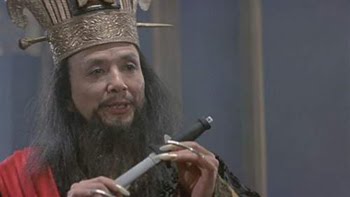 As with Prince of Darkness, Carpenter's subsequent failure, there is something inherently interesting in the central concept of this film. It aims to do for martial arts movies what Indiana Jones did for matinee idols: take all the clichés and conventions of those films, restage them with the budgets they deserved, and pay tribute to the aspects that worked while sending up those that didn't. The twist with Big Trouble is that this story does not have a period setting, with Carpenter attempting to marry ancient Chinese mythology to the technology and social attitudes of the 1980s.
 Carpenter may not have Steven Spielberg's track record when it comes to blockbusters, but he had shown his knack for directing action movies on Assault on Precinct 13 and, to a lesser extent, Escape from New York. And to give credit where it's due, the design elements of Big Trouble are pretty good. Dean Cundey, Carpenter's long-time cinematographer, gives the film a grainy B-movie look while utilising anamorphic lenses (another Carpenter trademark) to make the action feel very modern. The stunt choreography by James Lew is balletic but playful, creating stunts which are cartoonish without prompting us to look where all the wires or trampolines are hidden.
Unfortunately all the good work of Carpenter and his colleagues comes to nothing. After a pretty decent opening, Big Trouble in Little China slowly descends into the very formulas it was trying to send up, resulting in a film which is repetitive, uninvolving and lacking in narrative direction. The central problem lies in a further comparison to Indiana Jones, namely in the business of being tongue-in-cheek. Although Raiders of the Lost Ark was clearly motivated by a desire to send up its subject matter, Spielberg understood that it wasn't enough to simply stand around making fun of old film clichés. In order to sell the film to an audience, it had to be entertaining in its own right, with enough in the way of pace and punchy action to wow an audience who hadn't grown up on John Ford or Howard Hawks.
 One of the great successes of Raiders - in fact, of all the original trilogy - was its combination of pace and narrative; the story was pulpy enough to be gripping when married to the action, but even if you weren't that interested in what was going on, you could just sit back and enjoy the spectacle in blissful ignorance. Big Trouble in Little China doesn't have this perfect pacing: it barrels along so quickly that the story keeps getting lost, with characters having to stop and explain the plot to each other in an increasingly incoherent manner.
 Because the film keeps losing its narrative thread (what there is of it), its ability to work as an affectionate pastiche or parody begins to gradually desert it. Certain elements remain faintly subversive, such as Dennis Dun's character, whose resourcefulness and intelligence sends up Indy and Short Round in Temple of Doom. But elsewhere the film bears an uncanny resemblance to The Fiendish Plot of Dr. Fu Manchu, Peter Sellers' final film which attempted (unsuccessfully) to send up similar stereotypes. The film forgets about its desire to be ironic as soon as it becomes convenient, settling for spectacle where we expect to see so much more.
 Even if we attempt to enjoy Big Trouble as empty-headed entertainment, we still don't get very far. One of the pleasures of classic martial arts films was the scale of the fights and the seamless way in which they were filmed. Bruce Lee's fight scenes would be filmed like Gene Kelly's dancing, in long continuous shots which created a natural sense of scale and continuity. A lot of both Lee and Kelly's film work was somewhat lacking narratively, but again it didn't matter because of the inherent physicality and tactility of their fighting and dancing respectively.
 Big Trouble, on the other hand, has precious little in the way of physicality. The fight sequences may be inventively choreographed, but they are shot from such odd angles and edited so rapidly that you can't tell what's going on or who is fighting whom. Then there are the cheesy special effects, which include beams of light coming out of people's mouths or characters conjuring up lightning like Emperor Palpatine. These effects were created by Boss Films, who did the effects for Ghostbusters, and as with that film the characters become lost in a lot of uninvolving visual trickery.
 In most cases, the special effects in Big Trouble are there to pad out the action rather than contribute to the story. The laser beam fight between Victor Wong and James Hong, in which imaginary warriors are conjured from rings and battle it out, is like watching a boring video game and breaks up the more interesting duel involving Dennis Dun. Even the old-fashioned monsters are no good, with neither the wookie-like creature nor the floating head with many eyes getting anything like the screen time they need to set them up as sustained and believable threats to the characters.
 On top of all that, the film is populated by a cast of characters which are poorly drawn and unlikeable. Kurt Russell, who has never topped his performance in The Thing, spends most of his time mugging at the camera. While his Clint Eastwood impression in Escape from New York had a certain amount of appeal, his John Wayne impression in this film is off-putting and obnoxious. Kim Cattrall is equally annoying and largely wooden, and the film only seems properly interested in her when she's been dolled up in buckets of rouge. Dennis Dun's character is underdeveloped beyond his one-liners with Jack, and Victor Wong is as criminally underused here as he was in Prince of Darkness.
 One factor that might mitigate Big Trouble's poor execution is the conditions under which it was made. The film went into production around the same time as the Eddie Murphy vehicle The Golden Child; Carpenter was hired because he could work fast, enabling the studio to get their film out first. Certainly one cannot accuse Carpenter of bottling it in the presence of more money; as his 1990s output shows, he was capable of making bad films regardless of how much they cost. But even with the rushed production schedule, you would have expected someone of his mettle and genre experience to come through with the goods.
 Big Trouble in Little China resembles a dumb mix of Indiana Jones and Year of the Dragon, albeit without the overt racism of the latter. It disappoints as empty action and as an attempted subversion of martial arts clichés. It still has pockets of humour, whether intentional or otherwise, which keep it from being either depressing or Carpenter's worst film. But it simply doesn't cut the mustard either as a Carpenter film or on its own terms - it's no fun, and nothing but trouble.
Rating:
Verdict: Incoherent, irritating and uninvolving
Cronos (Mexico, 1993)
Directed by Guillermo del Toro
Starring Federico Luppi, Ron Perlman, Claudio Brook, Tamara Shanath
Well before the 'abstinence porn' of Twilight began to hit our screens, a whole wave of vampire films in the 1990s returned to the deep well of sex which had become the lifeblood of vampire fiction. We had Anne Rice's AIDS allegory Interview with a Vampire, John Landis' uneven crime drama Innocent Blood, and of course Francis Ford Coppola's bonkers version of Dracula.
But in the midst of these hypersexual offerings, a small Mexican film from a first-time director was helping to radically reshape the genre. Cronos, the debut by Guillermo Del Toro, demonstrated that vampire fiction could explore themes far more varied than sex, such as the fear of death, the loneliness of old age and the relationship between Mexico and the USA. A hugely influential work of horror cinema, it is every bit as striking and significant as Let The Right One In. When I reviewed The Usual Suspects, I remarked that one test of a good filmmaker is being able to take a hackneyed series of conventions, and create something which is both memorable and mindful of its genre origins. On this level alone Cronos is a triumph, since it is able to fulfil all the requirements of being a bona fide vampire film which approaching all the key plot points and characters arcs from distinctively unusual angles.
 Cronos may have a backstory about the origins of the vampire, followed by the introduction of our protagonists to said bloodsucker which results in quite a lot of gore. But Del Toro manages to achieve this while removing from the story all connotations of sex or lust. In place of Hammer's heaving bosoms and phallic fangs, he gives us skin peeling like wallpaper and the intricate clockwork of the Cronos device. The closest the film comes to anything sexual is a scene of Federico Luppi licking a nosebleed off a bathroom floor, which is shot with such clinical precision that there can be no room for erotic thoughts.
By refocusing the story around ageing and the fear of death, Cronos hits on the central dilemma in vampire fiction: would you rather live forever but lose your soul, or stay pure and human but live in constant fear of death? Both the elderly characters in the film choose the former, albeit for different motives and by entirely different means. Dieter, the dying businessman, makes a conscious decision to pursue the device: he owns the manual needed to operate it and believes it is the only thing that can keep him and his empire alive (and out of his nephew's hands). Jesus, on the other hand, is 'bitten' accidentally, and only comes to use the device frequently through observing its physical benefits. His desire, in the form of addiction to blood, is every bit as strong as Dieter's desire to possess the device himself, but it is not motivated by selfishness or a desire for power. Like Dracula, Jesus becomes weary of eternal life: he is worn down not by an army of brides, but by the constant torment of those who are jealous of his powers. In the end his remaining sense of self triumphs over the vampire he has become, and he sacrifices himself to protect his beloved granddaughter.
The theme of ageing is also conveyed in the visuals of Cronos. Guillermo Navarro's cinematography is very washed-out, with dark woods and fading reds to indicate how everything around the characters is very slowly dying or decaying. Even the brightest scenes in the film, like the New Year's party, are filled with pale colours and make use of shadows wherever possible.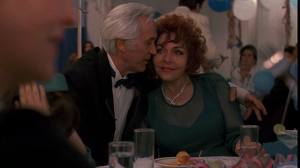 Beyond its direct connections with the vampire genre, Cronos is connected to other key figures in horror. The design of the Cronos device itself, with its peculiar blend of biology and mechanics, resembles the work of Clive Barker: its design as is intricate as the puzzle box in Hellraiser and there is the same suggestion of great evil being contained in or brought forth from something of great beauty.
 There are also connections with John Carpenter in the film's elaborate and highly convincing make-up. Del Toro's training under make-up artist Dick Smith shines through in his pursuit of organic, physical terror, and the work of his make-up artist M. Carrajal rivals anything which Rob Bottin achieved on The Thing. There is a further connection with Carpenter contained in a line where the device is dismissed as "just a toy". Like Carpenter in Hallowe'en, Del Toro is taking an aspect of horror which had become institutionalised and accepted, and proving that it could still scare you to death.
 Cronos is a deeply religious film, in its use of iconography and its exploration of the meanings to both life and death. Again, this is drawing on a classic trait in vampire fiction, namely that the act of being or becoming a vampire is a rebellion against the laws of nature (including death), which it was believed were set in stone by God. Though there is no scene of Jesus declaring war on heaven, as happens in the Coppola version, his faith is counterpointed by his growing dependence on the device, as demonstrated by him reciting the Lord's Prayer while allowing it to stab him a second time.
 There are other indications of these religious themes as well. The Cronos device was created by an alchemist, someone who brought the material and spiritual worlds together, using what became the scientific method to find the divine substance which could cure all disease and prolong life. The images of cockroaches bursting out of angels, or the device being hidden in said statues, hints at the threat which such a device poses to Christianity. By removing the certainty of death, it undermines the corresponding fear of death and damnation, and therefore makes it less necessary either to repent or to live a moral life.
 To add to its theological wrangling, Cronos also has political connotations. The film is a rich allegory for US-Mexican relations, in which America is the bloodsucker which takes without asking and refuses to yield. Dieter, the American, is determined not to let the Mexicans (in the shape of Jesus) get one over on them - the second they come up with something useful, the Americans want it for themselves and won't take no for an answer. There is a contrast between Federico Luppi's sympathetic, caring grandfather and Ron Perlman's aggressive and ambitious nephew. Perlman may slip in and out of Luppi's language, but he is only interested in himself - it is not communication, only giving orders in a language he thinks they can understand.
 The performances in Cronos are mostly of a high quality. Luppi is a great screen presence, seeming frail and vulnerable while coming across as a strong and determined character. Perlman, in his first of several collaborations with Del Toro, is a very fine match for him. His versatility with language is matched only by his desire to throw himself physically into the role. The only weak link is the young girl, played by Tamara Shanath. It isn't so much her performance as the limited extent of her character's development; we don't feel as strongly connected to her as we do with her counterparts in The Devil's Backbone or Pan's Labyrinth.
 Cronos is a great debut feature from one of horror's greatest directors. While not as perfectly formed as Pan's Labyrinth, it contains all the hallmarks of Del Toro's genius, from its powerfully unique visuals to its constant invention and intelligence even in the most trivial of moments. It's a top-notch chiller and a welcome shot in the arm for vampire fiction, proving that the genre is still able to stimulate as well as scare. It's not Let The Right One In, but it should be welcomed into anyone's collection.
Rating:
Verdict: Creepy, chilling and very clever
The Fog (USA, 1980)
Directed by John Carpenter
Starring Adrianne Barbeau, Tom Atkins, Jamie Lee Curtis, Janet Leigh
Having caught the public's imagination with Hallowe'en, John Carpenter needed another big hit to cement his position as an ascendant low-budget filmmaker. After the release of Hallowe'en in October 1978, he began his working relationship with Kurt Russell on the Elvis TV-movie, which famously beat a re-run of Gone With the Wind in the American ratings.
The Fog is the kind of film that Hallowe'en would have been if Carpenter were not so adept at marrying storytelling to special effects. It contains a number of technically impressive set-pieces which foreshadow more expensive mainstream films, along with all Carpenter's directorial trademarks including a very good score. But although the story is as brutally simple as its predecessor, the film ultimately fails to make the most of it and ends up surprisingly dull. Like Prince of Darkness after it, The Fog is on one level Carpenter's tribute to one of his favourite horror writers - in this case Edgar Allan Poe rather than H. P. Lovecraft. The film begins with a quote from Poe and a spooky prologue in which John Houseman sets the scene. This scene is very well-played, not only in creating the mood but in the level of horror it orchestrates. The fact that there are children present leads us to believe that the story is just another old wives' tale to stop people going out at night. But Houseman's delivery is so precise and dolorous that we can't help wondering whether we're mistaken.
 Sadly, the suspense created in these first five minutes is completely undone by the following forty. With the exception of the prologue the first half of The Fog is very dull, with very little going on that is engaging or threatening in any way. Carpenter sets up a host of different characters who begin interacting in various ways, but none of these encounters on their own are enough to sustain our interest. Our emotional responses vary from annoyance directed at Janet Leigh to confusion as to how Tom Atkins and Jamie Lee Curtis ended up sleeping together so quickly.
 Such shortcomings in the characters undercut the film's ability to truly frighten us. Until the sequence in the lighthouse with the burning driftwood, The Fog simply isn't scary, and its attempts to rectify this are desperately obvious. The scene of Father Malone reading from Blake's diary is so hokey that all we can do is smirk, and elsewhere all Carpenter comes up with is a few loud bangs in broad daylight. Even the elaborate opening involving clinking glass and car alarms contains nothing which is capable of generating a sustained level of terror.
 In the absence of either engaging characters or proper scares, all we have left to admire in this section of The Fog are the special effects - which, as it turns out, are quite impressive. The low budget meant there simply weren't the resources to fill entire streets with artificial fog, let alone make it move in a certain way. To get around this all the wide shots of the coast and Antonio Bay's streets are done with scale models shrouded in black cloth, something you wouldn't notice unless you had studied the production in detail.
 As for the fog itself, it's real fog. In contrast to the blatant CGI used in the remake, Carpenter used machines known as mole foggers to generate the sepulchral clouds and then guide them as best he could with carefully positioned fans. Dean Cundey, Carpenter's long-time cinematographer, lights the fog to get the greatest amount of menace out of what is essentially an inanimate object. When it's coming in off the sea, it shimmers with an iridescent blue, while in the boy's house it is the same lurid combination of red and green of 1950s Hammer.
 Fittingly, it is one particular special effect which finally kicks The Fog into life (and no, it's not the TV turning itself on in the manner of Poltergeist). It comes when Adrianne Barbeau is in the radio station testing some pre-recorded demo tapes near the piece of driftwood her son found on the beach. While her back is turned, the wood begins to drip with water, until it works its way into the tape machine and garbles the sound. Barbeau turns round to find the writing on the plank has changed from 'Dane' to '6 will die', and then the whole thing bursts into flames.
 Quite apart from its technical proficiency, this sequence is the first time in the film where we have both a real sense of tension and a provable physical threat. The execution of this scene conveys the supernatural elements of the story - water catching on fire - while retaining the physical grounding of the film's villains. And because the action happens so close to us on screen, we feel the beginnings of a connection to these characters and their rapidly darkening predicaments.
But again there is a problem. As the screen time accorded to the ghosts increases, we begin to ask questions about how they function on a physical level. Blending a supernatural force with natural elements (i.e. ghosts in fog) is a hard act to pull off, and as the film rolls on more inconsistencies come to light. Perhaps this is a result of the various production problems, which necessitated reshooting a third of the footage. The Fog never sets out any kind of parameters in which the fog or the ghosts operate, and yet every time we try to impose our logic on it, it very quickly defies it. We assume that the fog has no power of its own - until it creeps of its own accord into the boat's generator. We accept that the ghosts cannot have influence without the fog - until the driftwood gets soaked. And we embrace the fact that the ghosts are physical, having to knock on doors rather than walk through them - except at the end, when they magically re-materialise in the church. Errors like this not only make the film confusing but work against our desire to become involved in the story and our desire to be scared by it.
Fortunately, there is just enough in the way of atmosphere created in the last half hour to prevent The Fog from completely collapsing. Carpenter's dynamic score is well-matched to the ominous shots of the fog creeping in off the coast, and several of the set-pieces work pretty well. The scene of Jamie Lee Curtis being attacked by the reanimated corpse is pretty creepy, as is the final confrontation in the church involving Father Malone and the shimmering cross. The performances in The Fog are also pretty decent. Adrianne Barbeau, who was then married to Carpenter, gives a convincing performance as a local radio DJ, even if she does spend a little too much time screaming out repetitive instructions. Hal Holbrook brings a brooding presence to Father Malone, turning his few lines into something which seems more significant. And Janet Leigh gives her all in her last film role, sharing scenes with two graduates of Hallowe'en - one being Nancy Loomis, the other her real-life daughter Jamie Lee Curtis.
 The Fog is a disappointing follow-up to Carpenter's greatest work. Its special effects, score and performances are just about enough to carry it through its running time, and there is some appeal in seeing a cutting-edge horror filmmaker re-approach an old-fashioned ghost story. But while technically interesting, it's also narratively inept, coming nowhere near the heights of its predecessors or Carpenter's subsequent greatness on Starman and The Thing.
Rating: 2.5/5
Verdict: Technically interesting but narratively inept


